The Worker Adjustment and Retraining Notification (WARN) Act aims to safeguard the interests of workers, their families, and local communities during significant workforce changes, like plant closings and mass layoffs. This article’ll cover the Florida WARN Act, its key components, and how it is enforced to ensure compliance and protect the rights of employees.
Key Facts
- Florida does not have a separate state mini-WARN Act – covered Florida employers must follow the federal WARN Act, which requires at least 60 days’ written notice before a qualifying plant closing or mass layoff.
- The U.S. Bureau of Labor Statistics reported Florida’s July 2026 unemployment rate at 4.6%, with 514,526 unemployed residents.
- As noted by Webapps, wARN violations can trigger up to 60 days of back pay for affected employees and civil penalties of up to $500 per day for local governments.
- Florida’s Rapid Response coordinators make initial employer contact within 48 hours after receiving a WARN notice.
Table of Contents
- Does Florida have WARN Act?
- What is the Florida WARN Act?
- WARN notices in Florida
- What Triggers the WARN Act in Florida?
- Florida WARN Act Requirements
- How is the WARN Act Enforced in Florida?
- Offboarding your workforce during a layoff
- Offboarding solutions 🚀
Does Florida have WARN Act?
Florida does not have a separate state mini-WARN Act. Covered Florida employers must follow the federal WARN Act and submit WARN notices for qualifying mass layoffs and plant closings. FloridaCommerce says employers should notify affected workers or representatives, the State Rapid Response Coordinator, and the chief elected official of the local government where the employment site is located.
Some states are not only regulated by the federal WARN Act, like Florida, but have their own requirements and regulations specified in their so-called mini-WARN Acts. These states include: California, New York, New Jersey, Illinois, and more.
What is the Florida WARN Act?
In Florida, the federal WARN Act protects workers facing covered layoffs or plant closings. The U.S. Department of Labor states that covered employers generally must provide at least 60 calendar days’ written notice before a qualifying plant closing or mass layoff. This notice serves to offer employees adequate time to explore alternative employment options. Bear in mind that the WARN Act operates independently of the Fair Labor Standards Act (FLSA), which establishes guidelines for minimum wage, overtime, and unemployment benefits. The FLSA is not to be confused with the Family and Medical Leave Act (FMLA) in Florida.
For broader HR planning, Florida holidays may affect scheduling, payroll calendars, and employee communications. Check out our federal holiday calendar as a planning resource.
Related: Florida Labor Laws Explained

WARN notices in Florida
WARN notices in Florida involve a 60-day advance notification requirement for employees facing layoffs or plant closures. If union workers are involved, notification is directed to union representatives rather than individual employees. While there is no single required template, the U.S. Department of Labor says WARN notices should be written in understandable language and include the employment site, expected separation dates, whether the action is permanent or temporary, affected job titles, bumping-rights information, union details when applicable, the number of affected employees, and a company contact.
Who do Florida employers have to give a WARN notice?
Employers covered by the act must provide written notice to affected workers, labor unions representing these workers, the State Rapid Response Coordinator, and the chief elected official of the local government where the employment site is located. This notice should be delivered at least 60 days before the anticipated plant closing or mass layoff.
Florida employers should also email WARN submissions to [email protected] so Florida’s Rapid Response team can coordinate workforce services promptly, according to FloridaCommerce.
What Triggers the WARN Act in Florida?
Certain situations can trigger federal WARN notice obligations in Florida:
- Plant closings causing employment loss for 50 or more full-time employees at a single site during a 30-day period.
- Mass layoffs affecting 500 or more full-time employees at a single site during a 30-day period.
- Mass layoffs affecting 50 to 499 full-time employees when they represent at least 33% of the active full-time workforce at that site.
- Aggregated losses that reach WARN thresholds across related employment losses within a 90-day period, unless the employer can show separate and distinct causes. The Legal Information Institute’s version of 20 CFR § 639.5 states employers should look 90 days ahead and 90 days behind when evaluating aggregated employment actions.
What is a plant closing?
When an employment site or facility is shut down, resulting in an employment loss for 50 or more employees during a 30-day period.
What are mass layoffs?
When a mass layoff occurs that does not result from a plant closing, but leads to an employment loss for 500 or more employees during a 30-day period, or for 50–499 employees if they constitute at least 33% of the employer’s active workforce.
What counts as a single site of employment?
WARN thresholds are measured at a single site of employment. The U.S. Department of Labor explains that for workers who travel, are outstationed, or work outside regular sites, the relevant site may be the home base, the location assigning work, or the location where they report.
What are extended layoffs?
When the cumulative employment losses for two or more groups of workers, each falling below the minimum threshold for notice, reach the threshold level during any 90-day period for either a plant closing or mass layoff.
Are there exceptions to the 60-day WARN notice period?
Yes. The U.S. Department of Labor states WARN may allow less than 60 days’ notice for a faltering company, unforeseeable business circumstances, or a natural disaster, but employers still must give as much notice as practicable.
Florida WARN Act Requirements
In Florida, employers are covered by the federal WARN Act if they have 100 or more employees, excluding workers with fewer than six months of service in the last 12 months or those working an average of fewer than 20 hours per week. The U.S. Department of Labor also recognizes coverage for employers with 100 or more employees, including part-time workers, who collectively work at least 4,000 hours per week, excluding overtime.
Employees entitled to notice under the WARN Act include hourly and salaried workers, as well as managerial and supervisory employees. However, business partners are not entitled to notice.
The core focus of WARN Act requirements in Florida is on notification. Employers must provide advance notice before a change in employment affecting many employees.
For planning purposes, HR should document the affected site, employee counts, full-time and part-time status, first separation date, 30-day and 90-day aggregation windows, and each notice recipient before announcing a reduction in force.
How is the WARN Act Enforced in Florida?
Enforcement of federal WARN rights in Florida occurs through the United States District Courts. The U.S. Department of Labor states that workers, representatives, and units of local government may bring individual or class-action suits, and courts may award reasonable attorney’s fees to the prevailing party.
The U.S. Department of Labor states that the local-government civil penalty can be avoided if the employer satisfies liability to each affected employee within three weeks after ordering the closing or layoff. Failure to comply may lead to individual or class-action lawsuits in the U.S. District Court. If you are unsure, consult with Florida labor lawyers to address potential violation claims and always read the official sources before making any decisions, as laws are subject to change.
Why is the Florida WARN Act important?
Understanding WARN Act requirements in Florida is essential for HR managers planning significant workforce changes. The U.S. Department of Labor’s WARN Advisor explains that WARN helps employers and workers determine whether a business or event is covered and what notice rules may apply.
Related: Compliance calendar for HR
Offboarding your workforce during a layoff
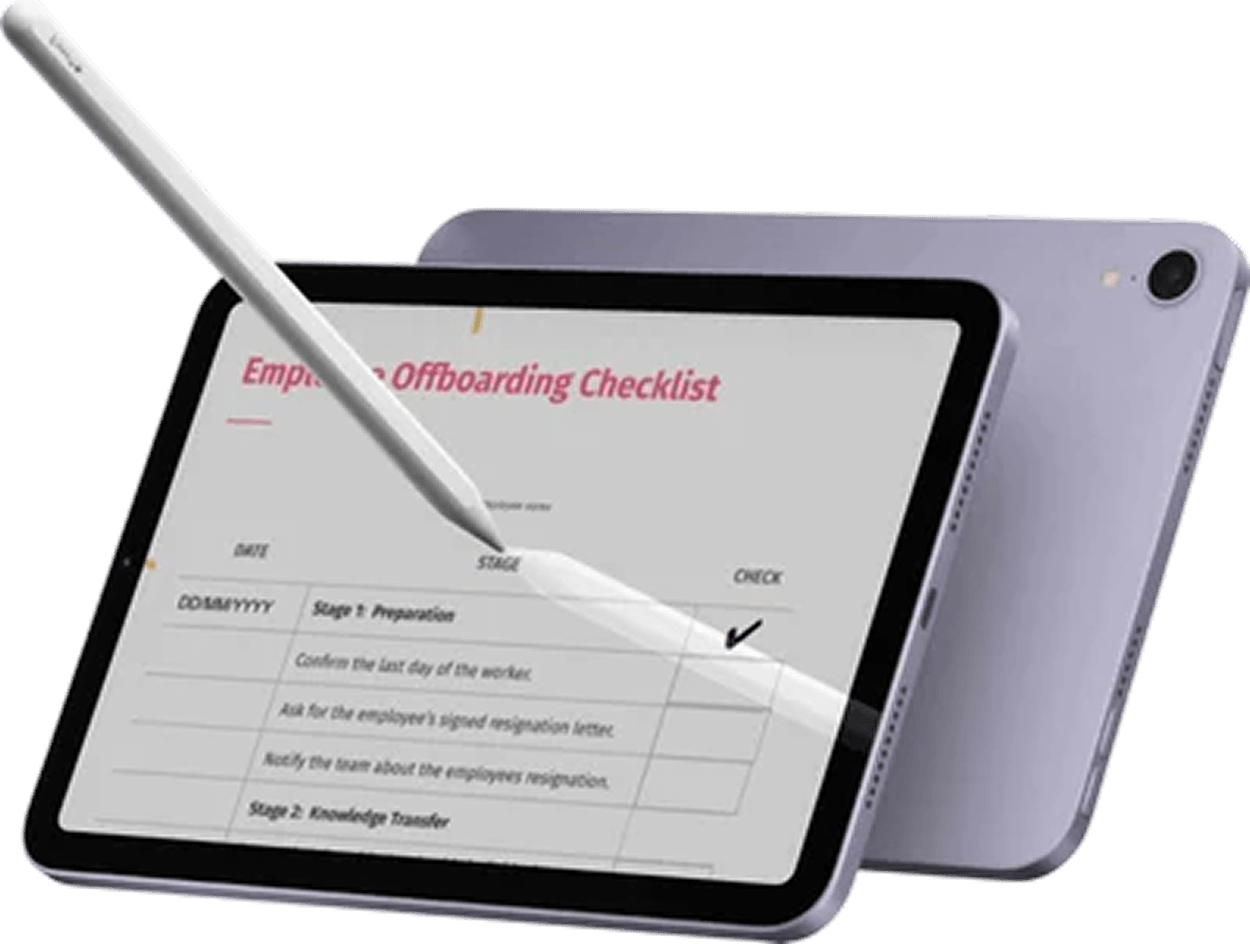
Once you’ve followed all the required steps mandated by Florida during plant closings and mass layoffs, it’s time to begin the offboarding process at your company. Offboarding so many employees at the same time can be a time consuming and costly process, but with the right HR software, it can be easy.
For HR teams handling a covered layoff, Factorial can help assign offboarding tasks, track document completion, and centralize exit records so notice, asset return, access removal, and final communications do not depend on manual follow-up.
How to offboard employees with HR software
Factorial simplifies the offboarding process, simplifying tasks and ensuring a smooth transition for departing employees. With Factorial, you can efficiently manage exit procedures, such as collecting company assets, updating access permissions, and conducting exit interviews. Offboarding software simplifies the entire process from start to finish.
Key Features for offboarding during layoffs:
1. Clear Communication: Easily explain departure details to the departing employee, including the last day of work, return of company property, and other essential information.
2. Task Automation: Automate offboarding tasks, such as revoking system access, updating records, and notifying relevant departments, to save time and minimize the risk of oversight.
3. Documentation and Compliance: Stay compliant by generating necessary documentation, such as termination letters and exit surveys, helping you maintain a comprehensive record of everything that takes place during offboarding.
4. Access Control: Centralize the management of who controls what, making it simple to revoke access to company systems and confidential information, safeguarding your organization’s data.

By utilizing Factorial for offboarding, HR managers can enhance efficiency, maintain compliance, and provide a positive experience for departing employees.
Book a free demo call to learn more!
FAQ
Is the WARN Act still in effect?
Yes, the federal Worker Adjustment and Retraining Notification (WARN) Act is still in effect nationwide. It mandates that covered employers provide a 60-day advance notification of plant closings and mass layoffs, giving employees time to prepare and seek other opportunities.
Does the WARN Act apply in Florida?
Yes, the WARN Act applies in Florida. Although Florida does not have its own state-level version of the law, employers in the state must comply with the federal WARN Act’s requirements for notifying employees of mass layoffs and plant closings.
Where can I find information about Florida Warn listings?
Official information and listings for Florida WARN notices are available through the Florida Department of Commerce. Their website provides public access to the notices submitted by employers regarding upcoming mass layoffs and plant closures across the state.