Family and Medical Leave Act (FMLA) is a crucial federal law that plays a significant role in the lives of Ohio employees and employers. In order to ensure one’s job security does not have to be sacrificed because of health or family circumstances, this legislation allows eligible employees to take unpaid, job-protected leave for specific family and medical reasons.
The purpose of this article is to clarify the FMLA in Ohio, providing a comprehensive guide to its workings, eligibility criteria, and rights and responsibilities.
Key Facts About FMLA Ohio
- Direct answer: FMLA Ohio is the federal FMLA framework applied to Ohio workplaces, covering qualifying family, medical, and military-related leave – giving eligible employees up to 12 workweeks of unpaid, job-protected leave with group health benefits maintained, according to the U.S. Department of Labor.
- Ohio-specific rule: Ohio Revised Code § 124.136 gives eligible Ohio state employees up to 12 consecutive weeks of parental leave, including 480 paid hours for full-time staff at 70% of base pay.
- Compliance risk: The U.S. Department of Labor reported 301 FMLA compliance actions with violations in FY 2025, affecting 342 employees and resulting in $1,029,463 in back wages.
- Actionable deadline: The U.S. Department of Labor says employers that require medical certification must generally allow at least 15 calendar days for the employee to provide it.
Table of Contents
- What is Family and Medical Leave Act (FMLA)?
- FMLA: Eligibility Criteria in Ohio
- Qualifying Reasons under the FMLA in Ohio
- Duration and Types of Family and Medical Leaves in Ohio
- Employee Rights and Employer Obligations Under the FMLA Leave
- How To Request FMLA Leave in Ohio
- Resources and Further Reading
- FAQ About Family And Medical Leave in Ohio
- Effortlessly Track Employee Time Off With This HR Software ✅
What is Family and Medical Leave Act (FMLA)?
As a landmark piece of legislation in the United States, the Family and Medical Leave Act (FMLA) was enacted in 1993. In the beginning, it was recognized that workers facing health crises, without losing their jobs, needed help.
In essence, FMLA allows employees 12 weeks of unpaid, job-protected leave per year while maintaining their health insurance coverage. All government agencies, elementary and secondary schools, and companies with 50 or more employees are covered by this law. FMLA covers a wide range of situations, including illness, childbirth, adoption, and military family circumstances.
FMLA: Eligibility Criteria in Ohio
In Ohio, the Family and Medical Leave Act (FMLA) sets specific criteria to determine who is covered under its provisions.

- Covered employer rules: The U.S. Department of Labor states that FMLA covers private-sector employers with 50 or more employees in 20 or more workweeks in the current or previous calendar year, public agencies regardless of size, and public or private elementary and secondary schools.
- Employee eligibility: The U.S. Department of Labor states that an employee must work for a covered employer for at least 12 months, have at least 1,250 hours of service during the 12 months before leave starts, and work at a location where the employer has at least 50 employees within 75 miles.
Qualifying Reasons under the FMLA in Ohio
Under FMLA Ohio rules, eligible employees may take leave for several qualifying reasons recognized by the U.S. Department of Labor:

- Personal: Leave for an employee’s own serious health issue
- Family Member’s Serious Health Conditions: This includes to care for a spouse, child, or parent suffering from a serious health condition.
- Birth, Adoption, or Build Care Placement of a Child: FMLA allows parents to take leave for the birth of a child, as well as for the adoption or build care placement of a child, providing time for bonding and care.
- Military-Related Exigencies and Caregiver Leave: Employees may take leave for reasons related to a family member’s military service, including exigencies arising from a family member’s deployment. FMLA also provides for a longer leave (up to 26 weeks) to care for a family member who is a service member with a serious injury or illness.
How does the FMLA 3-day rule work?
The FMLA 3-day rule refers to one common serious-health-condition pathway: the U.S. Department of Labor says incapacity for more than three consecutive full calendar days must also involve ongoing medical treatment to qualify.
What is not covered under FMLA?
FMLA does not cover every absence or minor health issue. The U.S. Department of Labor defines a serious health condition as one involving inpatient care or continuing treatment, so routine absences that do not meet those standards generally are not FMLA-protected.
Related: Ohio Laws for Employers
Duration and Types of Family and Medical Leaves in Ohio
Duration of leaves under the Family and Medical Leave Act (FMLA)
- Maximum duration of FMLA leave: The U.S. Department of Labor states that eligible employees may take up to 12 workweeks of FMLA leave in a 12-month period for most qualifying reasons, or up to 26 workweeks in a single 12-month period for covered military caregiver leave.
Types of Family and Medical Leaves in Ohio
The U.S. Department of Labor recognizes that FMLA leave may be taken all at once, intermittently, or on a reduced schedule when medically necessary.
| Leave type | How it works | Typical use |
|---|---|---|
| Continuous leave | One uninterrupted leave period | Surgery recovery or childbirth bonding |
| Intermittent leave | Separate blocks of time for one qualifying reason | Recurring treatment appointments |
| Reduced schedule leave | Temporarily reduced daily or weekly work hours | Medically necessary gradual return |
Can FMLA leave be paid in Ohio?
FMLA itself is unpaid, but the U.S. Department of Labor says accrued paid vacation, sick leave, or personal time may run at the same time as FMLA leave. Ohio Revised Code § 124.136 separately provides eligible Ohio state employees up to 480 paid parental-leave hours at 70% of base pay.
Employee Rights and Employer Obligations Under the FMLA Leave

Job Security
Employers must guarantee that employees are reinstated to the same or equivalent position upon their return. This protection ensures job security and prevents retaliation by employers when employees are absent for an extended period.
Health Insurance Maintenance
Employers must maintain the employee’s health insurance under the same terms and conditions as if they had not taken leave. Whereas, employees continue to be responsible for paying their portion of any health insurance premiums.
Protection of Employee Benefits
Employee’s benefits are maintained as if the worker is actively working.
Employer’s Role in Granting Leave and Maintaining Compliance
Employers are required to grant leave to eligible employees for qualifying reasons under the FMLA. In addition, they must keep accurate records and comply with all aspects of the FMLA, including not interfering with, restraining, or denying the exercise of FMLA rights. This promotes employee rights as employers are prohibited from retaliating against employees for taking FMLA leave.
Common FMLA Ohio compliance mistakes
- Missing the five-business-day eligibility or designation notice deadline, which the U.S. Department of Labor requires in most cases.
- Counting uncertified leave before allowing at least 15 calendar days for medical certification.
- Failing to restore employees to the same or equivalent job.
- Not tracking intermittent leave accurately.
How To Request FMLA Leave in Ohio
Step-by-Step Guide on How Employees Can Request FMLA Leave
- Determine Eligibility: You must work at a location with 50 or more employees within a 75-mile radius and be employed for at least 12 months by a covered employer.
- Understand the Reason for Leave: Determine your FMLA qualifying reason, such as personal health issues, family member care, birth or adoption of a child, or military exigencies.
- Notify Your Employer: Notify your employer in writing or verbally of your need for FMLA leave. Employees must generally give at least 30 days’ advance notice when the need for leave is foreseeable, or notice as soon as practicable when it is not.
- Submit Required Forms and Documentation: Complete any FMLA leave request forms provided by your employer. Provide medical certification or other required documentation to support your leave request, such as a doctor’s note or military orders, if applicable.
- Await Employer Response: After receiving notice that leave may qualify for FMLA, employer generally must provide an eligibility notice within five business days and, once enough information is available, a written designation notice within five business days.
- Coordinate Leave Details: Discuss with your employer the specifics of your leave, such as the start date, duration, and any potential need for intermittent leave or a reduced schedule.
- Understand Your Rights and Responsibilities: Review the rights and responsibilities under FMLA, including job protection, health insurance continuation, and any obligations you have during your leave.
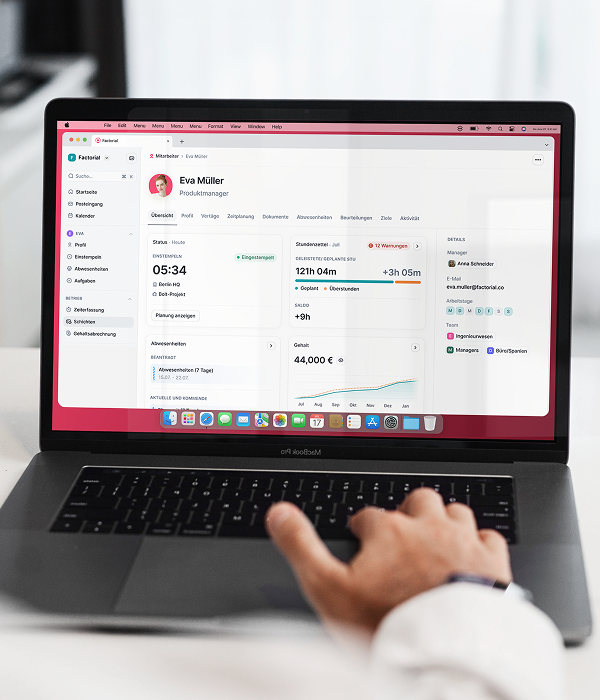
For employers, a central time-off record reduces missed deadlines and inconsistent documentation. Factorial’s holidays and leaves software can help HR teams record FMLA requests, monitor balances, and keep related documents in one organized workflow.
Documentation and Notice Requirements
- Medical Certification: If you need leave due to serious medical conditions (personal or family), provide a medical certificate. The certification should include the date the condition began, its expected duration, and relevant medical facts.
- Advance Notice: In case of foreseeable leave, such as childbirth or planned medical treatment, provide at least 30 days’ notice.
- Periodic Updates: Keep your employer informed about your status and intent to return to work, especially if the leave duration changes.
- Fitness-for-Duty Certification: Provide your employer with a fitness-for-duty certification before returning to work from serious health leave.
Which FMLA forms may be used?
The U.S. Department of Labor lists optional FMLA forms including WH-380-E for an employee’s serious health condition, WH-380-F for a family member’s serious health condition, WH-381 for eligibility and rights, and WH-382 for designation notices.
Resources about FMLA in Ohio
- U.S. Department of Labor (DOL) Website
- Ohio State Bar Association
- Ohio Bureau of Workers’ Compensation (BWC)
- Legal Aid Societies in Ohio
- Ohio Civil Rights Commission
- Ohio Department of Job and Family Services
Here are some important Ohio related articles:
- Ohio WARN Act and WARN Notice: Complete Guide
- Your Guide to the Ohio Minimum Wage
- Ohio state holidays: Essential guide for employers
- At Will Employment By State: HR Guide By Factorial
- Paid Sick Leave Laws By State 2024 (New York, Texas, etc)
FMLA per State
- Family and Medical Leave Act California: How Does It Really Work?
- Family and Medical Leave Act Florida: How Does It Work?
- Family and Medical Leave Act Texas: How Does It Work?
- Family and Medical Leave Act Illinois: How Does It Work?
- Family and Medical Leave Act Colorado: How Does It Work?
- Family and Medical Leave Act Massachusetts: How Does It Work?
- Family and Medical Leave Act NY: How Does It Work?
- Family and Medical Leave Act Oregon: How Does It Work?
- Family and Medical Leave Act Michigan: How Does It Work?
- Family and Medical Leave Act Georgia: How Does It Work?
- Family and Medical Leave Act Indiana: How Does It Work?
- Family and Medical Leave Act Maryland: How Does It Work?
- Family and Medical Leave Act Missouri: How Does It Work?
- Family and Medical Leave Act Nevada: How Does It Work?
- Family and Medical Leave Act New Jersey: How Does It Work?
FAQ
Do you get paid for FMLA in Ohio?
FMLA leave is unpaid. However, your employer may require, or you may choose, to use accrued paid time off, such as sick days or vacation time, concurrently with your FMLA leave. This allows you to receive pay during your absence.
What are the three types of FMLA leave?
The three types of FMLA leave are continuous, intermittent, and reduced schedule. Continuous leave is an uninterrupted block of time. Intermittent leave is taken in separate, smaller periods, and a reduced schedule leave decreases your daily or weekly work hours.
How to apply for FMLA in Ohio?
To apply for FMLA, you must notify your employer of your need for leave, providing 30 days’ advance notice when possible. You will then need to complete your company’s required forms and submit any necessary documentation, such as a medical certification.
What is not covered under FMLA?
FMLA does not cover leave for routine medical appointments, non-serious health conditions, or care for family members who are not a spouse, child, or parent (e.g., grandparents or siblings). It also doesn’t cover employees who have not met the minimum work-hour and tenure requirements.
What are common FMLA mistakes to avoid?
Common mistakes include failing to provide timely notice, not submitting medical certification promptly, and poor communication about your leave status. Manually tracking leave can be complex, using an all-in-one business management software like Factorial helps ensure accurate record-keeping and compliance for employers.