Effectively managing employee time off is crucial for maintaining productivity and supporting staff wellbeing. Whether it’s annual leave, sick days, or parental leave, every absence impacts team workflow and business continuity. For UK businesses, using dedicated absence management software is not just an administrative aid. It’s a strategic tool for ensuring legal compliance, reducing costs, and building a supportive workplace culture where employees feel valued.
Read on to learn how absence management software could help your business, or jump straight to the best options on the market.
Table of Contents
- Key Points
- What Is Absence Management Software?
- What Are the Core Benefits of Using Absence Management Software?
- How Can UK Businesses Ensure Absence Policy Compliance?
- How Do I Choose the Right Absence Management Software for My Business?
- What Is the Best Absence Management Software?
- How Should Employers Compare Absence Management Software?
- FAQs
Key Points
- What is Absence Management Software? It is a digital tool that automates and centralises the tracking, approval, and analysis of all employee leave, including holidays, sickness, and statutory leave.
- UK Sickness Absence: The average UK employee now takes 9.4 days of sickness absence per year, the highest level in over 15 years.
- Rising Costs: A 2026 UK absence survey found that 52% of organisations report challenges from increasing absence-management costs.
- Legal Compliance: As of 6 April 2026, UK law requires Statutory Sick Pay (SSP) to be paid from day one of an absence, making accurate, real-time tracking more critical than ever.
If you want to get the best out of your employees, you need to manage their absences effectively. Being flexible, having a workplace culture that supports life outside work and providing clear policies to cover absence and leave all contribute to good absence management. Managing absence in the workplace takes skill and focus, and using software to help with the administration involved can free up time for managers and senior leaders to focus on the elements that matter– such as supporting employees, understanding trends in absence and ensuring policies are legally compliant.
What Is Absence Management Software?
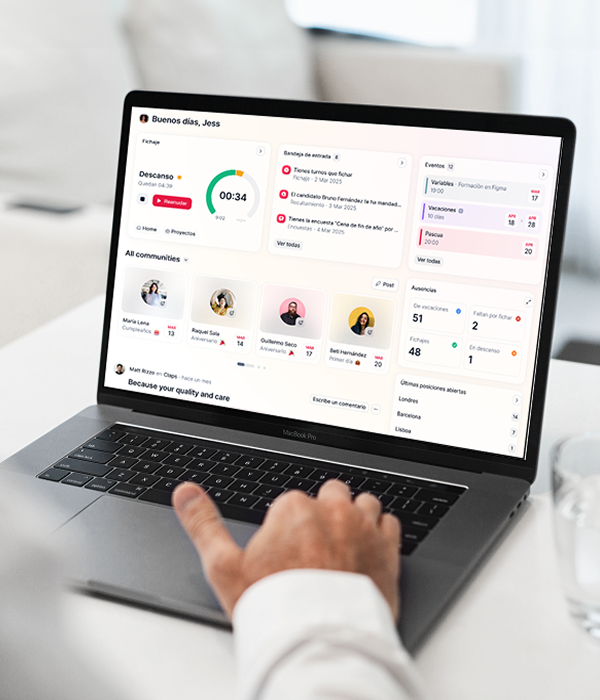
Also known as leave management software, absence management software is a digital program that allows companies to manage the processes involved in approving and tracking when employees are not working. Absence management includes paid or unpaid holiday, sick leave or other types of absences such as parental, compassionate or medical leave.
Absence management software can have many functions, including:
- Processing and approving leave requests
- Real-time tracking of leave
- Compliance with legal requirements
- Generating reports to help with identifying trends and issues
- Acts as an employee leave tracker for all types of absence
What Are the Core Benefits of Using Absence Management Software?
Manually tracking holiday allowances, approving leave requests, and communicating team availability is a complex process prone to error. Without a centralised system, businesses risk non-compliance with UK employment law and waste valuable administrative time.
Using a digital program to simplify the work involved in managing absence has many benefits:
- Enhances Legal Compliance: Automatically tracks statutory entitlements, such as the minimum 5.6 weeks of paid holiday for most UK workers, and adapts to changes like the 2026 Statutory Sick Pay reforms. This ensures accurate records are kept, as required by law (GOV.UK).
- Increases Administrative Efficiency: Automating requests, approvals, and calendar updates saves significant time for HR staff, managers, and employees, reducing the administrative burden of manual tracking.
- Improves Workforce Visibility: Centralised, real-time calendars provide managers with a clear overview of team availability, preventing scheduling conflicts and ensuring adequate cover for projects and shifts.
- Provides Actionable Insights: Reporting features allow you to identify absence trends and patterns. Acas says recording and measuring sickness absence can reveal absence-level problems, common reasons for sickness, and underlying causes that need action.
- Boosts Employee Morale: A transparent and easy-to-use system for requesting and tracking leave enables employees. Quick approvals and clear visibility of their own leave balances make staff feel their work-life balance is respected.
For context, the Office for National Statistics reported that 148.8 million UK working days were lost to sickness or injury in 2025, equivalent to 4.4 days per worker and a 2.0% sickness absence rate.
How Can UK Businesses Ensure Absence Policy Compliance?
Staying compliant with UK employment law is a primary function of modern absence management. From 6 April 2026, GOV.UK confirms that SSP is payable from the first day of illness, and the 2026/27 weekly rate is £123.25 or 80% of average weekly earnings, whichever is lower.
Key 2026 Legal Requirements
- Day-One SSP Entitlement: The three-day waiting period for SSP has been abolished. GOV.UK states that employers must calculate SSP from the first day of illness, subject to the employee’s qualifying days and average weekly earnings.
- No Lower Earnings Limit: The previous earnings threshold has been removed, extending SSP eligibility to all employees, including many part-time and lower-paid workers who were previously excluded.
- Statutory Holiday Entitlement: Software must correctly calculate the statutory minimum of 5.6 weeks’ paid annual leave for all workers, including pro-rata calculations for part-time staff.
- Record Keeping: UK law requires employers to keep adequate records to prove compliance with holiday pay and entitlement rules. An automated system provides an essential audit trail.
- Health-data protection: The Information Commissioner’s Office says employers handling workers’ health information must understand their UK GDPR and Data Protection Act 2018 obligations, including sickness and injury records.
Using a system like Factorial’s time off management software helps automate these complex calculations, ensuring your policies remain compliant with the latest UK legislation without manual intervention.
How Do I Choose the Right Absence Management Software for My Business?
Selecting the right software requires a clear understanding of your business needs, from current team size to future growth plans. Before comparing platforms, define your core requirements.
The following questions can be a helpful place to start thinking about what you need from an absence management program:
Does the software have an easy-to-use interface?
It might seem obvious, but some systems are easier to use than others. Given that one of the main benefits of using software to manage absences is inputting information easily and quickly, the software must be intuitive for everyone to use. It is as vital that both employees and those approving and managing leave requests can access the program and use it without any problems. Making it easy to ask for leave and see how much holiday you have taken sends a signal to employees that their time off is valued, making them feel appreciated and more engaged.
Can you customise the software to reflect your company’s leave policies?
Having an absence policy that is clear and specific to the needs of your business is a good idea, as it reduces areas of potential conflict between managers and employees. Your policy is also a communication tool for explaining how, as a company, you view absence and the impact it can have. The system you choose needs to reflect the policies you have put in place, so check that you can customise it.
Can the software integrate with other systems you have?
In many cases, absence management software is part of a broader human resources information system (HRIS), so integration with other systems is not an issue. However, it always pays to check if the software can be integrated with any external systems you are still using. For example, some HRIS create payroll reports, which are then sent to bookkeepers to pay employees. As leave can influence payroll, checking that systems can talk to each other is essential to avoid adding manual stages to a process you aim to make as automatic as possible.
Is the leave management software cloud-based?
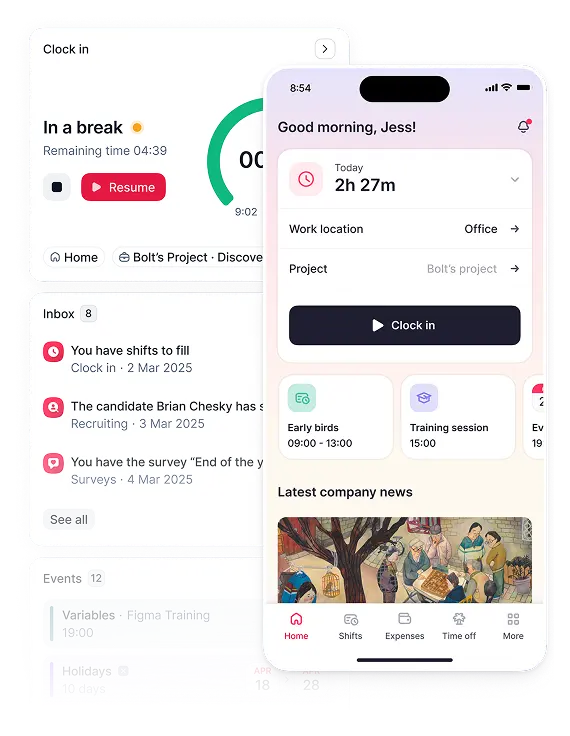
Again, it is possible to assume that all programs are cloud-based, and it’s safe to say that most are, but it always pays to check. You want employees and managers to be able to use the program wherever they are, especially if they are reporting in sick for the day. It doesn’t mean having a mobile app is essential, although you might feel it is for your business. It does mean that everyone needs to be able to access the system wherever they are based.
Is the leave management software compliant with current legislation?
A legal framework protects employees’ rights to leave, covering holidays, sick pay, and parental leave. Your chosen software must be fully compliant with UK law, including the Working Time Regulations 1998 and the latest 2026 SSP updates. The provider should guarantee automatic updates as legislation evolves.
Does the software automatically update?
As well as the absence management software updating with changes to legal requirements, it also needs to update if you change a contract or personal information. The beauty of these systems is that they should do this – one of the main ways to save you time and money – but always check for any loopholes. For example, if you customise the program for your specific leave policies, ask how legislative updates will work.
Is the software completely secure?
The absence management software you choose will be responsible for processing and storing confidential data about your employees. All software programs will promise your data is secure, but it pays to spend some time asking the difficult questions about how they guarantee this and what happens if there is a data breach or the systems go down.
Can I try before I buy?
A free trial or a demo is a good idea, allowing you to road-test the new system without committing. Typically, absence management software will be used by the whole workforce. Therefore, having a trial can be even more helpful for this type of software than for others. If people need help to use the software to manage their leave requests, there are probably better choices for your company.
What Is the Best Absence Management Software?
Now we know what to look for, let’s have a look at the best options out there:
| Tool | Best fit | Pricing | Trial/demo |
|---|---|---|---|
| Factorial | UK SMEs | From £5.40/user/month | Demo |
| BambooHR | HR records | From £8.10/employee/month | Quote |
| BrightHR | HR advice | Quote-based | Demo |
| CharlieHR | Small teams | From £21/month after intro offer | 7 days |
| Timetastic | Leave-only teams | From $1.50/user/month | 30 days |
1: Factorial
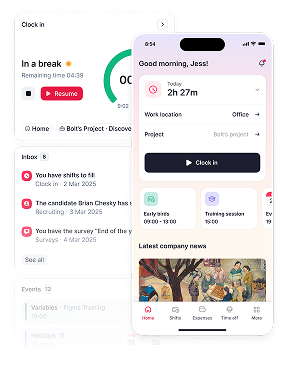
Factorial’s human resources information system (HRIS) is intuitive, easy to use, and designed for smaller and medium-sized businesses. Their technology is robust and secure, and the system puts communication at its heart to ensure that employees and managers can work collaboratively. By helping the whole team work together, Factorial’s approach can improve employee well-being and engagement, leading to gains in productivity.
The employee holiday and absence management software is part of their comprehensive HR system, so requests for leave can automatically be integrated with contract information and payroll for the month if necessary. With their leave management system, you can manage requests from your mobile or desktop, generate reports for individuals, projects or divisions, and customise the program to reflect the company’s absence policy.
Factorial’s Key absence management features:
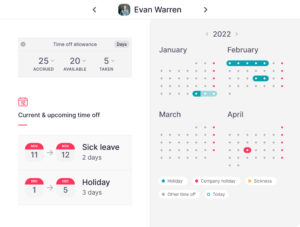
- Shared calendar: Gain full visibility into your team’s absences with an automatically synced calendar to view upcoming and overlapping days off.
- Customisable time off policies: Create custom policies based on location and contract type. Additionally, set PTO accrual limits and blackout dates to avoid scheduling conflicts.
- Simplified approval workflow: Approve holiday requests straight from your mobile – in just a few clicks. Receive real-time notifications to stay on top of managing your team’s absences.
- Centralised system: One centralised location to manage time off requests and employee attendance.
- Holiday entitlement calculator: Automatically calculates statutory holiday allowances according to UK law to ensure compliance with working time regulations.
Pros
- ✅ Free demo
- ✅ Transparent pricing model
- ✅ Mobile app as well as desktop
- ✅ Can easily customise the program to reflect your own absence policies
- ✅ Employees can keep track of their own holiday allowance
- ✅ Easy to link external calendars with the software
- ✅ Centralised absence database
Cons
- ❌ Some users report lags when using the mobile app
- ❌ Difficult to edit leave requests once approved
- ❌ Limited integration with third-party software
Pricing
According to the pricing page, plans start at £5.40 per user, per month.
2: BambooHR
Based in the US, BambooHR works with medium-sized businesses to simplify critical functions and tasks throughout the life cycle of an employee. Their system is structured into ‘essentials’ and ‘advantage’ and covers recruitment and onboarding, time tracking and leave management, performance management and payroll. BambooHR aims to ensure the administrative processes behind people management run smoothly, giving leaders the confidence to focus on more strategic work.
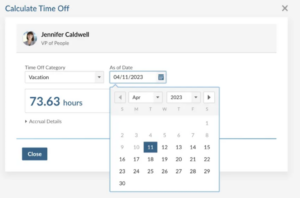
BambooHR’s time management software is part of their essentials package. It provides employees with an easy-to-use overview of their leave records, sends automatic notifications when leave is approved and generates reports on upcoming leave and absence trends.
Pros
- ✅ Mobile app available
- ✅ Free trial
- ✅ Easy to customise for individual departments
- ✅ Also includes an employee wellbeing tool to help understand absence trends
Cons
- ❌ Users report issues with payroll integration, which can impact leave management
- ❌ Can be considered expensive compared to other platforms
- ❌ Some of the language and approach can feel less relevant for a UK-based workforce
Pricing
3: BrightHR
UK-based BrightHR works with up to 90,000 businesses to simplify their HR and health and safety processes and support employee wellbeing and training. They provide intuitive software for all aspects of people management, including recruitment, rota-planning, absence management and payroll reports.
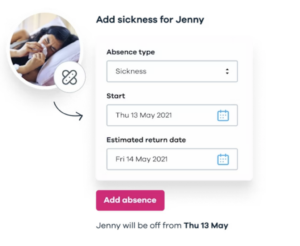
Their HR software includes a staff holiday planner and a reporting tool for sick leave and lateness. The holiday planner ensures that employees take their legal entitlements and flags any clashes in requests for leave. Within the sickness reporting tool, employees can take photos of hospital letters and self-certification forms and upload them directly, avoiding the need to find a scanner.
Pros
- ✅ Available on mobile
- ✅ Includes employee assistance programme, Bright Wellbeing & Counselling
- ✅ Allows you to quickly see who is available for cover if someone is off sick
Cons
- ❌ Users don’t always find the interface as intuitive as they had hoped
- ❌ Customisation can be limited
- ❌ Users report it is hard to change employee details once already amended
Pricing
Contact the BrightHR sales team to arrange a demo and get a personalised quote.
4: CharlieHR
CharlieHR is a London-based company that provides a software system which aims to give HR executives and managers more headspace and the right data to make the best decisions in terms of the workforce. Their system covers onboarding recruits, managing time off and performance, monitoring employee engagement and providing perks and benefits.
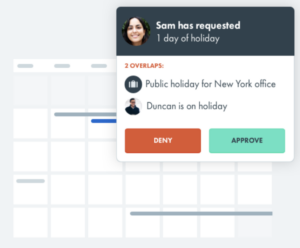
CharlieHR’s absence management software includes a function to delegate approval, can be customised for specific policies and part-time workers, and allows managers to spot and manage clashes ahead of time. It also keeps track of absences and can help you spot trends and issues that need addressing.
Pros
- ✅ User-friendly
- ✅ Community to share experiences and learn from others
- ✅ Users report excellent customer service
Cons
- ❌ Users can find the system clunky when searching for specific information
- ❌ Customisation can be limited
- ❌ Reporting tools are not as easy to use as other platforms
Pricing
According to the pricing page, the 1–4 employee plan is £5 per month for the first 6 months and £21 per month thereafter, whilst the 5–9 and 10–14 employee brackets are £47 per month.
5: HiBob
HiBob’s platform simplifies people management to drive company engagement, culture and productivity. It uses a social media look and feel to ensure its system is accessible and able to be used by all. The HiBob platform covers onboarding, leave and attendance, payroll and performance management. There is a people directory, document storage and a tool for whistleblowing or sharing feedback anonymously called Your Voice.
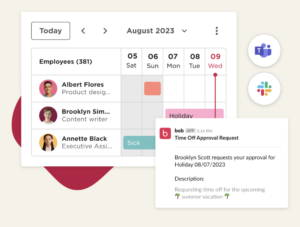
Within the time off section of their programme, you can quickly submit and approve leave requests with push notifications in Slack, MS Teams or HiBob itself. HiBob’s leave management software lets you customise policies for different employees and track time off easily with the automatically updated calendar.
Pros
- ✅ Mobile app available
- ✅ Easy-to-use interface
- ✅ Customised reports available so you can track absence trends
Cons
- ❌ Users report some issues integrating with other systems
- ❌ Some organisations report technical issues and security concerns during onboarding
- ❌ Difficult to access the admin tools on the mobile app
Pricing
Contact the HiBob sales team to arrange a demo and get a quote.
6: NaturalHR
Established in the UK in 2010, NaturalHR offers a flexible HRIS and help their clients get the most out of their reliable, flexible and low cost system from day one. They offer an all-in-one system that includes payroll as well as absence management, time tracking, documentation storage, recruitment, training and performance management.
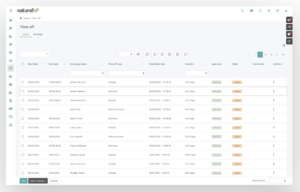
Their absence management tool allows companies to keep track and monitor absence, generate Bradford factor scores of all employees, automatically calculate leave summaries for individual employess and run reports on absences to identify trends. Through their leave management software, managers can gain greater control over their workforce.
Pros
- ✅ Intuitive return to work forms
- ✅ Engaging and easy-to-use interface
- ✅ Reporting tools allow you to see trends in absences
- ✅ Users report good customer support
Cons
- ❌ Some users find the reporting less intuitive than it could be
- ❌ Can be difficult integrating with other platforms
- ❌ Limited customisation options
- ❌ No free trial
Pricing
7: Humaans.io
Humaans is new to the HRIS space, being established in 2020. Their goal is to automate the whole life cycle of an employee and create simple workflows from current comple manual processes. They want to do this by a ground-up approach so their system becomes the foundation layer on which the rest of the company’s tech stack can be built.
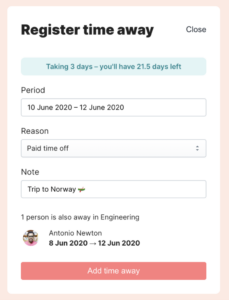
Their core HR system includes documentation management, absence tracking, workflow builder and an employee database. The absence tracking allows you to capture half days, working from home or remotely and supports 14 different types of leave with the additional capacity to add extra fields if you need. There is also the flexibility to create different start dates for holiday cycles, carry over days and accommodate unlimited leave.
Pros
- ✅ Integrates with Slack and calendars
- ✅ Free 14-day trial
- ✅ Mobile app to emplopyees can submit leave requests whenever they want
- ✅ Reporting set up to include a focus on DE&I
Cons
- ❌ Users note it would be good to be able to create customised templates for reports
- ❌ As a relatively new platform, users feel that some areas are still being developed.
- ❌ Provides a summary for payroll rather than directly talking to accounts
Pricing
According to the pricing page, Growth, Enterprise, and Athena plans are quote-based via sales, the page no longer publishes a £5 per person, per month starting price.
8: Personio
Personio provides a comprehensive software for human resources that covers HR management, talent management and payroll. They work with companies of between 10 to 2000 employees and have offices in seven cities in Europe. Personio’s aim is to make HR processes as transparent and efficient as possible so there is more time to focus on the people themselves.
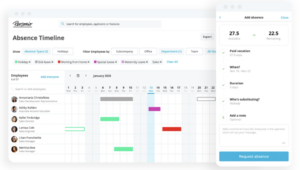
Their absence management software allows managers to process leave requests quickly. It also gives them easy access to calendars detailing who is on leave and calculates individual employees leave requirements. Additionally, you can run reports so you can track any trends in absences and take action.
Pros
- ✅ Easy to use interface
- ✅ Claims to save 80% of time on leave approvals
- ✅ Reports can be used to track wellbeing
- ✅ Includes anonymous communication channel for employees
Cons
- ❌ Some users find the dashboard clunky on smaller screens
- ❌ Currently does not include a policy for unlimited annual leave
- ❌ Limited customisation options
Pricing
9: Timetastic
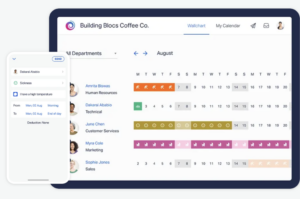
For nearly ten years, Timetastic have been helping businesses manage their absences with their dedicated software that focusses purely on absence management. Their software is available as an app on mobile and desktop, and allows companies to manage holiday requests, identify sickness trends and keep track of annual allowances.
Timetastic offer two different packages. The Core Plan includes shared calendars, holiday allowance approvals and records, and a mobile and desktop app. With Timetastic Pro, you can also get absence reports and insights, integration with other platforms and enhanced user profiles- plus an alert if employees are in danger of burning out.
Pros
- ✅ Intuitive interface
- ✅ Easily handles employees requests in hours as well as days in terms of when people work and want to take their leave
- ✅ Mobile app available
- ✅ One month free trial
Cons
- ❌ Some users feel there could be more flexibility in the leave system such as not having to resubmit a request when making small changes
- ❌ Can sometimes take a day to sync leave requests with external calendars such as Google
- ❌ Limited customisation options
Pricing
According to the pricing page, Leave & Absence Business costs $1.50 per user, per month, Pro costs $2.50 per user, per month, and Rota & Time Clock costs $5.50 per user, per month.
The information presented on this page is based on publicly available sources and not limited to,,, Capterra public reviews, G2 public reviews, and trustpilot public reviews. The comparisons between Factorial and other providers are intended solely for the illustration of the respective software features, pricing and functionalities. All information regarding features, prices, and integrations may be subject to change without prior notice. Factorial assumes no liability for the accuracy, completeness, or timeliness of the information presented. We recommend contacting the respective providers directly to obtain the most accurate and up-to-date information. All legal regulations regarding UK fair advertising and competition law are fully observed by us, if you have any concerns, please reach out to us. The comparisons presented do not constitute a final evaluation or recommendation for any provider, but serve solely as an informational source.
How Should Employers Compare Absence Management Software?
- Check whether the system records annual leave, sickness, parental leave, TOIL, and unpaid leave.
- Confirm how SSP and holiday entitlement rules are updated.
- Review payroll export or integration options.
- Test manager approvals, employee self-service, reporting, and mobile access.
- Ask whether sickness reasons and health records can be permission-restricted.
FAQ
What is the best software for attendance management?
The best software provides a centralised system for real-time tracking and reporting. An all-in-one business management software like Factorial allows you to monitor attendance with automated clock-in/out features, generate instant reports, and ensure accurate payroll, making it an ideal solution for simplifying operations.
What is the best software for tracking leave?
The best leave tracking software allows you to create custom policies, view team availability on a shared calendar, and simplify approvals. Factorial’s all-in-one business management software centralises all leave requests, automates holiday calculations to ensure compliance, and allows managers to approve time off in just a few clicks.