Skip to content

Secrets worth millions, for free.

Everyone wants to know Coca-Cola's secret. But what about Microsoft's, Mercedes-Benz's, or L'Oréal's? Receive a monthly selection of the stories, insights, and playbooks from Europe's most successful companies.

Want to know how Microsoft, L'Oréal, and other leading companies do it?

Get their stories, insights, and playbooks every month.

Transcription

00:09

Let's start with question number 1: Is employer branding more important than the actual employee experience?

00:15

A) Branding first — attraction.B) Experience first.

00:20

C) Alignment wins.Or D) The Joker.I actually find all the answers really compelling, so I'll go with D), the Joker.

00:28

All great answers — I would definitely go with C.

00:47

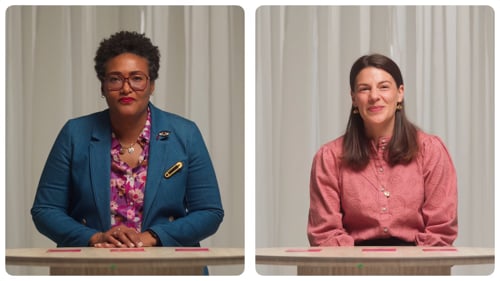
Great to see you. Likewise.Do you want to start?Yes, absolutely — I went with C.

00:57

Alignment — I believe today, compared to the past, employer branding used to be very campaign-heavy.

01:06

But I think today it's extremely important to also show the real moments inside the company across various channels.

01:15

Employees are very active on different platforms, and I think that's exactly why it's so important not to just project an image,but to simply show the real moments that happen inside the company.

01:27

And that's why I think it's a blend of both.Yes, I also consciously chose the Joker,because I think if you look at the three areas, they each have their own legitimate place.

01:40

But of course you also need the experience on the company side — meaning you truly stand behind what you project outwardly,it's already moving in the direction you want to communicate externally — but there should also be a certain reality behind it.

01:52

And that's essentially what you said with C.It should actually work exactly that way.

01:57

I'm sticking with the Joker, because I feel all three points are somehow valid and they interconnect.

02:01

And so I think you can no longer focus too heavily on just employer branding — you need to decentralize the whole thing a bit and say,hey, in the past it was employer branding versus the employee perspective, and today it goes hand in hand.

02:14

Absolutely, absolutely.Because I think if you put on a show and certain people have an expectation of the company, but are actually in a very different phase themselves or expect something completely different — then afterward you might end up again with a higher turnover rate, or people leaving the company again — which translates into costs.

02:35

I can draw a very clear parallel to the sales perspective there.

02:39

If the product doesn't deliver what the marketing campaign promised externally, you'll see cancellations coming in faster, churn rate increases — and you can compare that one to one with how it works here too.

02:49

If a company presents itself externally as far better than it actually is internally, you might attract the right candidates at first — but they won't stay long if what they were actually looking for simply doesn't exist in the company's reality.

03:02

That's why I'd say that aligns very, very well.

03:08

Question number 2: What role will technology play in recruiting in the future?