The cost of employee turnover is what your business spends or loses when someone leaves. It can include overtime to cover the vacancy, the wages of people running interviews, equipment for the replacement and time spent bringing them up to speed. Even an interview nobody attends can use paid staff time.
This guide explaines the cost of employee turnover by showing you how to build an itemised turnover estimate, put a figure on a missed interview and use your own records to budget for the next departure.
What costs should you count when an employee leaves?
Start with the work the departure creates. Who runs the handover? Who covers the shifts? Who interviews the replacement and gets their laptop ready? Then ask which costs your business would have incurred anyway. That gives you a better estimate than taking a percentage of the leaver’s salary.
| Stage | What to check | Where to find it |
| Handover and departure | Manager handover time, HR admin and IT account closure | Staff time estimates and offboarding records |
| Vacancy cover | Extra overtime, temporary cover or work sent to a supplier | Payroll, rota and invoices |
| Recruitment | Job adverts, screening, interviews and pre-employment checks | Finance records and the hiring calendar |
| Equipment and setup | New devices where needed, courier charges, IT setup time and extra licences | IT inventory and supplier invoices |
| Onboarding and training | Time spent on induction, coaching and supervised work | Training records and manager estimates |
Keep track of whether each line is extra money paid out or time used by people you already employ. Paying £220 for an advert adds to your bills. Two hours of interviews run by a salaried manager use time you have already bought. Both matter when you plan, but only the advert adds £220 to your cash spending. Use the same distinction when reporting the wider cost of your recruitment and selection process.
If you close the role after someone leaves, you may still have handover and admin costs. Only include replacement costs when you actually plan to fill the role. For a budget forecast, mark these costs as estimates until the work takes place.

How do you price staff time and a missed interview?
Multiply the time spent by each person’s hourly employment cost. Ask finance what to include in the rate. For example, it might cover gross wages, employer National Insurance and employer pension contributions. An annual employment cost of £58,500 divided by 1,950 paid hours gives an illustrative rate of £30 an hour. Use a consistent basis across roles, even if the rates differ. The payroll guidance on GOV.UK explains how employer National Insurance fits into payroll.
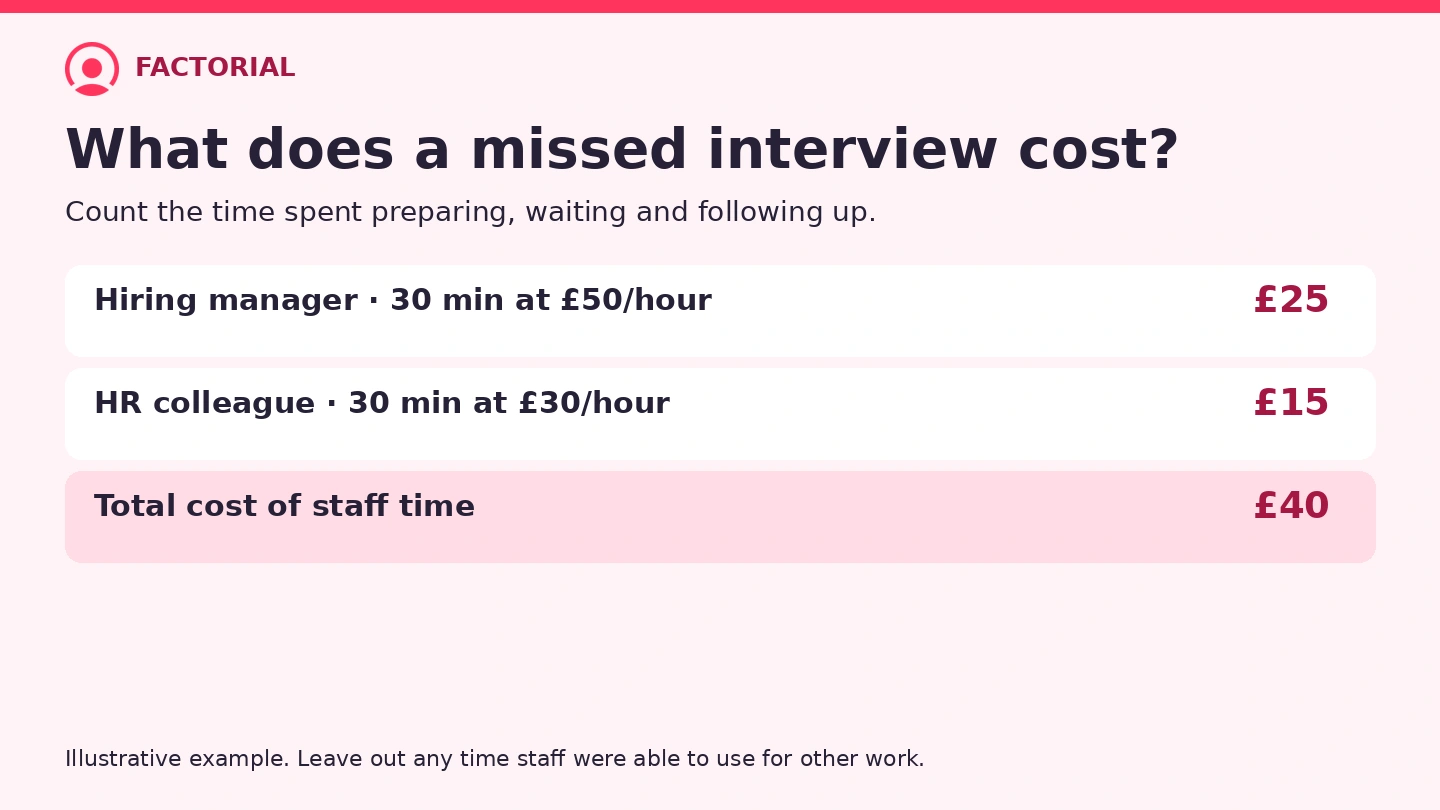
Count preparation and follow-up as well as the interview. If HR reviews applications for six hours, that goes on the screening line. If a manager spends another hour writing interview questions and comparing notes, put it on the interview line. Ask people to estimate actual time spent so that a calendar booking does not become your only evidence.
| Missed interview example | Time used | Hourly cost | Cost |
| Hiring manager prepares and waits | 30 minutes | £50 | £25 |
| HR checks the booking, waits and follows up | 30 minutes | £30 | £15 |
| Total | 1 hour | £40 |
The £40 is the cost of time actually used, which figures into the cost of employee turnover in a big way. If the panel booked an hour but returned to other work after a short wait, leave that recovered time out. If you took people off a shift and someone else had to cover, add the extra paid cover only if it is a separate cost. If you already include a panel’s full time in the interview total, a no-show can be labelled within that total so it is counted once.
If missed interviews keep happening, check when and where candidates drop out. For example, you might find that interviews booked more than a week ahead are missed more often. Test reminders or an easier way to reschedule, add the agreed steps to your recruitment process policy, then compare attendance and time to hire before and after the change.
How much does it cost to replace one employee?
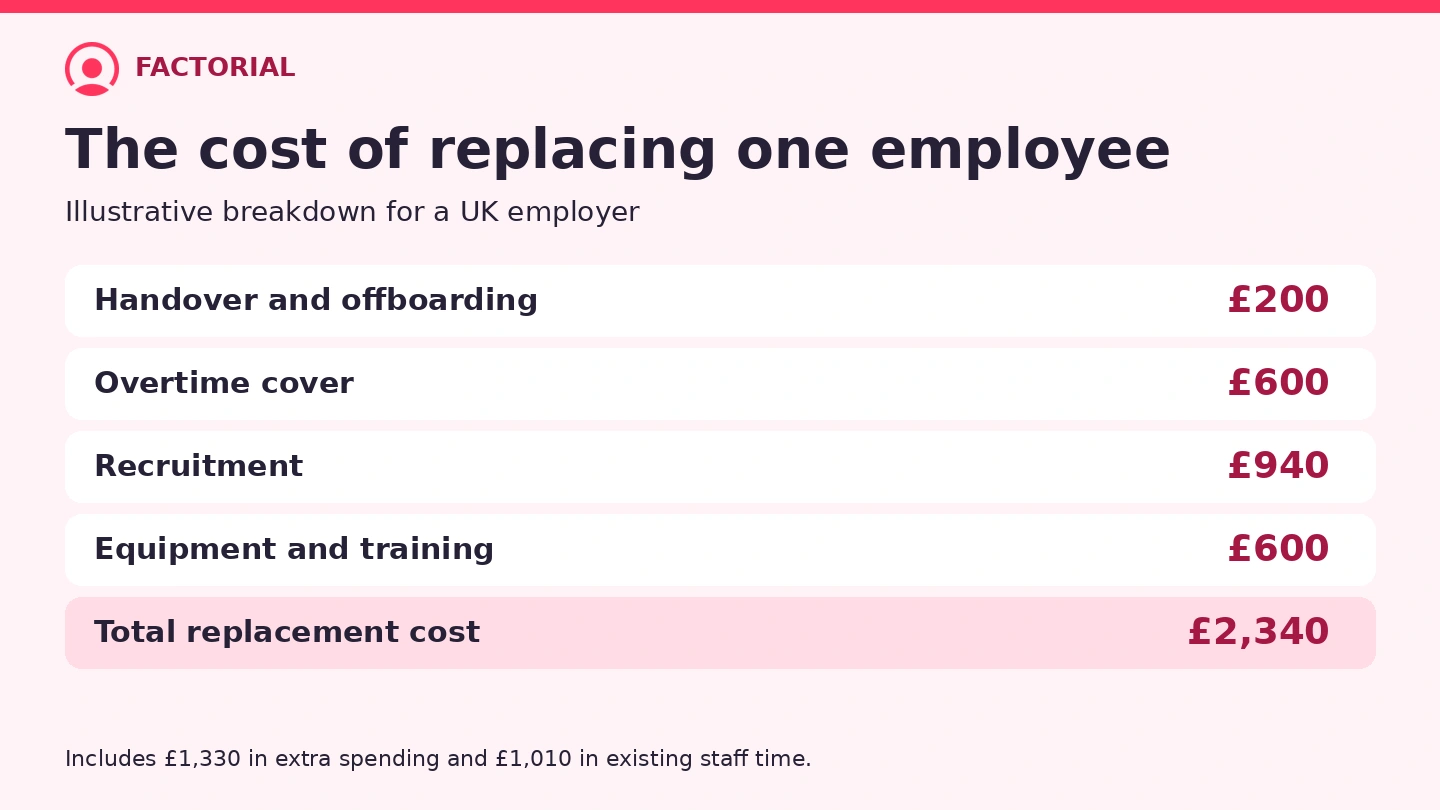
Here is an illustrative example for a UK business replacing an office-based employee. The vacancy is covered with some paid overtime before the replacement starts. The business recovers the old laptop and can use it again. Prices and hourly rates are assumptions for the example, so use your own figures when you build a budget.
| Cost item | Calculation | Cost |
| Manager handover | 3 hours × £40 | £120 |
| HR and IT offboarding | 2 hours × £40 | £80 |
| Overtime to cover the vacancy | 20 hours × £30 in extra employment cost | £600 |
| Job advert | One paid posting | £220 |
| HR screening and scheduling | 7 hours × £30 | £210 |
| Attended interviews | 4 hours each for a £50/hour manager and £30/hour HR colleague | £320 |
| Missed interview | Manager and HR time from the example above | £40 |
| Employee background checks | Supplier invoice | £150 |
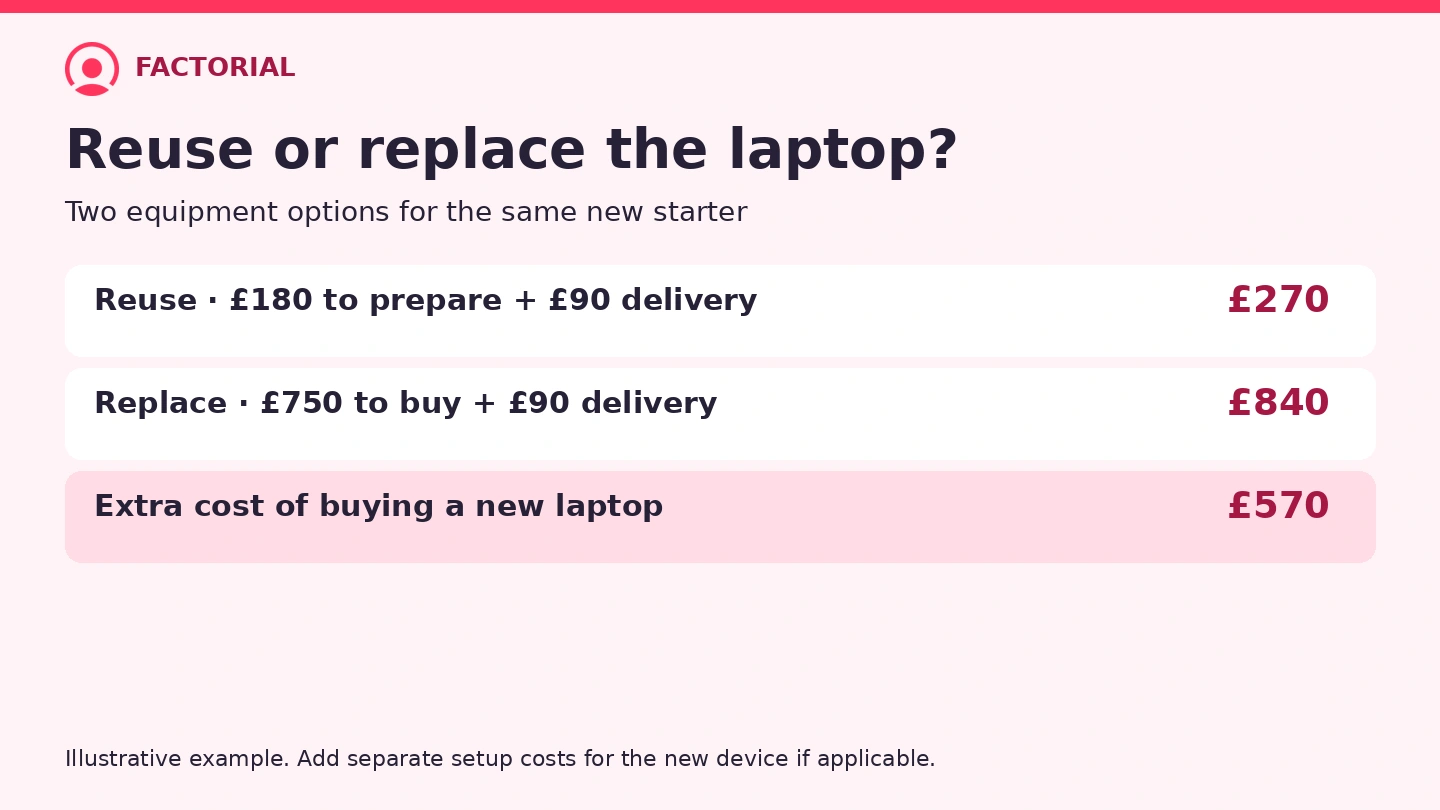
| Laptop preparation and delivery | £180 supplier refurbishment and setup + £90 delivery | £270 |
| Manager and buddy training time | 8 combined hours at an average of £30 | £240 |
| External training materials | One supplier charge | £90 |
| Total | £2,340 |
In this example, the business spends £1,330 in extra cash and uses £1,010 of existing staff time. The recruitment lines add up to £940, and the rest comes from the handover, vacancy cover, equipment and training. Looking at the lines individually makes it easier to see where to act. Here, overtime costs more than the advert and screening combined.
Should you include the full price of a laptop?
Include the cost you expect the departure and replacement to create. In the example, the laptop is reused, so the business counts £270 to prepare and deliver it. If it has to buy a new laptop for £750 and pay the same £90 delivery charge, and those costs replace the £270 line, the total becomes £2,910. Add any separate setup cost if the new device still needs it. Use the same approach for monitors, uniforms and software seats. A licence you can transfer may have a setup cost, while a new subscription may add another bill.
Record what needs returning before the person leaves, and confirm what you can reissue before ordering replacements. Put those steps in your employee life cycle so HR, managers and IT know who owns each one.
How do you estimate lost output and annual turnover costs?
Track what happened to the work while the role was empty and during the first few weeks after the replacement arrived. Some of it may have been completed by other people, while some may have been delayed or lost. Use the measure you can support, such as jobs completed, orders processed or billable hours delivered.
| What happened | How to handle it |
| Another team member did the work on paid overtime | Count the additional overtime cost. |
| The work was delayed and completed later | Record the delay and any extra cost it caused. |
| The business lost work it would otherwise have delivered | Estimate the contribution you lost after the direct costs you would have incurred. |
| The new starter needed more time at first | Track the gap against the output you normally expect at that stage and keep the estimate separate from training costs. |
For example, suppose the business can show that the new employee’s first weeks produced £360 less contribution than expected, after allowing for work covered elsewhere. Add that separately to the £2,340 itemised estimate to get £2,700. If the £360 already reflects the same hours included in the training line, check the overlap before adding it. If there is too little evidence to give the output gap a reliable value, report it in hours or jobs and leave the money estimate open.
For an annual budget that accounts for employee turnover cost, group similar departures together. Assume you expect six office roles to be replaced at £2,340 each and two specialist roles at £5,000 each. That gives a planning estimate of £24,040 before any separately measured loss of output. If finance needs the net impact on the payroll budget, show any salary savings from the vacancy separately. If departures are rare, use a low and high estimate based on how many people might leave and whether you would replace them. Compare the forecast with actual costs at the end of the quarter.
Where can employers reduce the cost of turnover?
When it comes to the cost of employee turnover, start with the biggest cost you can influence. If overtime is the largest line, check whether you can train another team member to cover key tasks before a vacancy opens. If equipment is expensive, make sure devices are returned and checked early enough for the next starter. If the same positions keep reopening, look at what people say about the role and their first few months.
| Pattern you notice | What to look at first |
| Departures soon after joining | Check whether the advert, interviews and first weeks gave people a clear picture of the job. |
| Vacancies repeatedly need expensive cover | Identify the tasks another team member could learn and who could cover them. |
| Staff leave from the same team | Review the reasons people give and look for a common issue with workload, hours or progression. |
| Hiring costs rise even when departures stay steady | Check spending by role and source, including staff time and paid postings. |
Use your HR KPIs to agree what you will check next quarter. Track the employee retention rate alongside the cost figures. That helps you see whether you are spending less per departure, having fewer departures or both. The CIPD explains how to use turnover and retention measures to understand where staff are leaving.
How can Factorial help you track and reduce employee turnover cost?
Give each cost line an owner. Finance can confirm supplier bills and overtime costs. Hiring managers can log interview and training time. HR can keep the dates and stage records that show how long a role was open and what happened before the person started.
- Keep hiring records together. Use Factorial’s applicant tracking system to manage vacancies and candidate stages. Use interview and start records alongside your finance figures to check where time and money went.
- Assign tasks when people join or leave. Use onboarding and offboarding software to organise tasks and who owns them. For example, assign one person to confirm equipment return and another to set up induction.
- Review your figures with managers. Use your HR metrics to bring turnover, hiring time and retention into the same discussion. Agree one change to test and measure its effect the next time a role opens.
Start with the last vacancy you filled. Pull the invoices, ask the people involved how much time they spent and check whether equipment was reused. That gives you a figure you can explain to finance and a starting point for the next recruitment budget. Request a free demo of Factorial to save time collecting data and get instant insights instead!

FAQs about the cost of employee turnover
Divide the number of people who left during the period by the average headcount for that period, then multiply by 100. If 8 people left and you had an average of 80 employees, turnover was 10%. Use the same dates and group of employees for both figures.
Choose a regular reporting period and agree which departures count. If headcount changes a lot during the year, use several headcount snapshots to work out the average. You can then report voluntary resignations separately if you want to understand where retention might need attention.
Add up the costs linked to the departure, vacancy cover, recruitment, equipment and onboarding. Separate extra spending from the cost of staff time. Include a lost output estimate only where you have enough evidence to value it and can check it against other lines to avoid counting it twice.
For one departure, use the total you can trace to that case. For an average, divide total turnover costs by the number of departures covered by those costs. For example, £12,000 across five departures gives an average of £2,400. Compare similar roles when you use the figure to forecast.
Turnover varies by industry, occupation and time of year. Compare with organisations that employ people in similar roles and use the same definition of a leaver. For your own business, look at how the rate changes over time and whether departures are concentrated in one team or stage of employment.