Skip to content

Secrets worth millions, for free.

Everyone wants to know Coca-Cola's secret. But what about Microsoft's, Mercedes-Benz's, or L'Oréal's? Receive a monthly selection of the stories, insights, and playbooks from Europe's most successful companies.

Want to know how Microsoft, L'Oréal, and other leading companies do it?

Get their stories, insights, and playbooks every month.

Transcription

00:06

what tips the scale might not just be the fastest, best, most optimized process, but also the personal one.

00:15

The job market in Germany has fundamentally changed, and so has the way companies attract and retain talent.

00:21

In this episode we talk about a topic that truly affects everyone — one that carries responsibility for growth and people.

00:28

What does modern hiring look like in Germany today?

00:31

What does it look like and where are the key levers?

00:35

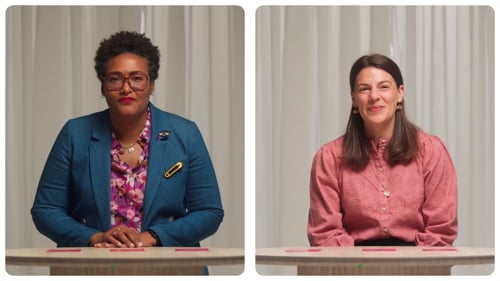
To explore this topic, we welcome today Kerstin Markut from Factorial and Andreas Gabelsberger, founder of SaaSlyte. And this is On the Deck.

00:44

Let's go!

00:53

Hi, my name is Kerstin.I'm the Team Lead for the SDR Outbound team at Factorial, and today I'll be talking with you about the topic: The evolution of hiring in Germany.

01:04

Hi, I'm Andreas.I'm co-founder of SaaSlyte.We support B2B SaaS and tech companies in building and scaling go-to-market teams.

01:19

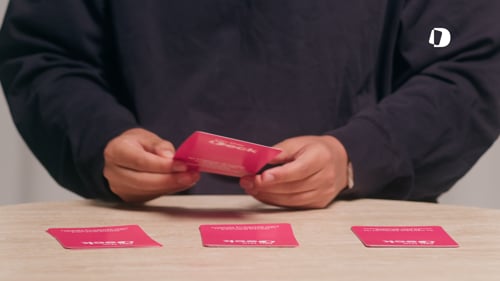
Hey Kerstin and Andreas — On the Deck works like this: first you'll each answer a question without knowing what the other will say, and then you'll have the chance to exchange views and discuss your answers. Let's go!

01:31

Let's start with question number 1: Is employer branding more important than the actual employee experience?

01:37

A) Branding first — attraction.B) Experience first.

01:42

C) Alignment wins.Or D) The Joker.I actually find all the answers really compelling, so I'll go with D), the Joker.

01:51

All great answers — I would definitely go with C.

02:09

Great to see you. Likewise.Do you want to start?Yes, absolutely — I went with C.

02:19

Alignment — I believe today, compared to the past, employer branding used to be very campaign-heavy.

02:28

But I think today it's extremely important to also show the real moments inside the company across various channels.

02:37

Employees are very active on different platforms, and I think that's exactly why it's so important not to just project an image,but to simply show the real moments that happen inside the company.

02:49

And that's why I think it's a blend of both.Yes, I also consciously chose the Joker,because I think if you look at the three areas, they each have their own legitimate place.

03:02

But of course you also need the experience on the company side — meaning you truly stand behind what you project outwardly,it's already moving in the direction you want to communicate externally — but there should also be a certain reality behind it.

03:14

And that's essentially what you said with C.It should actually work exactly that way.

03:19

I'm sticking with the Joker, because I feel all three points are somehow valid and they interconnect.

03:23

And so I think you can no longer focus too heavily on just employer branding — you need to decentralize the whole thing a bit and say,hey, in the past it was employer branding versus the employee perspective, and today it goes hand in hand.

03:36

Absolutely, absolutely.Because I think if you put on a show and certain people have an expectation of the company, but are actually in a very different phase themselves or expect something completely different — then afterward you might end up again with a higher turnover rate, or people leaving the company again — which translates into costs.

03:57

I can draw a very clear parallel to the sales perspective there.

04:01

If the product doesn't deliver what the marketing campaign promised externally, you'll see cancellations coming in faster, churn rate increases — and you can compare that one to one with how it works here too.

04:11

If a company presents itself externally as far better than it actually is internally, you might attract the right candidates at first — but they won't stay long if what they were actually looking for simply doesn't exist in the company's reality.

04:24

That's why I'd say that aligns very, very well.

04:30

Let's move on to question number 2: What role will technology play in recruiting in the future?

04:36

A) Human-centered selection, B) AI-driven efficiency,C) Augmented Recruiting, or the Joker.

04:47

Here I go with answer C.I'm clearly going with C — Augmented Recruitment.

04:57

Here too, it was actually the same again.I found all three answers compelling.

05:01

When we think about how exactly recruiting works today — you often don't have just one open role, you have several running in parallel.

05:09

You don't just have one applicant — sometimes hundreds.

05:14

I still remember when I was in recruiting — I sometimes had 200 applicants for a single role, and sometimes I would have loved to have an AI supporting me.

05:24

I wouldn't have wanted to hand over the whole process, because I've always recruited in a very human-centered way — but that kind of support would be great. So if I were to say now, okay,I'll have an AI scan and screen CVs and make sure the AI really makes the decisions on who moves forward or not — then I'm already put off by that, because I know myself what it's like when your résumé has a gap in it, or you changed jobs after a year, or maybe even left during probation — then an AI, which is not designed for nuanced judgment but purely for scanning what's in front of it — certain aspects could simply get lost that a human interviewer or a person would evaluate and contextualize very differently.

06:03

That's why I'm truly a fan of saying: I'm happy to be supported in the processes — but I don't hand the wheel completely over to AI.

06:12

My number one tip — and it's so basic, it couldn't be more basic.

06:17

You have a candidate who comes in through an application, or through whatever channel.

06:21

You're the hiring manager, TA — don't just send an email saying how great it is that they applied — let's talk.

06:27

Call them. Call the person.99.9% — communication tools today are text, email, maybe WhatsApp sometimes.

06:40

Nobody actually calls people anymore.Tell that to my team.

06:44

And again here — sales and recruiting are blending into each other.

06:49

But call the person, and they'll say: hey, that's something new,because all I get now are emails and invitations — no one actually calls anymore, and they appreciate it.

06:59

And with that you've already created that first emotional connection — setting yourself apart from the competition.

07:04

Which is probably also an important factor in the decision,because you'll definitely notice it too — good candidates today have multiple offers, and what tips the scale might not only be the fastest, most optimized process, but also the personal one.

07:26

Now for question number 3: At what point does it make sense to hire new employees?

07:32

A) Reactive hiring, B) proactive hiring,C) strategic hiring, or D) the Joker.

07:41

All answers have their place,but here I choose C).

07:46

All important points.I think the combination is what makes it work, from all three angles.

07:51

So I'll take the Joker.

07:56

Right — feel free to start.We had 3 great choices.

07:59

Why did you decide on none of them?I have to honestly take a quick look at this again.

08:06

I think we live today — or from my perspective — I work a lot with startups and scaleups, and they're in very different stages.

08:14

Large corporations today also find themselves in very different phases.

08:19

And I think none of the 3 answers alone is correct.

08:26

I believe each answer is right at a certain point in time.

08:30

Yes, I chose the Joker.I think today it's no longer about when should I hire — it's more about: how early do I know, how early do I have the best knowledge about the talent market I'm hiring in.

08:51

And then I can cover those three areas individually and say: okay, I am informed, I know where other companies might be struggling,where there might be layoffs, how salaries are evolving,how candidate profile requirements are shifting.

09:08

And if I have that information, then I can always act specifically based on my own needs — hire proactively when needed, or hire reactively, or build strategic plans.

09:18

Yes, and from that I could for example also say:if I find someone I really want to have, but I don't have the budget — then two questions actually arise.

09:26

One is: can I hire this person even without the budget — and what costs does that generate?

09:31

On the other hand: what happens if I do hire the person,if this top talent joins us and perhaps requires less onboarding because they already have experience in the field — and then closes more deals,generates more revenue — then the costs that I initially balked at because the budget wasn't planned, end up offsetting themselves.

09:49

On the other hand, I'm also genuinely a fan of really thinking through where you want to grow as a company.

09:56

Do you want to expand the existing market?Do you want to enter a new market?

09:59

And then there obviously needs to be a basic setup in place to say: okay, I want to hire 5 people in the next year, or I need someone with the technical expertise or the language skills so I can always keep my eyes and ears open.

10:09

Would you agree with me if I say the hiring process doesn't end at the offer — it might only end after a year, once the person has already started at the company?

10:20

Because you brought up the topic of strategic hiring — for me that also means that the groundwork within the company needs to be in place.

10:27

I can't hire 13 people if I then have no plan for what happens next.

10:31

Because if I don't have that plan, I'll lose those people again — and we fall right back into reactive hiring.

10:38

So — how would you look at it?I do think it doesn't always end right at the hire.

10:43

You also have to look at whether the person stays through probation, how the onboarding goes,how long-term the person sees themselves at the company, how they develop.

10:50

That's why you really shouldn't always stop there — but for me it's also again about having a strategy: I plan that ahead of time too — how I bring people into the company.

11:01

Alright, that's a wrap — thank you both so much, and with that we close the discussion.

11:05

Discussion round for today.Super — that was fun, Andreas.

11:08

Likewise — see you soon.Hopefully it just keeps going the same way.