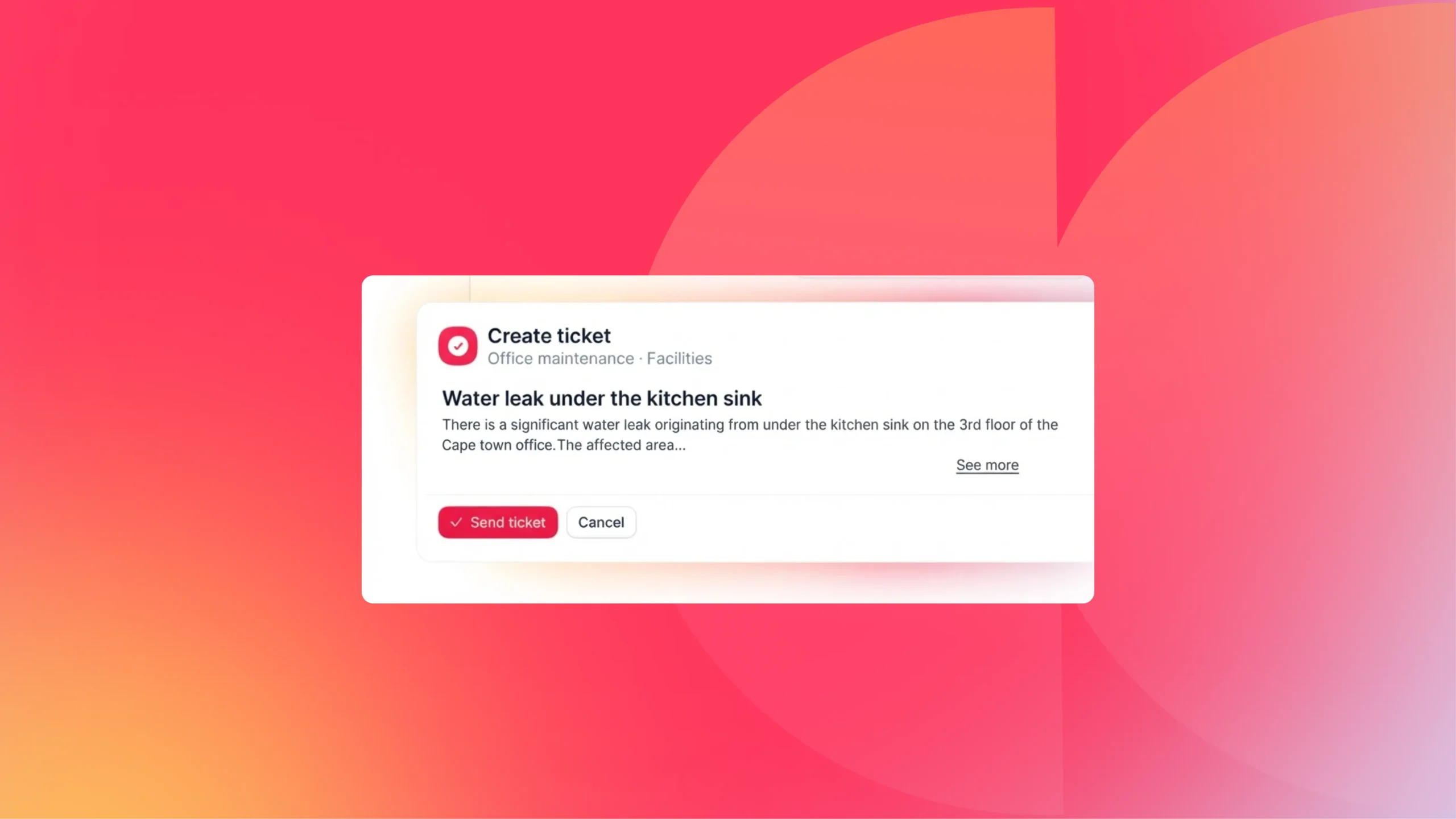
HR teams play a key role in attracting talent, developing employees and building productive workplaces. Yet administrative tasks like answering questions, preparing reports and coordinating recruitment often leave them with less time for strategic work.
Factorial One brings AI into team management, helping employees find information, create documents and automate repetitive tasks. This allows HR teams to spend less time on administration and more time focusing on people.
What is Factorial One?
Factorial One is Factorial’s AI agent for work. It connects company context, data and workflows to help employees move from asking questions to getting work done.
Rather than functioning only as a tool for generating text, One supports three ways of working:
- Ask: Get answers, analyse information and find relevant insights using connected company data.
- Delegate: Get help creating documents, reports, presentations and other work.
- Automate: Set up recurring tasks and workflows so that less work needs to be completed manually.
One is designed to work across business functions, including HR, Finance and IT. Its capabilities include answering questions about company policies, supporting recruitment, preparing reports and helping teams manage requests.
For HR professionals, the benefit is the opportunity to reduce repetitive administrative work without treating every people-related task as something that should be handed over to AI.
How Factorial One equips HR teams to spend less time on administration
1. Answer routine employee questions faster
Questions about leave balances, company policies, internal procedures and other workplace matters can take up a significant amount of HR’s time, particularly when employees repeatedly ask for information that already exists in company documents or systems.
Factorial One allows employees to ask questions and receive answers based on available company information and their existing access permissions. According to Factorial’s product information, One can also direct employees to relevant help resources and explain how to complete processes. For HR teams, this can reduce the need to respond manually to every routine query. Employees can find information when they need it, while HR professionals have more time for complex questions and situations that require personal attention.
For example, an employee who wants to understand a leave policy could ask One rather than wait for HR to reply to an email. HR can then focus on requests that require interpretation, discussion or an individual decision.
The goal is not to remove HR from employee support. It is to make everyday information easier to access.
2. Spend less time preparing HR reports
Workforce data can help HR teams understand employee trends, monitor performance-related indicators and support decisions about staffing and development. However, collecting information from different sources and turning it into a useful report can be time-consuming.
Factorial One can analyse available company data and help prepare reports, summaries and other documents. Its reporting capabilities are designed to help teams identify trends and present information in a more useful format. For example, an HR professional could use relevant workforce data to prepare a report for a management meeting instead of assembling every section manually. The resulting output can then be reviewed, checked and used to support discussions.
This can help HR teams move towards more data-informed decisions without spending as much time on the preparation that precedes them. The value depends on the information available and the task being performed. AI-generated reports should still be reviewed for accuracy and context before they inform important workforce decisions.
3. Reduce repetitive work in recruitment
Recruitment involves more than finding candidates. HR teams also need to prepare job descriptions, review applications, coordinate interviews, communicate with candidates and organise information for hiring managers.
Factorial One can support parts of this process. According to the product materials, it can help draft job descriptions, screen candidates who reach a defined stage of the recruitment process, contact candidates and prepare evaluation reports. Consider a recruitment team handling a large number of applications. Instead of manually coordinating every initial screening interaction, the team can use One to support candidate conversations and organise the resulting information for review.
This helps reduce repetitive coordination and gives recruiters more time to focus on candidate experience, hiring-manager discussions and final selection decisions.
AI should support the recruitment process, not replace human judgement. Hiring decisions still need appropriate oversight, and organisations should ensure their recruitment processes are fair, transparent and suitable for the roles being filled.

4. Make employee onboarding easier to coordinate
When a new employee joins, HR must help coordinate the activities that make their transition into the business smoother. This may include preparing onboarding plans, sharing policies, organising documentation and communicating with the people responsible for different tasks.
Factorial One can help draft onboarding plans and other documents, answer questions using available company information, and support workflows connected to the broader Factorial platform. For example, HR could use One to prepare an initial onboarding plan based on the role and information provided. The team can then review it, make the necessary adjustments and coordinate the relevant activities.
This can reduce the time spent starting routine documents from scratch and help HR professionals focus on the human side of onboarding: welcoming new employees, helping them understand their responsibilities and supporting their integration into the team.

5. Create a more accessible source of company information
HR information is not always difficult to find because it does not exist. It can be difficult to find because it is spread across documents, systems, conversations and different teams.
Factorial One is designed to work with connected company information and existing permissions. Employees can ask questions, analyse available files and obtain information relevant to their work without having to provide all the context from scratch each time. This is particularly useful when employees need to understand policies or processes but do not know which document or department to consult.
The benefit depends on how well the relevant information is maintained and connected. Clear, up-to-date policies and well-organised employee records remain essential. AI can make information easier to access, but it cannot compensate for missing or inaccurate source information.
Why company context matters when using AI in HR
Many AI tools can draft emails, summarise documents and generate ideas. But HR work often depends on details that are specific to an organisation, such as its policies, approval processes, employee information and internal procedures.
Without that context, employees may need to locate information themselves, copy it into another tool and check whether the resulting answer is appropriate. Factorial One is designed to work within the Factorial environment, using connected company information and permissions to support its answers and actions.
This distinction matters for three reasons.
- More relevant answers. Responses can draw on available company context rather than relying only on a general prompt.
- Access based on permissions. One is designed to respect existing role-based permissions, so employees only access information they are authorised to see.
- Greater visibility and control. The product materials describe workflows in which actions can be reviewed and human approval is retained where required.
These capabilities can help businesses introduce AI into everyday work more thoughtfully. However, organisations still need appropriate governance, accurate information and clear rules about which tasks can be automated.
AI in HR: What should South African businesses consider?
For South African businesses, introducing AI into HR requires more than identifying tasks that could be automated. Employers should also consider employee privacy, the quality of their data, the fairness of their processes and the level of human oversight needed.
The Protection of Personal Information Act (POPIA) establishes requirements for processing personal information in South Africa. Businesses should assess how any AI-enabled workflow handles employee and candidate information, including who can access it, what information is processed and how it is protected. This is particularly important in recruitment and employee management, where information can influence decisions about people.
Factorial One’s product materials describe permission-based access and controls designed to keep information within the access rights already assigned to users. These features are relevant when assessing an AI solution, but they should not be treated as proof of automatic compliance with POPIA. Businesses must evaluate their own responsibilities and the specific way they configure and use the product.
HR teams should also retain appropriate human oversight for decisions involving recruitment, employee relations, performance and other sensitive matters. AI can help gather information and prepare recommendations, but the business remains responsible for its decisions.

See how Factorial One can support your HR team
Your HR team should not have to spend its entire day answering the same questions, preparing routine documents and chasing administrative tasks.
Factorial One helps businesses bring AI into everyday work, supporting tasks such as answering employee questions, preparing reports, assisting with recruitment and creating onboarding documents.
If you want to explore how AI could fit into your HR processes, book a demo with Factorial to see Factorial One in action and discuss where it could help your team spend less time on administration and more time on people.