As an employer in the Centennial state, it is important to be aware of all Colorado state holidays and the leave and labor laws that regulate employee time off and holiday pay. By understanding your obligations as an employer, you can ensure that your employees are treated fairly and that your business complies with the law.
Table of Contents
- Key Facts
- Colorado Federal Holidays
- Colorado State Holidays
- Leave and Labor Laws in Colorado
- Tips to Ensure Compliance with Colorado State Holiday Laws
- Simplify Time Off Management with Factorial
Key Facts
- Colorado recognizes 11 legal holiday closure dates in 2026, including Frances Xavier Cabrini Day on October 5.
- The U.S. Bureau of Labor Statistics reported that 81% of private industry workers had access to paid holidays in March 2025.
- Paid sick leave access ranged from 55% in leisure and hospitality to 97% in information and finance in March 2025.
- Colorado Department of Labor and Employment (CDLE) requires Colorado employers to provide at least 1 hour of paid sick leave for every 30 hours worked, up to 48 hours per year.
In this post, we will review all of Colorado’s state holidays and explain the leave and labor laws that regulate employee time off and holiday pay in the state. We will also share tips to help employers ensure they are complying with Colorado state holiday laws and treating their employees fairly.
Colorado Federal Holidays
Much like most states in the US including California, Massachusetts, New Jersey, Georgia, Illinois, Ohio, Pennsylvania, New York, Texas, Nevada, Hawaii, Rhode Island, Wisconsin, and Florida, Colorado observes most US federal holidays each year.
Colorado’s 2026 state holiday calendar mirrors most federal holidays but substitutes Frances Xavier Cabrini Day for Columbus Day. The U.S. Office of Personnel Management lists 11 federal holidays for 2026, including Columbus Day on October 12.
- New Year’s Day (Thursday, January 1, 2026)
- Martin Luther King Jr. Day (Monday, January 19, 2026)
- Washington’s Birthday / Presidents’ Day (Monday, February 16, 2026)
- Memorial Day (Monday, May 25, 2026)
- Juneteenth (Friday, June 19, 2026)
- Independence Day (Saturday, July 4, 2026)
- Labor Day (Monday, September 7, 2026)
- Columbus Day (Monday, October 12, 2026) (not a Colorado state holiday)
- Veterans Day (Wednesday, November 11, 2026)
- Thanksgiving Day (Thursday, November 26, 2026)
- Christmas Day (Friday, December 25, 2026)
For 2026 planning, Independence Day is observed on Friday, July 3 for most federal employees because July 4 falls on a Saturday.
Most government offices are closed on federal and state holidays, but some essential services, such as emergency services and public transportation, may remain open. Private businesses can choose to be open or closed on federal holidays. Some businesses, such as restaurants and retail stores, may be open on federal holidays, while others, such as banks and offices, may be closed.
The only federal holiday that Colorado does not observe is Columbus Day. Instead, the state celebrates Frances Xavier Cabrini Day. More on this below.
Colorado State Holidays
Aside from the federal holidays above, Colorado has two state-specific observance issues for employers to track: Frances Xavier Cabrini Day and the March 31 voluntary holiday now called Farm Workers Day for 2026 and 2027, according to the Colorado General Assembly.
Here’s everything you need to know about the history of these two important dates on the 2026 Colorado holiday calendar:
| 2026 Colorado holiday | Observed date |
|---|---|
| New Year’s Day | January 1 |
| Martin Luther King Jr. Day | January 19 |
| Presidents’ Day | February 16 |
| Memorial Day | May 25 |
| Juneteenth | June 19 |
| Independence Day | July 3 |
| Labor Day | September 7 |
| Frances Xavier Cabrini Day | October 5 |
| Veterans Day | November 11 |
| Thanksgiving Day | November 26 |
| Christmas Day | December 25 |
The Colorado Judicial Branch lists these 11 legal holiday closure dates for calendar year 2026.
Farm Workers Day, formerly Cesar Chavez Day
A federal commemorative holiday in the United States that celebrates the birthday and legacy of César Estrada Chávez, a labor leader and civil rights activist who dedicated his life to improving the lives of farmworkers. For March 31, 2026 and March 31, 2027, Colorado law refers to this voluntary legal holiday as Farm Workers Day. The Colorado General Assembly states that the act changed the name from Cesar Chavez Day to Farm Workers Day.
Chavez is widely associated with the National Farm Workers Association (NFWA), founded in 1962, which later merged with the Agricultural Workers Organizing Committee (AWOC) to form the United Farm Workers (UFW). The UFW led a series of strikes and boycotts to demand better wages, working conditions, and benefits for farmworkers. Chavez also promoted nonviolence and civil disobedience as tactics for social change.
Chavez’s efforts led to significant improvements in the lives of farmworkers. In 1975, the UFW negotiated a contract with grape growers that included higher wages, improved working conditions, and health benefits. Chavez also helped to pass the California Agricultural Labor Relations Act of 1975, which gave farmworkers the right to organize and bargain collectively.
Chavez died in 1993, but his legacy continues to inspire people around the world. In Colorado, this day is an opportunity to celebrate his accomplishments and to continue his fight for social justice.
Frances Xavier Cabrini Day
Frances Xavier Cabrini Day is a Colorado state holiday that is observed annually on the first Monday in October. It honors Saint Frances Xavier Cabrini, the patron saint of immigrants.
Cabrini was born in Italy in 1850 and immigrated to the United States in 1889. She dedicated her life to helping the poor and sick, especially immigrants. She founded the Missionary Sisters of the Sacred Heart, a religious order that served immigrants and other marginalized groups.
Cabrini visited Colorado several times in the early 1900s. In 1902, she founded the Queen of Heaven Orphanage in Denver. She also founded a summer camp for children near Golden, Colorado. Today, Golden is the home of the Mother Cabrini Shrine, a complex of monuments and chapels that are dedicated to her life and work.
The Colorado legislature created Frances Xavier Cabrini Day in 2020, replacing Columbus Day as a state holiday. This was a significant step, as Colorado is the first state in the nation to recognize a woman with a paid state holiday.
Ultimately, Cabrini Day is a day to celebrate the contributions of immigrants to Colorado and the United States. It is also a day to reflect on Cabrini’s legacy of compassion and service.

Leave and Labor Laws in Colorado
Let’s take a look now at all the leave and labor laws that Colorado employers need to consider when they create their leave policies. A practical way to manage holiday closures, Colorado paid sick leave, FAMLI leave Colorado, and vacation balances is to use PTO tracking software that keeps requests, approvals, accruals, and policy rules in one place.
Holiday Pay for Colorado State Holidays
State and private employees have different rights when it comes to Colorado holiday pay rules for state holidays.
Permanent full-time Colorado state employees generally receive 8 hours of paid holiday leave for each legal holiday designated by law, the Governor, or the President, according to the Legal Information Institute’s publication of 4 CCR 801-1, Chapter 5.
For covered state employees required to work on an observed legal holiday, Colorado rules provide for an alternate day off, compensatory time, or pay at 1.5 times the base hourly rate, depending on classification and agency rules, according to the Legal Information Institute’s publication of 4 CCR 801-1, Chapter 5.
Colorado private employees are not automatically entitled to paid time off for Colorado state holidays. However, many private employers choose to offer it. For private employers, holiday observance should be documented in the employee handbook or written policy, including eligibility, whether holiday hours count toward overtime, and whether premium pay is offered for work performed on a holiday. Whether or not a private employee is entitled to time off or holiday pay for a state holiday ultimately depends on the employer’s leave policy.
Vacation Leave
Colorado law does not require employers to provide paid vacation leave to their employees. However, many employers do offer paid vacation leave as a benefit. Many private employers also offer additional leave benefits including unpaid time off, unlimited PTO, personal time off, floating holidays, VTO, and flexible time off. Employers in Colorado are also generally free to design their own vacation accrual, vacation payout, and PTO carry-over systems.
Paid vacation is separate from HFWA paid sick leave. Colorado Department of Labor and Employment (CDLE) states that Colorado employers are not required to offer paid vacation, but if they do, earned vacation pay must be treated as wages and paid at separation.
Under Colorado law, employers may set vacation accrual rates and caps in policy, but CDLE guidance states that already-earned vacation cannot be forfeited and must be paid when employment ends.
FAMLI and federal FMLA leave
Colorado employers should distinguish the federal Family and Medical Leave Act from Colorado’s Family and Medical Leave Insurance program. The Colorado FAMLI Division states that the 2026 premium rate is 0.88% of wages for employers with Colorado employees.
Employers should map FAMLI leave Colorado, federal FMLA, PTO, and paid sick leave separately in payroll and absence systems because each program has different eligibility, funding, job-protection, and notice rules.
Colorado has its own family and medical leave law known as the Colorado Family and Medical Leave Act (CFMLA). There are some key differences between the CFMLA and the federal Family and Medical Leave Act (FMLA).
- Eligibility. The CFMLA has a slightly shorter eligibility requirement than the FMLA. To be eligible for CFMLA leave, employees must have worked for the employer for at least 12 months, while the FMLA requires employees to have worked for the employer for at least 12 months and 1,250 hours in the previous 12 months.
- Covered reasons. The CFMLA also covers some additional reasons for leave that are not covered by the FMLA. For example, it covers leave to care for a seriously ill parent-in-law, while the FMLA does not.
- Return to work. The CFMLA also includes stronger protections for employees who take leave. It requires employers to reinstate employees to their same or equivalent position when they return from leave, while the FMLA only requires employers to reinstate employees to a comparable position.
Overall, the CFMLA provides more generous benefits to eligible employees than the FMLA.

Healthy Families and Workplaces Act (HFWA)
The Colorado Healthy Families and Workplaces Act (HFWA) is a law that guarantees Colorado paid sick leave and public health emergency leave to employees in Colorado.
Under the HFWA, employees can accrue at least one hour of paid sick leave for every 30 hours worked, with a maximum of 48 hours per year.
Employees can use paid sick leave to:
- Care for themselves or a family member who is ill or injured.
- Attend a medical or dental appointment for themselves or a family member.
- Obtain preventive care for themselves or a family member.
- Take time off for domestic violence or sexual assault.
- Take time off for bereavement.
Public health emergency leave is not currently in effect, but CDLE still states that HFWA requires two types of paid sick leave: accrued leave and public health emergency leave when activated.
Employees can use public health emergency leave to:
- Be quarantined or isolated due to a public health emergency.
- Care for a family member who is quarantined or isolated due to a public health emergency.
- Care for a child whose school or childcare facility is closed due to a public health emergency.
- Take time off from work due to a public health emergency.
All employees who work for a Colorado employer are eligible for paid sick leave and public health emergency leave under the HFWA, regardless of the employer’s size or industry. There are a few exceptions, however, such as federal employees and some railroad employees.
Colorado COMPS overtime rules
Colorado overtime is governed by the Colorado COMPS Order. Colorado Department of Labor and Employment (CDLE)’s 2026 COMPS poster states that covered employees must receive 1.5 times the regular rate after 40 weekly hours, 12 daily hours, or 12 consecutive hours.
Do not average separate workweeks to avoid overtime. Colorado’s weekly overtime trigger applies after 40 hours in a single workweek, according to Colorado Department of Labor and Employment (CDLE)’s 2026 COMPS poster.
COMPS applies to most employees in Colorado, including salaried employees, hourly employees, and part-time employees. There are some exemptions to COMPS, such as executives, administrators, and professional employees.
Employers are required to offer overtime pay for all hours worked over 40 in a week, regardless of whether the employee is on a salary or hourly wage. Overtime pay must be paid out on the next regular payday after the employee works the overtime hours.
Wage Protection Rules
The Colorado Wage Protection Rules require employers to pay their employees’ wages in a timely manner and to provide them with accurate pay statements.
In addition, the Colorado Wage Claim Act (CWCA) allows employees to file a claim with the Colorado Department of Labor and Employment (CDLE) if they believe that their employer has violated any of the Colorado wage and hour laws.
Colorado pay transparency should also be included in employer compliance checks. Colorado Department of Labor and Employment (CDLE) reported 2,860 pay transparency complaints filed since January 1, 2021, with the claim summary table updated on July 7, 2026.
Discrimination and Harassment Laws
Finally, employers should also be aware of the following laws that protect employees from discrimination and harassment:
- Colorado Anti-Discrimination Act (CADA). The CADA prohibits employers from discriminating against employees on the basis of race, color, religion, sex, national origin, citizenship status, disability, age, sexual orientation, gender identity, or marital status.
- Retaliation under Colorado anti-discrimination law. Employers should not retaliate against staff who report discrimination, request covered accommodations, or participate in a discrimination investigation.
- POWR Act harassment standards. The Colorado General Assembly states that the POWR Act requires employers to keep personnel and employment records for at least 5 years and maintain a designated repository for discrimination or unfair employment practice complaints.

Tips to Ensure Compliance with Colorado State Holiday Laws
Compliance with Colorado state holiday laws is crucial for businesses to maintain a positive work environment and adhere to legal requirements.
Here are some tips to ensure compliance with Colorado state holiday laws:
- Familiarize yourself with state laws. Thoroughly review the Colorado state labor laws and holiday regulations, including employee rights, pay requirements, and any specific provisions regarding holiday observance.
- Review your company’s leave policy. Make sure that your leave policy complies with all applicable Colorado state laws and regulations.
- Communicate your leave policy to your employees. Make sure that your employees know what their rights are under your leave policy and how to request time off. This will help to avoid confusion and disputes.
- Track employee leave time. Create a leave management system to keep track of the amount of paid time off that each employee has accrued and has used. This will help you to ensure that employees are not taking more time off than they have accrued.
- Pay employees correctly for working on state holidays. Whether or not you must pay your employees additional pay for working on a state holiday depends on a number of factors. This includes the type of work they are performing and whether or not they are salaried or non-exempt. Make sure you are clear about your obligations as an employer.
- Accommodate religious observances. Respect employees’ religious beliefs and provide reasonable accommodations for their religious observances during holidays.
- Maintain a respectful work environment. Build a workplace culture that respects and values diversity, acknowledging the various cultural and religious backgrounds of employees during holiday seasons.
- Audit holiday and leave codes annually. Confirm that 2026 holiday dates, the 48-hour HFWA sick leave cap, FAMLI categories, and Colorado overtime triggers are configured before the first payroll run of the year.
Simplify Time Off Management with Factorial
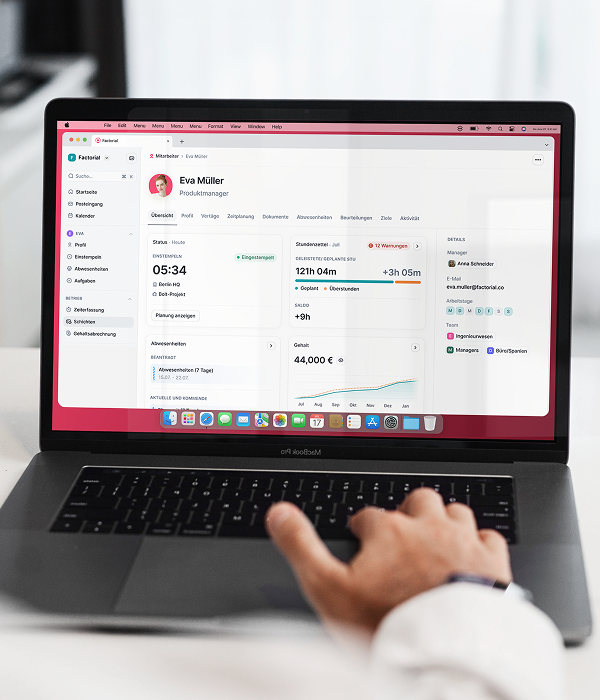
Factorial’s comprehensive HR software provides an efficient solution for managing time off and ensuring compliance with Colorado state holiday laws. With its user-friendly interface and robust features, Factorial simplifies the process of tracking and managing employee time off, building a productive and compliant work environment.
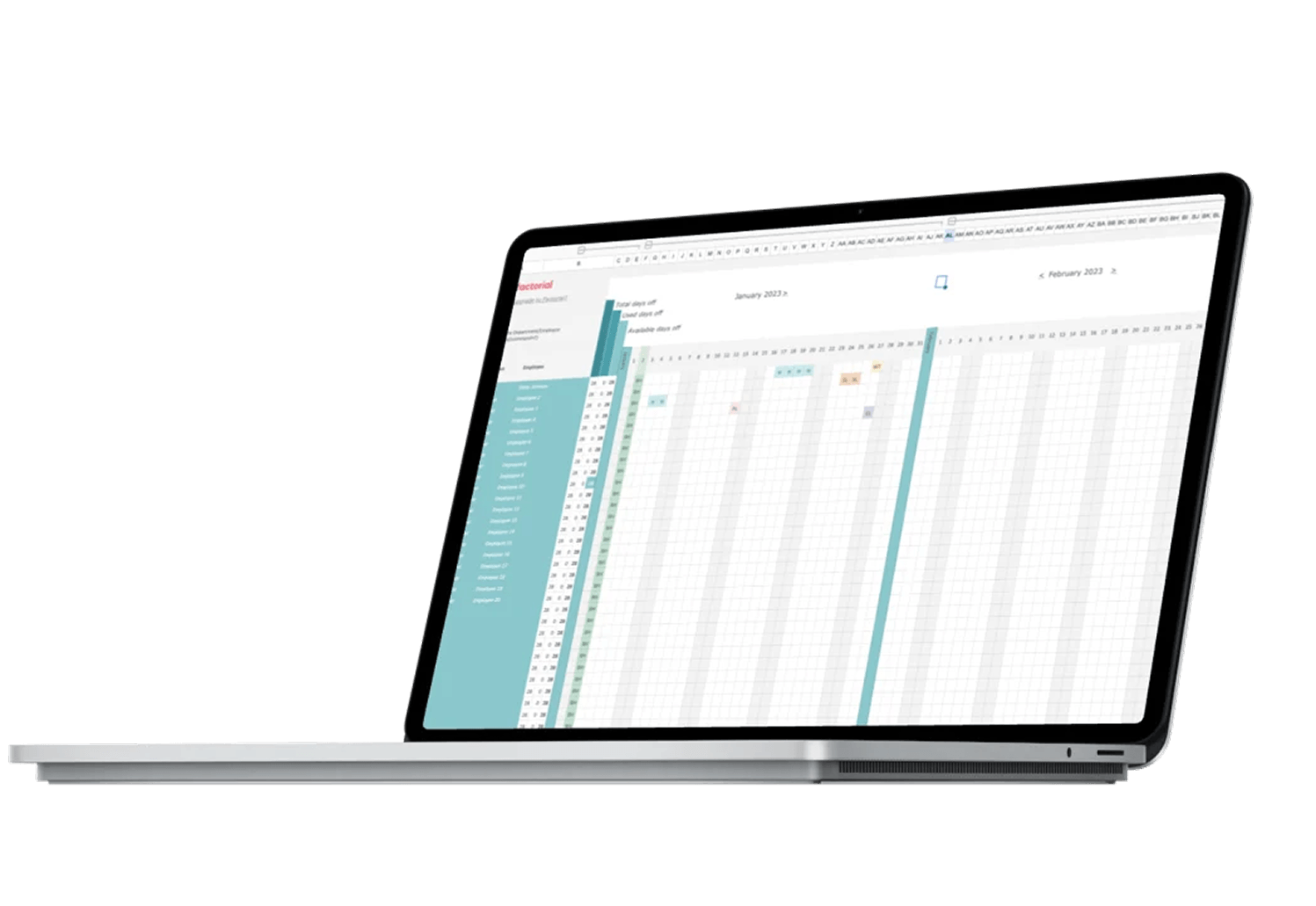
Factorial’s time off management software includes a number of features that can help employers manage Colorado state holidays.
These features include:
- Leave management. Factorial allows employers to create and manage all Colorado state holidays through a centralized leave management system. Employers can also set custom rules for each holiday. For example, you can define which days employees must work and how much you will pay them if they do work.
- PTO accruals. Factorial automatically accrues paid time off for employees based on the company’s leave policy. This includes accruals for Colorado state holidays.
- Time off requests. Employees can easily submit all types of time off requests through Factorial’s self-service portal. Managers can then review and approve or deny requests.
- Leave reporting. Factorial generates a variety of reports that can help employers track employee time off usage and compliance with Colorado state holiday laws.
Additional benefits of Factorial’s time off management software include:
- Reduced administrative burden. Factorial automates many of the tasks associated with time off management.
- Improved compliance. Factorial’s software helps employers comply with all applicable Colorado state holiday laws.
- Increased employee satisfaction. Factorial’s software makes it easy for employees to request time off and view their leave balances. This can help to improve employee morale and productivity.
Ultimately, by using Factorial’s time off management software, employers can simplify the process of managing Colorado state holidays and ensure that their employees are able to take the time they need while maintaining business productivity.
FAQ
What are the state holidays in Colorado in 2026?
Colorado observes 10 federal holidays, including New Year’s Day, Martin Luther King Jr. Day, and Juneteenth. The state also recognizes two additional state-specific holidays: Cesar Chavez Day (optional) and Frances Xavier Cabrini Day, which replaced Columbus Day.
Is Monday, Feb 16, 2026 a federal holiday?
Yes, Monday, February 16, 2026, is Presidents’ Day. This is a federal holiday observed in Colorado and most other states on the third Monday of February each year.
What are the state holidays for Colorado state employees?
Colorado state employees are entitled to paid time off for 10 holidays each year: New Year’s Day, Martin Luther King Jr. Day, Presidents’ Day, Memorial Day, Juneteenth, Independence Day, Labor Day, Veterans’ Day, Thanksgiving Day, and Christmas Day.
Is it illegal to not get PTO in Colorado?
Colorado law does not require private employers to provide paid vacation leave. However, the Healthy Families and Workplaces Act (HFWA) mandates that all employers provide accrued paid sick leave, which can be used for various health and safety reasons.
Does Colorado recognize Juneteenth as a state holiday?
Yes, Colorado recognizes Juneteenth (June 19) as an official state holiday. It is one of the 10 federal holidays observed by the state, closing most government offices and giving state employees a paid day off.