The Colorado Worker Adjustment and Retraining Notification (WARN) Act safeguards and protects workers, families, and communities during workforce changes, such as plant closings and mass layoffs. This article provides an overview of its components and enforcement, so that you can ensure compliance with US labor law and the protection of employee rights at your company. Read on to learn how to issue a WARN notice in Colorado and everything else you need to know about the WARN Act in CO.
Key Facts
- The Colorado WARN Act refers to federal WARN obligations in Colorado, and the Colorado Department of Labor and Employment directs employers to federal WARN rules for covered plant closings and mass layoffs.
- The United States Bureau of Labor Statistics reported 43,000 layoffs and discharges in Colorado in November 2025, up from 35,000 in October 2025.
- A missed local-government notice can expose an employer to a civil penalty of up to $500 per day under the U.S. Department of Labor Employment Law Guide.
- For rolling workforce reductions, the eCFR instructs employers to look 30 days forward and backward and 90 days forward and backward when testing WARN thresholds.
Table of Contents
- Does Colorado have WARN Act?
- What is the Colorado WARN Act?
- WARN notices in Colorado
- What Triggers the WARN Act in Colorado?
- Colorado WARN Act Requirements
- How is the WARN Act Enforced in Colorado?
- Offboarding your workforce during a layoff
- Offboarding solutions 🚀
Does Colorado have a WARN Act?
Colorado does not have its own state-level mini-WARN law, but Colorado employees are still protected by the federal WARN Act. Covered employers must provide written notice for qualifying plant closings and mass layoffs, and the Colorado Department of Labor and Employment treats submitted WARN notices as public records under the Colorado Open Records Act.
Some states are not only regulated by the federal WARN Act, like Ohio, Pennsylvania, Georgia, North Carolina, Arizona, and Florida, but have their own requirements and regulations specified in their so-called mini-WARN Acts. These states include: California, New York, New Jersey, Illinois, and more.
For a quick threshold screen, HR teams can use the U.S. Department of Labor WARN Advisor to test whether the employer is covered, whether the event is covered, and what notice may be required.
What is the Colorado WARN Act?
Colorado’s WARN Act is meant to ensure that workers are protected when facing layoffs or plant closures. Employers in Colorado have to provide advance notice to employees when aware of impending closures or layoffs. The purpose of this notice is to offer employees enough time to find alternative employment options.
For other similar topics read our article on the Family and Medical Leave Act (FMLA) in Colorado. The FMLA is not the same as the FLSA, which sets federal rules for minimum wage, overtime pay, record keeping, and youth employment, but not unemployment benefits.
On a similar note, however, Colorado holidays are determined both federally, and locally per state. Check out our federal holiday calendar for an updated and complete list.

WARN notices in Colorado
WARN notices in Colorado generally require 60 calendar days’ advance written notice for covered plant closings or mass layoffs. If affected employees are represented by a union, notice goes to the union representative rather than to each represented employee. Use this notice checklist, based on eCFR WARN regulations:
| Notice element | What to include |
|---|---|
| Employment site | Name and address of the site where the plant closing or mass layoff will occur. |
| Timing | Expected date of the first separation and the anticipated separation schedule. |
| Action type | Whether the action is permanent or temporary, and whether the entire plant will close. |
| Affected roles | Job titles affected and the number of affected employees in each job classification. |
| Bumping rights | Whether bumping rights exist. |
| Union information | Names of unions representing affected employees and contact details for union leadership. |
| Company contact | Name and telephone number of a company official who can answer follow-up questions. |
See previously issued WARN notices for the state of Colorado here.
Who do Colorado employers have to give a WARN notice?
Covered employers must provide written notice to affected employees or their union representative, the state dislocated worker unit, and the chief elected official of the local government where the employment site is located, according to eCFR WARN regulations. This notice must be delivered at least 60 days before the anticipated plant closing or mass layoff.
What Triggers the WARN Act in Colorado?
Certain situations trigger the WARN Act in Colorado under federal rules:
| Trigger | Threshold | Measurement period |
|---|---|---|
| Plant closing | Employment loss for 50 or more employees, excluding part-time employees, at a single site. | Any 30-day period. |
| Mass layoff, large event | Employment loss for 500 or more employees, excluding part-time employees. | Any 30-day period. |
| Mass layoff, percentage test | Employment loss for at least 50 employees and at least 33% of active employees, excluding part-time employees. | Any 30-day period. |
| Aggregated reductions | Separate employment losses that together reach plant-closing or mass-layoff thresholds. | Any 90-day period, unless the employer proves separate and distinct causes. |
These thresholds come from eCFR WARN definitions for plant closings, mass layoffs, and aggregated employment losses.

What is a plant closing?
When an employment site or facility is shut down resulting in loss of employment for 50 or more employees during a 30-day period.
What are mass layoffs?
When a mass layoff occurs that does not result from a plant closing, but leads to an employment loss for 500 or more employees during a 30-day period, or for 50–499 employees if they make up at least 33% of the employer’s active workforce.
What are extended layoffs?
When the cumulative employment losses for two or more groups of workers, each falling below the minimum threshold for notice, reach the threshold level during any 90-day period for either a plant closing or mass layoff.
When can a Colorado employer give less than 60 days’ notice?
Federal WARN regulations allow reduced notice only in narrow situations, including faltering-company plant closings, unforeseeable business circumstances, and natural disasters. As noted by Webapps, even then, the employer must give as much notice as practicable and include a brief reason for reducing the notice period, according to eCFR.
Related: Reduction in Force (RIF) – A Comprehensive Guide for Employers
Colorado WARN Act Requirements
In Colorado, federal WARN generally covers a business enterprise with 100 or more employees excluding part-time employees, or 100 or more employees including part-time employees who collectively work at least 4,000 hours per week, excluding overtime, according to eCFR. The Act applies to all sorts of employers: private, for-profit employers, private, nonprofit employers, as well as public and quasi-public entities operating in a commercial context.
The WARN Act covers affected hourly, salaried, managerial, and supervisory employees. As noted by Webapps, it does not treat business partners, self-employed contractors, or contract employees with a separate employment relationship as affected employees of the assigning business, according to eCFR. The most important focus of the WARN Act requirements in Colorado is on notification. Employers must provide advance notice before a change in employment affecting many employees.
The state of Colorado encourages all employers to issue a WARN notice, regardless of whether they are legally required to do so by meeting the WARN act minimum employee threshold or any of the other criteria.
How is the WARN Act Enforced in Colorado?
The Colorado WARN Act is enforced through the United States District Courts. Workers, their representatives, and units of local government have the right to bring individual or class-action suits against employers believed to be in violation of the Act. The court may decide to award reasonable attorney’s fees to the prevailing party as part of the costs.
When the WARN Act is violated, employers may owe affected employees back pay and benefits for the violation period, up to 60 days. An employer that fails to notify the local government may also face a civil penalty of up to $500 per day. The U.S. Department of Labor Employment Law Guide states that the employer can avoid that penalty by satisfying employee liability within three weeks after the closing or layoff. Failure to comply may lead to individual or class-action lawsuits in the U.S. District Court. Consult with Colorado labor lawyers to address potential violation claims and always read the official sources before making any decisions, as laws are subject to change.
HR managers must understand the Colorado WARN Act to handle workforce changes compliantly and protect employees’ rights during significant transitions.
Related: Compliance calendar for HR
Offboarding your workforce during a layoff
Once you’ve followed all the required steps mandated by Colorado during plant closings and mass layoffs, it’s time to begin the offboarding process at your company. Offboarding so many employees at the same time can be a time consuming and costly process, but with the right HR software, it can be easy.
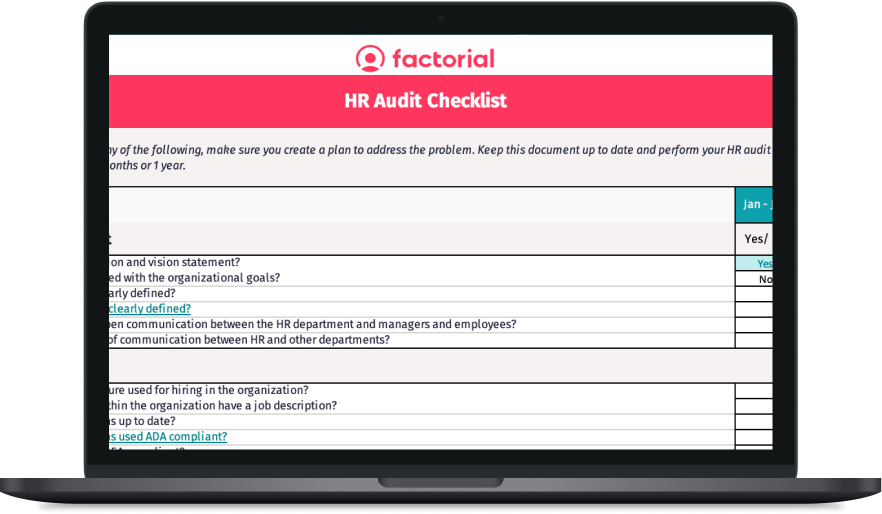
During a WARN event, document every offboarding step in one place: notice dates, final separation dates, asset returns, access removal, benefit communications, and exit interview status. Factorial can help HR teams assign owners and track completion across affected employee groups without relying on scattered spreadsheets.
How to offboard employees with HR software
Factorial simplifies the offboarding process, simplifying tasks and ensuring a smooth transition for departing employees. With Factorial, you can efficiently manage exit procedures, such as collecting company assets, updating access permissions, and conducting exit interviews. Offboarding software simplifies the entire process from start to finish.
Key Features for offboarding during layoffs:
1. Clear Communication: Easily communicate departure details to the departing employee, including the last day of work, return of company property, and other essential information.
2. Task Automation: Automate offboarding tasks, such as revoking system access, updating records, and notifying relevant departments, saving time and minimizing the risk of oversight.
3. Documentation and Compliance: Ensure compliance by generating necessary documentation, such as termination letters and exit surveys, helping you maintain a comprehensive record of the offboarding process.
4. Access Control: Centralize access control management, making it simple to revoke access to company systems and confidential information, safeguarding your organization’s data.
By utilizing Factorial for offboarding, HR managers can enhance efficiency, maintain compliance, and provide a positive experience for departing employees.

FAQ
Which states have a WARN Act?
While the federal WARN Act applies nationwide, several states have their own additional laws, often called “mini-WARN Acts.” These states, which include California, New York, New Jersey, and Illinois, may have different or more stringent requirements for employers conducting mass layoffs or plant closures.
Who falls under the WARN Act?
The federal WARN Act generally applies to employers with 100 or more employees. It protects most workers in a covered layoff or plant closing, including hourly, salaried, and managerial staff. However, it does not count employees who have worked for less than 6 months or average under 20 hours per week.
What triggers a WARN Act notice?
A WARN Act notice is required for a plant closing that affects 50 or more employees. It is also triggered by a mass layoff impacting at least 500 employees, or one affecting 50-499 employees if they constitute at least 33% of the employer’s active workforce.
Can you be fired without warning in Colorado?
For individual terminations, yes, as Colorado is an at-will employment state. However, in cases of mass layoffs or plant closings covered by the federal WARN Act, employers are legally required to provide affected employees with a 60-day advance written notice before the termination date.