Working in HR in the construction sector can be challenging. It’s often the case that you are managing skills shortages, a mixture of permanent and temporary staff, multiple job sites, health and safety compliance requirements and a high turnover.
Fortunately, construction recruitment software is available to support this work. In this article, we’ll run through the benefits of using software for recruiting in the construction industry and list the 5 best construction recruitment software options available in the UK in 2026, along with a comparison table.
Table of Contents
- Key Facts
- What is Construction Recruitment Software?
- Top 5 Construction Recruitment Software Options
- How Should You Choose Construction Recruitment Software?
- Final Thoughts on Construction Recruitment Software
Key Facts
- Construction recruitment software brings candidate sourcing, applicant tracking, interview scheduling, document collection and onboarding together in one system.
- CITB forecasts that UK construction will need an additional 41,200 workers each year between 2026 and 2030.
- Skills England projects that construction priority occupations will grow by 493,000 people, or 26%, between 2025 and 2035.
- Skills England reports that 59% of projected additional employment in construction priority occupations requires Level 2 or Level 3 qualifications, which makes skills and certificate tracking a core software requirement.
📌 Skip ahead to the comparison chart
What is Construction Recruitment Software?
Software for construction recruitment is a specialised digital platform that automates the processes for advertising, selecting and onboarding candidates to work in the construction sector.
For UK construction employers, the strongest systems do more than record applications. They should create a traceable process for role-specific skills, work-location requirements, interview decisions, candidate documents and onboarding tasks.
Construction recruitment software supports businesses with the following tasks:
- Candidate sourcing: posting job descriptions, sending mass communications to multiple job sites for new opportunities and trawling existing databases of potential candidates.
- Applicant tracking: recording and storing information on each candidate who applies for a role using Applicant Tracking Software (ATS).
- Client and candidate relationship management: tracking interactions, storing communication history and prompting follow-ups using a customer relationship management (CRM) system.
- Filtering candidates: software can check through applications, identifying who has the right qualifications and experience.
- Scheduling interviews and assessments: organises interviews, conducts evaluations and stores the results in the system.
- Coordinating documentation for job offers and onboarding: having all the required documentation in one place reduces the chance of errors.
- Compliance checks: ensuring that applicants have completed any compulsory training requirements.
Which compliance features matter for UK construction recruitment?
Use configurable checklists to record role-specific certificates, identity evidence, induction status and review dates. The Home Office states that employers must complete the prescribed right-to-work check before employment starts, and a correctly completed check can provide a statutory excuse against a civil penalty.
Where recruitment data is spread across spreadsheets, email and site managers’ inboxes, a central applicant tracking system can give HR teams a single view of applications, interview stages and candidate records without changing the hiring process itself.

Benefits of Using Construction Recruitment Software
In general, utilising software can save a team countless hours of work and increase their efficiency. Whether your team will be using HR software for manufacturing or a designated ATS solution, there are many benefits from automating your manual workflows. Let’s look at the main pros to using construction recruitment software, including:
- More efficient recruitment: using software increases the speed at which companies fill open positions by reducing time spent on manual processes.
- Builds an internal database of talent: using the software supports the development of internal talent pools to draw on when required, avoiding the cost of working with agencies and minimising delays in filling new positions.
- Transparency: construction recruitment software enables key stakeholders in the business to easily gain insights into workforce availability, the status of specific projects, and any recruitment-related issues.
- Improved compliance: by tracking, documenting and managing applicants’ training certificates and records as they enter the workforce, construction recruitment software enables organisations to stay on top of health and safety requirements.
- Smooth onboarding: many software options integrate with other HR tools, including payroll and employee databases, which helps coordinate the required documentation for onboarding.
- Ready for growth: using software equips businesses with the tools they need to manage a large number of candidates, supporting the organisation as it scales without requiring changes to the existing systems.
- Easy for managers to access: mobile-friendly apps support HR managers and recruiters to review applications, schedule interviews, and make decisions wherever they are, which is especially helpful if you are working across multiple sites.
Top 5 Construction Recruitment Software Options
It’s time to invest in the best construction recruitment solutions in 2026. That way, your team can stay ahead of the curve while your operations run smoother than ever. Before looking at the details of each software, take a look at our comprehensive overview to familiarise yourself with the platforms we’ve reviewed.
Choosing construction recruitment software matters more as demand for skilled workers rises. CITB forecasts that the sector will need 41,200 additional workers each year through 2030, so employers need tools that support faster sourcing, consistent screening and accurate candidate records.
Best Construction Recruitment Software Comparison Table 2026
Before comparing providers, decide which recruitment model you need to support: defining the role, attracting applicants, managing applications and selection, and making the appointment.
| Selection criterion | Why it matters in construction |
|---|---|
| Skills and certificate fields | Helps teams record role-specific qualifications and review dates. |
| Multi-site hiring workflows | Supports hiring managers working across projects and locations. |
| Candidate database | Creates a reusable talent pool for recurring trade and project roles. |
| Reporting | Shows time to hire, source quality and bottlenecks by role or site. |
| Software | Key Features | Pros | Cons | Price per user per month | Why Choose? |
| Factorial | Applicant tracking system, payroll, compliance, shift management | Comprehensive HR support, scalable | Complex set-up for very small businesses | From £5.40 per user per month, subject to selected modules and contract terms | Robust all-in-one business management tool for construction recruitment |
| Zoho Recruit | Job board integration, candidate sourcing, and candidate/client portal | Affordable | Limited onboarding support | Free plan for one active job, with paid plans from £20 per user per month | Budget-friendly for smaller organisations |
| JobAdder | Candidate database, posting to multiple boards, compliance alerts | Strong UK presence | Limited additional HR features | Custom quote | Wide reach in terms of posting |
| Bullhorn | ATS and CRM for recruitment agencies | Robust, powerful system built for large-scale recruitment | Less suited for companies working with many temporary and shift workers | From £80 per user per month for Bullhorn Starter | Large businesses working at scale |
| Teamtailor | Candidate experience, employer branding | Strong branding tools, easy-to-use interface | Weaker compliance tools | Candidate-focussed experience |
1. Factorial
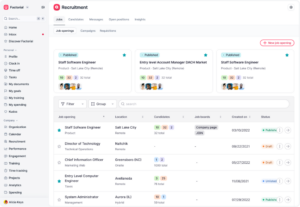
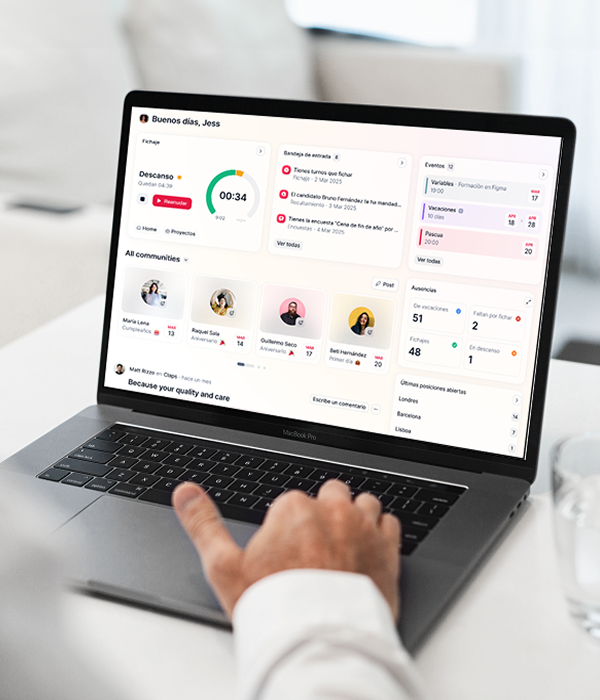
Factorial offers a comprehensive business management system that simplifies and automates recruitment for the construction industry while also centralising other HR functions such as employee records, payroll, time tracking and compliance. The platform’s recruitment module has AI integrated into its core functions to ensure a speedy and efficient recruitment process. Its AI functions filter through CVs, centralise candidate communication and match you to best candidates quickly. That way, your team is never impacted by staff shortages. By bringing everything you need to manage your team into one accessible system, Factorial supports an efficient approach to finding, onboarding and retaining the best staff for the construction sector.
The key features of Factorial to support construction recruitment include:
- An applicant tracking system (ATS) that integrates with job boards.
- CV filtering based on skills and experience.
- Auto-populated messages to send to potential candidates.
- Customisation options to create a more personal candidate experience.
- Centralised GDPR-compliant system to store candidate details.
- Reporting tools to gain insights from recruitment data.
- A mobile app for both managers and candidates to use.
Pros
- A centralised system for recruitment and HR processes creates a smooth experience for new hires.
- UK-compliance tools minimise legal issues.
- The software is designed to grow with your business.
Cons
- The advanced features of the system can be overwhelming for small businesses.
Pricing
- Plans start from £5.40 per user per month, with the final price depending on selected modules and contract terms. Published UK pricing states that premium bundles start from £5.40 per employee per month.
2. Zoho Recruit
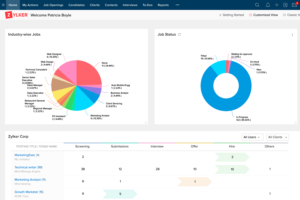
As part of the wider Zoho family, Zoho Recruit operates as a standalone recruitment system rather than a comprehensive HR solution. It offers tools for three different phases of talent acquisition: ‘source and attract’, ‘track and engage’, and ‘automate and hire’. For an industry such as construction, with high turnover, strict compliance requirements, and a wide variety of types, locations, and contracts, Zoho Recruit is a flexible recruitment system that can be easily adapted to meet these needs. Zoho Recruit is designed for agencies needing a flexible ATS that integrates with job boards and sourcing tools.
- Integrates with a large number of job posting boards.
- Automates reminders, follow-ups and scheduling.
- The candidate/client portal offers transparency for all parties involved in the hiring process.
- Customisable fields to track training requirements and vetting of certificates.
Pros
- Considered affordable and easy to set up.
- Analytics provide information on which sources yield the best candidates, track time-to-hire metrics, and drop-out rates.
Cons
- Limited onboarding support due to a lack of integration with HR/payroll tools
- Setting up the system can be time-consuming and intensive.
Pricing
- The Free plan supports one active job, while paid plans have higher job limits.
- The Standard plan starts at £20 per user per month, while Professional and Enterprise pricing depends on the billing currency and the selected plan.
3. JobAdder
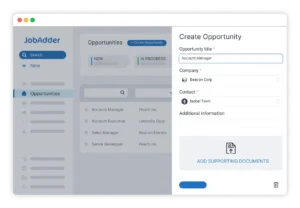
A popular recruitment system in the UK, JobAdder specifically highlights the tools it offers to support talent acquisition in the construction industry, emphasising its ‘headache-free’ compliance, efficient operations, and comprehensive overview of all activities. Its platform offers high customisability and candidate management which increases your team’s hiring efficiency. Overall, JobAdder centralises your database of candidates and simplifies the recruitment process so you can focus on the candidate on hand.
- Posting to over 200 job boards.
- Robust ATS including candidate management, personalised workflows, communication with applicants and interview scheduling.
- Integration with other apps like MailChimp and Xero to support communication and onboarding successful hires.
- Alerts for compliance management.
- A visual dashboard provides an overview of the process and data to drive future decision-making.
Pros
- Easy-to-use interface
- Broad reach in terms of the number of job boards used.
Cons
- Users report some issues with attaching and receiving CVs, which can slow down the process.
- Add-ons can feel expensive for smaller companies.
Pricing
- Different plans are available on a custom quote basis.
4. Bullhorn
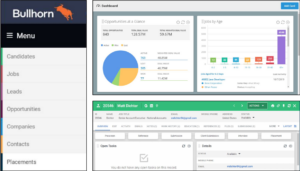
Bullhorn is a well-established global name in the recruitment sector, providing the software used by over 10,000 recruitment companies worldwide. It is especially popular with agencies that work with large numbers of applicants due to the robust nature of its system. Bullhorn is a good option if you typically recruit for a large number of roles across multiple sites, need to track compliance requirements carefully, and want to customise the process for your individual needs.
- Integration with job boards and third-party apps.
- ATS and CRM to track interactions, communication history and any follow-ups.
- Automation of administrative tasks such as reminders and scheduling.
- Compliance tracking tools.
- Reports and a dashboard to provide an overview of the recruitment pipeline and real-time insights into issues.
Pros
- Designed to support companies that are scaling their operations.
- Personalisation options to customise your workflows.
Cons
- More expensive than other construction recruitment options.
- Some users find it less helpful in recruiting shift or temporary employees.
Pricing
- Bullhorn Starter is £80 per user per month, while Bullhorn Core is £120 per user per month. Prices exclude VAT, and higher tiers are quoted separately.
5. Teamtailor
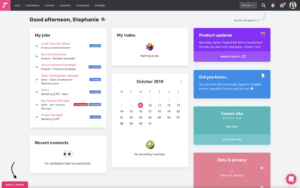
Teamtailor is an all-in-one recruitment platform that simplifies every aspect of finding the right people for your organisation. It’s designed for businesses that want to showcase their own employer branding to attract top talent. With easy-to-use workflows and engagement features that support good communication, Teamtailor aims to make the candidate experience positive and engaging from the start.
- ATS and Candidate Relationship Management (CRM) system.
- Unlimited job postings and users, with customer support for all.
- Branding tools for employers.
- Dedicated page for careers.
- Access to the Teamtailor Academy for training and resources.
Pros
- Supportive and integrated candidate experience.
- Promotes integration between hiring teams by providing transparent pipelines.
Cons
- Limited compliance tools for construction recruitment requirements.
Pricing
- Teamtailor provides a custom quote rather than a public UK list price. Quotes include unlimited job postings and unlimited users.
How Should You Choose Construction Recruitment Software?
The right choice depends on your hiring volume, number of sites, mix of employees and contractors, compliance workflow and need for wider HR functionality. For construction SMEs that want recruitment, employee records, time tracking, payroll support and onboarding in one platform, Factorial, all-in-one business management software, is the best overall option.
Methodology: This comparison considers publicly available product information, published pricing where available, core recruitment features, construction-relevant compliance workflows and the suitability of each platform for UK employers. Prices and features were checked in September 2026 and may change.
Final Thoughts on Construction Recruitment Software
For the construction sector, selecting the right recruitment software is crucial to save time, ensure compliance with regulations, and provide a candidate experience that attracts top talent in a competitive and fast-paced market.
In this article, we’ve reviewed the benefits of using recruitment software for the construction sector, and we’ve provided five options to consider. If you are looking for employer branding, Teamtailor could be the best option for you. Likewise, if value for money is a priority for your business, then Zoho Recruit is a good alternative to consider. However, if you want an affordable all-in-one solution that combines all your HR needs, such as payroll, compliance, and onboarding, as well as recruitment support, then Factorial is the best choice.
👉 Schedule a product tour to understand how Factorial can support your business.
The information presented on this page is based on publicly available sources and not limited to,, Capterra public reviews, G2 public reviews, and trustpilot public reviews. The comparisons between Factorial and other providers, are intended solely for the illustration of the respective software features, pricing and functionalities. All information regarding features, prices, and integrations may be subject to change without prior notice. Factorial assumes no liability for the accuracy, completeness, or timeliness of the information presented. We recommend contacting the respective providers directly to obtain the most accurate and up-to-date information. All legal regulations regarding spanish fair advertising and competition law are fully observed by us, if you have any concerns, please reach out to us. The comparisons presented do not constitute a final evaluation or recommendation for any provider, but serve solely as an informational source.
FAQ
What is the best software for recruitment management?
The best software centralises and automates the entire hiring process, from sourcing to onboarding. An all-in-one business management software like Factorial is ideal, as it includes a powerful applicant tracking system (ATS) alongside tools for payroll, compliance, and employee management, creating a smooth experience.
What are the top 5 ATS systems?
Top applicant tracking systems (ATS) automate recruitment by posting to job boards, filtering candidates, and scheduling interviews. They should also manage compliance and build a talent database. An all-in-one business management software like Factorial includes these ATS features while also integrating with other essential business functions.
What is the best software for recruiting agencies?
Recruiting agencies need software with robust applicant tracking (ATS) and client relationship management (CRM) capabilities to manage high volumes of candidates. The best systems are scalable and automate administrative tasks. Factorial’s all-in-one business management software provides these tools, helping agencies simplify their recruitment pipeline efficiently.