Choosing HR software in Kenya is no longer just about storing employee records or processing payroll. Businesses need technology that can manage recruitment, onboarding, attendance, leave, performance, payroll, expenses, compliance and employee data while connecting with the other tools they already use. Factorial vs SeamlessHR is a comparison worth considering for Kenyan businesses looking to centralise these processes.
Both platforms offer core HR management, recruitment, payroll, performance management, time and attendance, and employee management. SeamlessHR also provides payroll capabilities designed for Kenya, including statutory compliance and payroll disbursement.
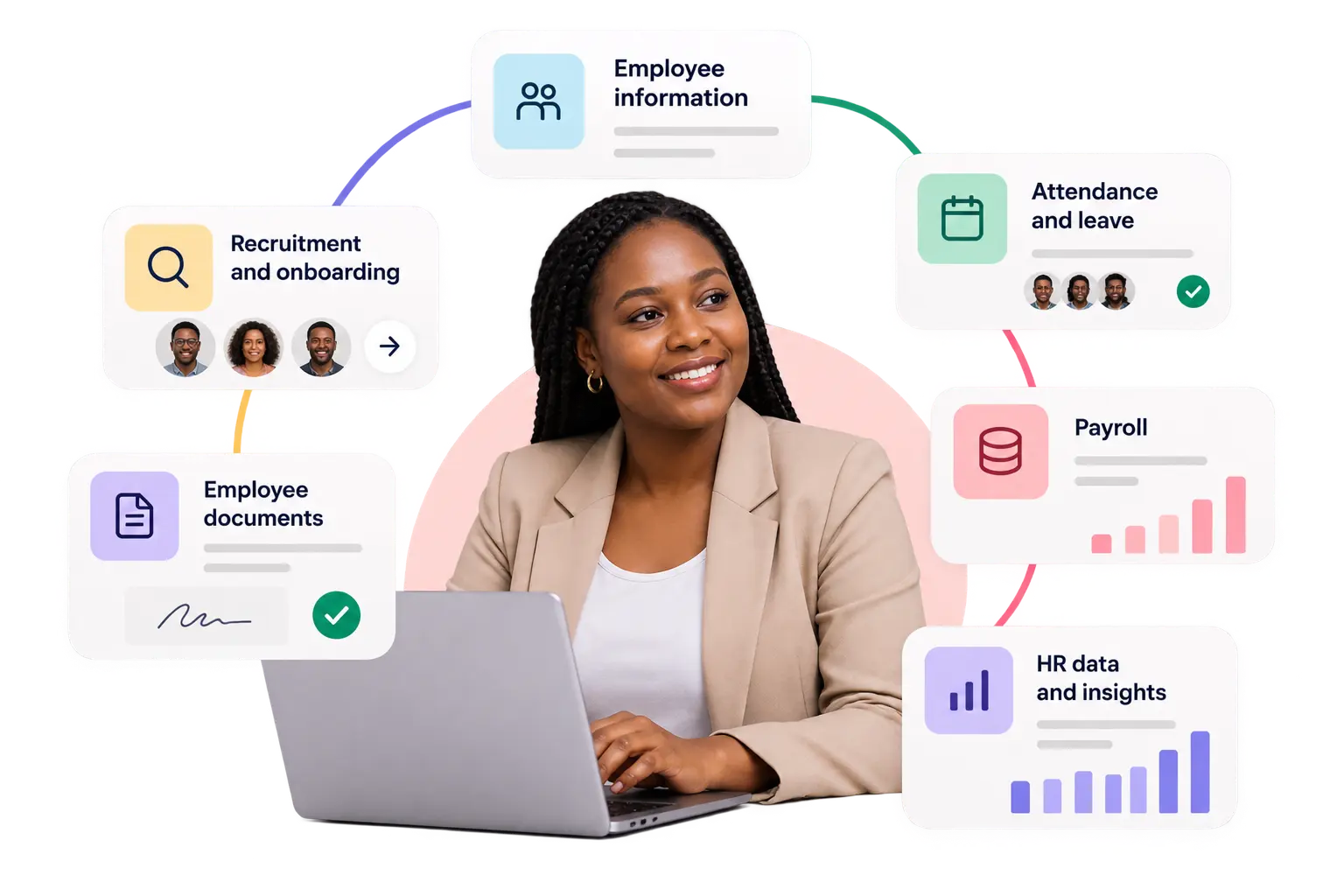
Factorial takes a broader approach. Its platform brings together HR, payroll, time management, talent, expenses, finance, IT and integrations, positioning it as a business management platform rather than an HR system alone.
So, Factorial vs SeamlessHR: which solution offers the right capabilities for your business?
Let’s compare them.
Factorial vs SeamlessHR at a Glance
| Feature | Factorial | SeamlessHR |
| AI-powered HR | ✓ | ✓ |
| Employee records | ✓ | ✓ |
| Recruitment & ATS | ✓ | ✓ |
| HR-connected IT onboarding/off-boarding | ✓ | — |
| Time tracking | ✓ | ✓ |
| Payroll management | Payroll management + payroll integrations | ✓ |
| Kenya statutory compliance | ✓ | ✓ |
| Performance management | ✓ | ✓ |
| Project management | ✓ | — |
| Expenses management | ✓ | — |
| IT management | ✓ | — |
| Finance capabilities | ✓ | — |
| Multi-country HR | ✓ | ✓ |
| Multi-OS device management (MDM) | ✓ | — |
What Is Factorial?
Factorial is an all-in-one HR and business management platform designed to bring people operations and wider business processes into one connected system.
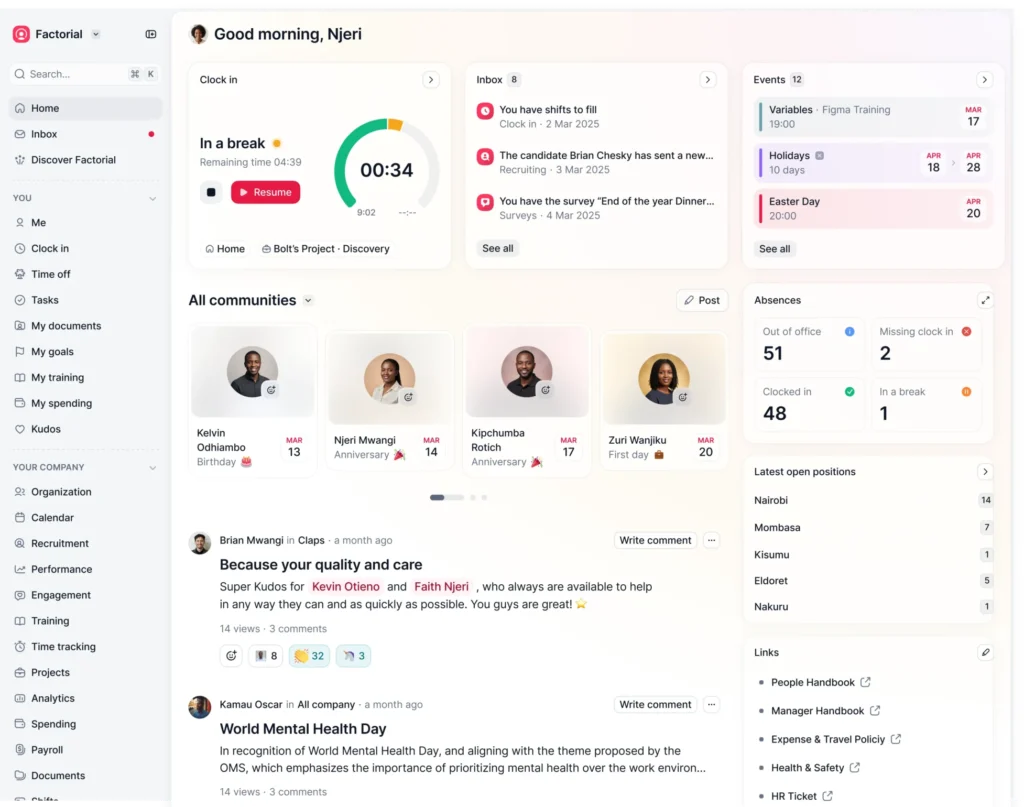
Its capabilities cover:
- Core HR
- Payroll
- Time and attendance
- Leave management
- Shift management
- Recruitment
- Onboarding
- Performance management
- Talent management
- Expense management
- Document management
- Digital signatures
- HR analytics
- Employee self-service
- Finance
- IT management
- Integrations
For businesses in Kenya, Factorial also supports payroll and compliance workflows around local statutory requirements, while allowing businesses to integrate with existing payroll providers through its open API.
The result is a platform that can connect HR with the wider business instead of keeping HR processes in a separate system.
What Is SeamlessHR?
SeamlessHR is an African HR technology platform that provides tools for managing different stages of the employee lifecycle.
Its Kenyan offering includes an HRMS, payroll, performance management, recruitment, time and attendance, and employee financial wellbeing solutions. SeamlessHR describes its HRMS as a platform for employee data management, process automation, performance insights, engagement and reporting.
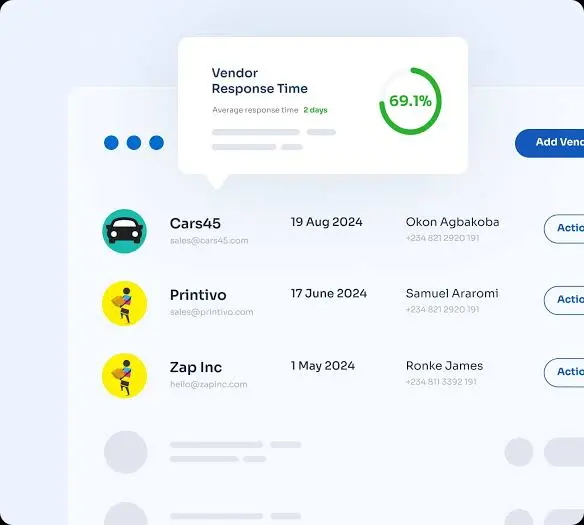
Its payroll solution is designed to help Kenyan businesses calculate payroll, remain compliant, disburse payments and access payroll financing.
SeamlessHR also offers recruitment and applicant tracking, performance management, and time-tracking capabilities, making it a comprehensive HR platform for organisations managing the employee lifecycle.
Factorial vs SeamlessHR: Feature Comparison
1. Core HR and Employee Management
Both platforms provide businesses with a central system for managing employee information.
SeamlessHR’s HRMS allows businesses to manage employee data, automate HR processes, generate reports and gain performance insights.
Factorial also provides a central employee database, but connects employee information with other workflows such as documents, time, leave, payroll, expenses and performance. Its employee portal gives employees access to documents, time tracking, holiday calendars, tasks and other HR information from one place. This means HR teams can reduce the need to manage employee requests and information across disconnected systems.
Advantage: Factorial
2. Recruitment and Applicant Tracking
Recruitment is another area where both platforms provide dedicated tools.
SeamlessHR offers an ATS designed to automate recruitment processes and help organisations manage candidates through the hiring journey.
Factorial also provides an ATS that centralises applicant information, supports customised job portals and allows recruiters to filter CVs and manage recruitment workflows. Factorial also connects with external recruitment platforms such as Teamtailor and Recruitee through its integration marketplace.
For companies that already have recruitment technology in place, this creates more flexibility.
Advantage: Factorial

3. Payroll and Payroll Integrations
Payroll is one of the areas where SeamlessHR has a strong offering.
Its Kenya payroll solution is designed to calculate payroll, support statutory compliance and facilitate payroll disbursement.
Factorial also provides payroll management, including employee compensation, bonuses, overtime, payroll documents, payslips and payroll reporting. Where Factorial particularly stands out is payroll integration.
Businesses that already use a payroll provider do not necessarily have to replace it. Factorial provides an open API and integrations that allow businesses to connect payroll providers with their HR data. That can be valuable for organisations that want to modernise their HR processes without replacing their entire technology stack.
Advantage: Factorial for businesses that value payroll flexibility and integrations.
4. Kenyan Payroll Compliance
Compliance is critical for Kenyan employers.
SeamlessHR markets its Kenya payroll as compliant and supports statutory payroll requirements.
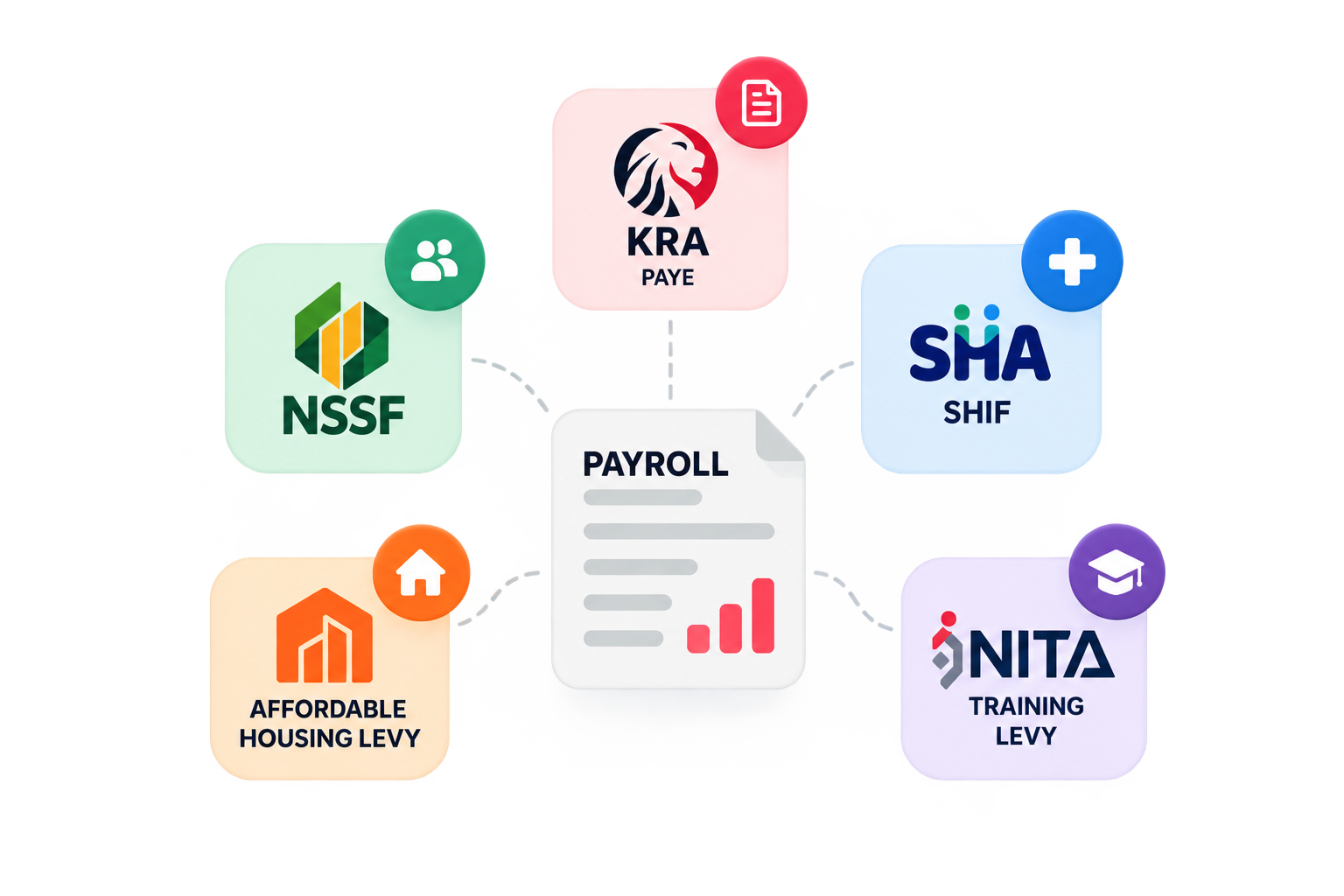
Factorial’s Kenya offering also supports local statutory payroll requirements, including PAYE, NSSF, SHA/SHIF and the Affordable Housing Levy. Its Kenya content also positions its payroll and HR platform around maintaining compliant employee records and payroll processes.
This is important because compliance isn’t just about calculating deductions. Businesses also need accurate employee records, documentation and payroll information that can be accessed when required.
Factorial combines payroll with:
- Employee records
- Document management
- Payslip management
- Time tracking
- Leave records
- Compensation information
- HR reporting
That creates a more connected compliance workflow.
Advantage: Factorial
5. Time, Attendance and Leave
Both platforms provide time and attendance functionality. SeamlessHR allows businesses to track working hours, overtime, schedules and employee locations through its time-tracking solution.
Factorial provides:
- Clock-in and clock-out
- Mobile time tracking
- Geolocation
- Shift management
- Working-hour reports
- Leave management
- Absence calendars
Factorial also integrates with ZKTeco for biometric and RFID time tracking, giving businesses another option for connecting physical attendance systems with their HR platform.
Advantage: Factorial
6. Performance and Talent Management
SeamlessHR provides performance management tools that allow businesses to establish frameworks, track employee progress and support feedback.
Factorial also supports performance management, including competencies, performance reviews and 360° reviews. Its wider talent toolkit also includes goals and OKRs, training and development, competency management and talent analytics.
Factorial therefore gives organisations a way to connect performance management with recruitment, employee records, compensation and broader workforce data.
Advantage: Factorial
7. Expenses and Finance
This is one of the clearest differences between the two platforms.
SeamlessHR’s Kenyan offering is primarily focused on HR, payroll, recruitment, performance and workforce management.
Factorial extends beyond these traditional HR functions with expense management and finance capabilities. Businesses can manage expense requests, approvals, reimbursements and spending information. Approved expenses can also be reflected as payroll supplements, connecting finance processes with payroll.
Factorial also supports corporate cards and broader finance workflows. This means finance and HR teams can work from connected employee and expense information rather than moving data manually between systems.
Advantage: Factorial
8. IT Management
Factorial goes beyond HR with IT management.
Businesses can manage aspects of their IT environment alongside employee information, creating a connection between the employee lifecycle and IT lifecycle.
For example:
New employee → HR onboarding → device allocation → access management
and:
Employee exit → HR offboarding → access removal → asset recovery
This expands the role of HR software from managing people information to helping coordinate the operational processes that surround employees. This is a significant distinction for growing organisations with distributed teams and increasingly complex technology environments.
Advantage: Factorial
9. Procurement and Project Management
Factorial also extends into business operations through capabilities such as procurement and project management.
This allows businesses to connect employee activity with broader operational processes rather than using a separate HR system alongside separate operational tools. For project-based organisations, connecting employee time, expenses and projects can also provide better visibility into workforce costs.
This is part of Factorial’s broader move toward business management rather than HR management alone.
Advantage: Factorial
10. Integrations
Both platforms can connect HR with other business systems.
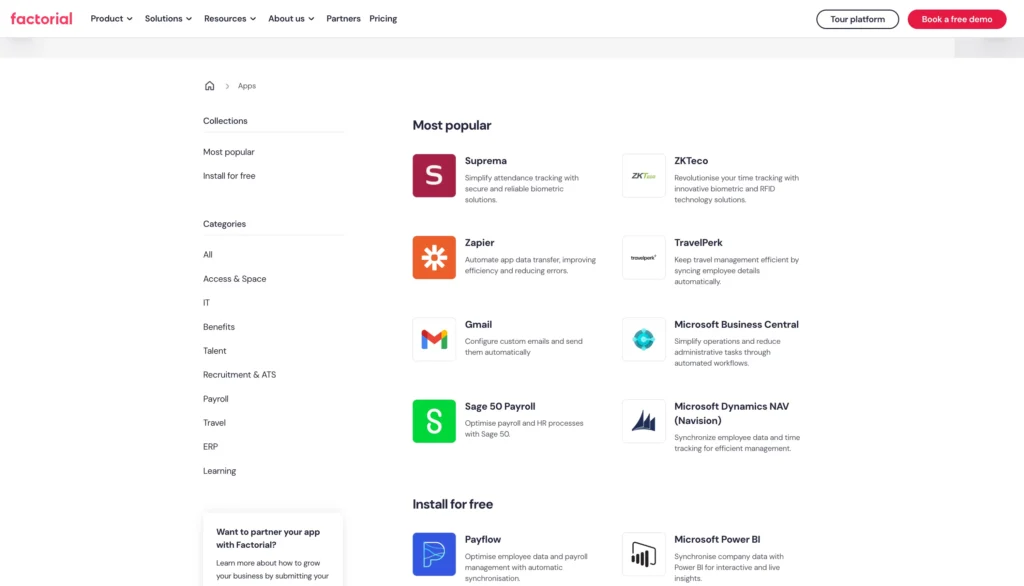
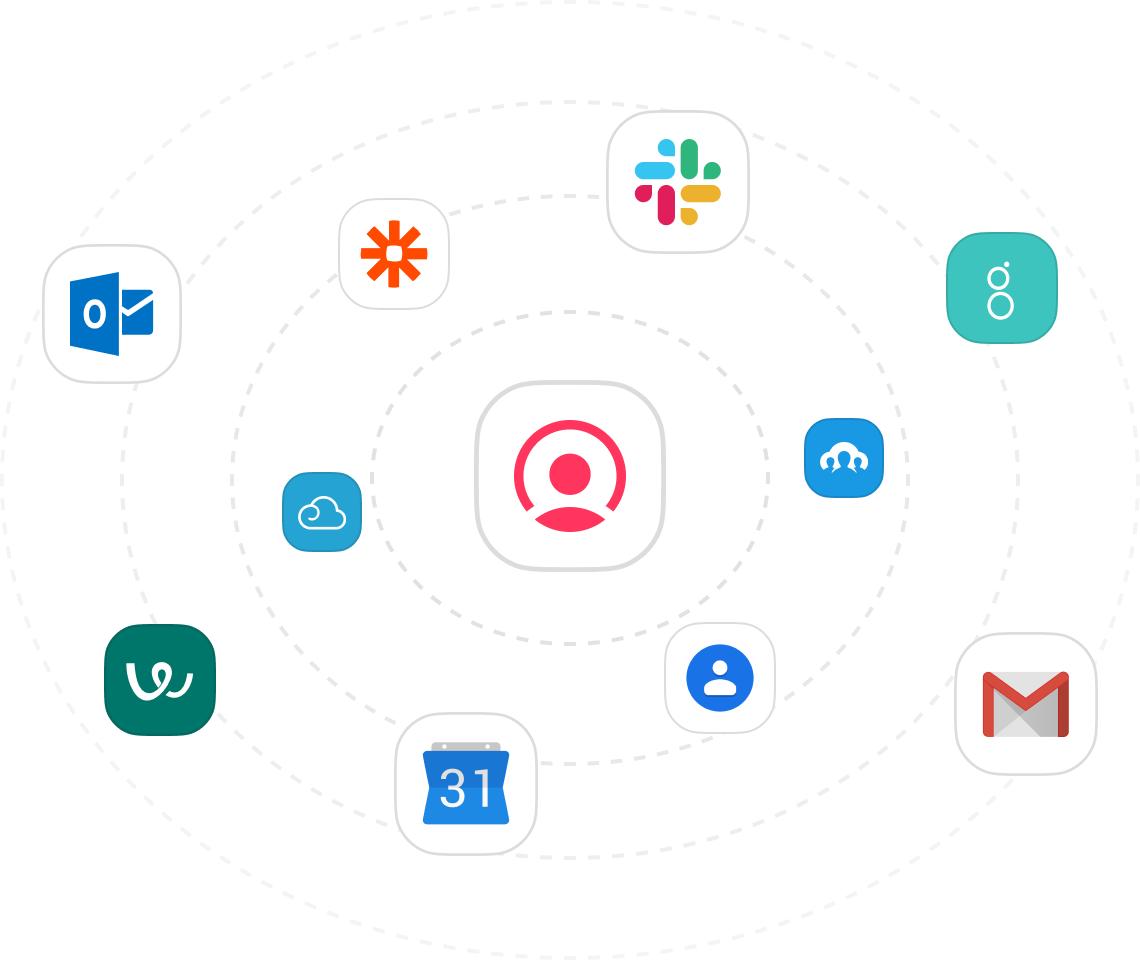
Factorial has an integration marketplace covering categories including payroll, recruitment, ERP, access management, learning and productivity. Its current marketplace includes integrations such as:
- Payflow
- Microsoft Power BI
- Zapier
- Teamtailor
- Recruitee
- ZKTeco
- Okta
- Slack
- Google Workspace
Factorial also provides an open API for connecting payroll and other systems. This gives companies more flexibility when building their HR technology stack.
Advantage: Factorial
11. HR Analytics and Business Intelligence
Both platforms provide reporting and analytics.
SeamlessHR’s HRMS provides reporting and performance insights.
Factorial provides custom HR reports and dashboards, while its integration ecosystem includes Power BI for deeper business intelligence. Factorial can also connect workforce information with compensation data through integrations such as Ravio and Figures, helping businesses analyse salary and benefits data.
This allows HR data to become more useful for broader business decisions.
Advantage: Factorial
Why Choose Factorial for Your Business?
SeamlessHR provides a comprehensive HR platform, with capabilities covering HRMS, payroll, recruitment, performance, time tracking and employee financial wellbeing.
But if your organisation is looking for a platform that can go beyond those core HR functions, Factorial offers a broader proposition.
With Factorial, businesses can connect:
HR + Payroll + Time + Talent + Finance + IT + Operations
in one ecosystem.
That means you can use one platform to:
- Manage employee information
- Recruit and onboard employees
- Track attendance and working hours
- Manage leave and shifts
- Run payroll processes
- Connect existing payroll providers
- Manage employee performance
- Set goals and OKRs
- Manage documents and e-signatures
- Process expenses
- Connect HR and finance workflows
- Manage IT processes
- Analyse workforce data
- Integrate third-party applications
- Give employees a central self-service portal
For growing businesses in Kenya, this broader approach can reduce the number of disconnected systems HR, finance, IT and operations teams need to manage.
Factorial vs SeamlessHR: The Bottom Line
Both Factorial and SeamlessHR provide the core capabilities businesses need to digitise HR in Kenya.
SeamlessHR offers a strong African HR platform with particular depth across HRMS, payroll, recruitment, performance and time management.
Factorial takes the platform a step further.
Rather than limiting the system to HR processes, Factorial connects HR with payroll, talent, finance, IT, expenses, procurement, projects and third-party business applications. For businesses that want an HR system that can grow into a broader business management platform, that difference matters.
Book a demo and explore how you can bring HR, payroll, talent, finance and business operations together in one platform.