Choosing the right HR software is critical, but a one-size-fits-all solution rarely works. While BambooHR is a popular option for automating HR processes, many UK businesses find they need more flexibility, UK-specific compliance features, or more scalable pricing. Any organisation looking to enhance its HR functions with a tool that truly fits its evolving needs may want to explore the best alternatives to BambooHR.
Table of Contents
- Key Facts
- Why Consider a BambooHR Alternative?
- Which HR Software Features Matter Most for UK Businesses?
- What Are the Top BambooHR Alternatives for UK Businesses?
- Which BambooHR Alternative Is Best for Your Team?
- FAQ
Key Facts
- How to choose: The best alternatives for UK businesses are the ones that match your payroll setup, reporting requirements, workflow complexity, workforce type, and growth plans.
- HR software adoption is already widespread: in a survey of 1,174 UK-based HR leaders, 84.5% said their organisation used an HRIS.
- Talent pressure remains material: 52% of organisations faced greater competition for well-qualified talent over the previous year.
- Technology should solve a defined problem: 76% of organisations increasing their use of resourcing technology saw benefits in areas including recruitment speed, candidate experience, accessibility, diversity, or quality of hire.
In this article, we’ll go over some of the best BambooHR alternatives currently on the market. We’ll look at what each one offers, who it’s best for, and how it compares. If you’re in search for a comprehensive, user-friendly platform, Factorial could be just what you’re looking for. It brings together all the essential HR tools your team needs to automate their tasks and work more efficiently.
Let’s explore the top BambooHR alternatives and help you find the best fit for your business.
Why Consider a BambooHR Alternative?
BambooHR is a well-known option for core HR tasks, but it may not meet the specific needs of every UK business. As teams scale and prepare for phased Employment Rights Act 2025 changes, HR leaders may assess alternatives that offer the right functionality, value, and UK-specific operational support. The Department for Business and Trade confirmed further measures scheduled to take effect in October 2026.
Whether it’s about accessing advanced features or finding a solution that fits tighter budgets, switching to an alternative can help teams get the right tools without compromising on performance.
Here are some common reasons businesses consider making a change:
- UK-Specific Feature Gaps: BambooHR offers UK payroll integrations, and buyers should verify the data flow and whether payroll is run in the provider’s system. HMRC says employers should check that their chosen payroll software is recognised for PAYE reporting.
- Rising costs: As headcount grows, BambooHR’s per-employee pricing can become expensive. — HM Revenue & Customs reports Many alternatives offer more scalable pricing models that align better with growing teams.
- Limited customisation: BambooHR is easy to use, but not highly customisable. For companies with unique workflows or industry-specific needs, this can be a constraint.
- Scaling concerns: The platform suits smaller organisations well, but may struggle to support more complex operations. Especially for companies expanding internationally or managing multiple locations.
- Industry-specific gaps: BambooHR lacks advanced features needed in sectors like healthcare, retail, or manufacturing, such as employee scheduling or detailed compliance tracking.
Exploring BambooHR alternatives can help your organisation find a better fit, reduce costs, and adopt the tools needed to scale effectively.
Which HR Software Features Matter Most for UK Businesses?
In a survey of 1,174 UK-based HR leaders, 84.5% reported using an HRIS and 82.9% reported using payroll software. This highlights just how essential HR software has become for companies aiming to simplify operations, improve the employee experience, and stay competitive. But it’s important to find a solution that works for your business. Integration, reporting quality, and ease of adoption are central considerations when comparing HR tech platforms, and an employee self-service portal is also crucial for improving efficiency and employee experience.
When choosing BambooHR alternatives, it’s helpful to focus on the features that will make your team’s work easier. Think about your main challenges and what is needed to solve those issues.
Here are some key features to look for when you’re exploring alternatives.
- User-friendly design: Choose a platform that’s easy to navigate for both HR teams and employees. A clean, intuitive interface speeds up onboarding, reduces implementation time, and allows your team to focus on what matters most – growing your people and team.
- Customisable workflows: Every team is unique, so having an HR software that meets every team’s needs is impossible without customisation. Look for software that allows you to tailor workflows, forms, and approval processes to fit your organisation’s unique needs. It’s essential the system adapts to you, not the other way around.
- Employee self-service: Enable your team with tools to manage everyday tasks like updating personal information or requesting time off. Self-service features lighten the HR team’s workload while giving employees greater autonomy.
- Robust reporting and analytics: Insightful data helps drive better decisions. Opt for a platform with customisable reports covering key metrics like turnover, engagement, and productivity – so you can identify trends and act with confidence.
- Integrated payroll and benefits: Some BambooHR alternatives offer built-in payroll and benefits administration. Managing everything in one place can simplify operations, reduce errors, and save valuable time – especially for growing teams.
- Employee engagement tools: Look for features that support culture and connection, like pulse surveys, feedback tools, and peer recognition. These tools help boost morale and keep engagement levels high across your organisation.
What Is the Difference Between HRIS and HCM?
An HRIS for UK businesses usually focuses on employee records, documents, absence, workflows, and reporting. HCM is often used for a broader suite that may also include recruitment, performance, learning, compensation, and workforce planning. In practice, the labels overlap, so compare the modules, integrations, reporting controls, and implementation support rather than relying on product terminology alone.
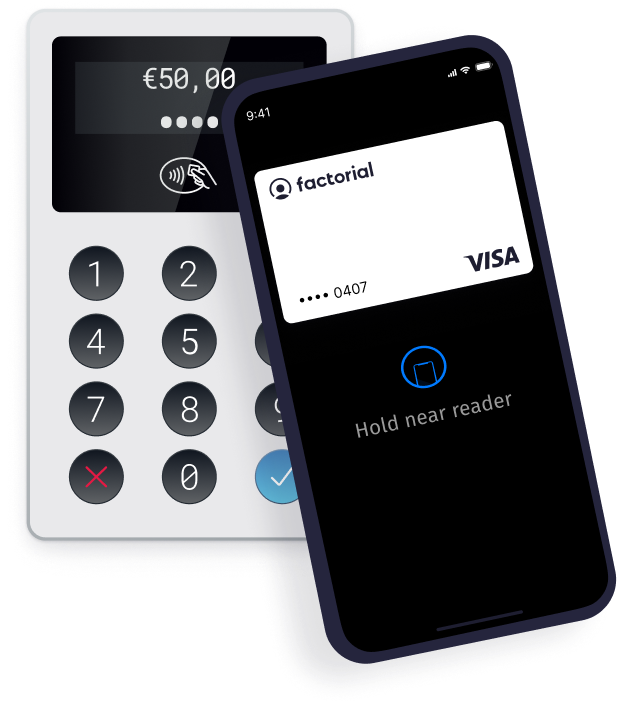
For teams that need to manage HR and business spending in one environment, Factorial’s finance tools can support expense submission, approval workflows, receipt capture, and reporting alongside employee data. This is particularly useful where HR and finance teams need clearer visibility of reimbursable costs.
When assessing reporting capabilities, prioritise the metrics your leadership team already needs. Research found that 75.1% of HR leaders reported headcount change, 74.4% reported turnover or retention, and 73.3% reported absence rates to management at least monthly or annually.
Where workforce management software includes geolocation or monitoring features, define the purpose, limit collection to what is necessary, and communicate the approach clearly. The Information Commissioner’s Office (ICO) states that worker monitoring should be necessary, proportionate, and transparent.
What Are the Top BambooHR Alternatives for UK Businesses?
So, we’ve seen which features you should be looking out for when you invest in HR software. Let’s take a look now at some of the most popular BambooHR alternatives to see how they compare. Each option offers unique strengths, whether it’s advanced payroll features, enhanced data reporting, or specialised tools for specific industries.
Dive in to find the solution that best matches your team’s needs and sets your HR up for success.
How Do the Leading BambooHR Alternatives Compare?
To help you compare the leading BambooHR alternatives for the UK market, we’ve summarised the key players, their ideal use cases, and their strengths in the table below.
| Software | Best For | Key UK Strength |
|---|---|---|
| Factorial | All-in-one solution for UK SMBs and scale-ups | Fully integrated platform with time tracking, expense management, payroll preparation, and payroll integrations |
| Gusto | US-based small businesses prioritising payroll | Strong benefits administration (primarily US-focused) |
| Zenefits | Companies wanting a modular, pick-and-choose approach | Flexible add-ons for benefits and wellness |
| Namely | Mid-sized businesses focused on performance management | Advanced goal tracking and employee engagement tools |
| Rippling | Tech-driven companies needing integrated HR and IT | Unified employee and device management |
| Justworks | Small businesses focused on HR compliance | Extensive compliance resources |
| Paycor | US businesses focused on payroll and onboarding | Simple and effective onboarding |
| Paylocity | Companies putting emphasis on communication and culture | Social collaboration tools and employee feedback processes |
| Workday | Large companies wanting HR and financial management | Extensive, scalable features across HR and finance |
| Deputy | Industries that require shift scheduling features | Intuitive, real-time shift scheduling and attendance tracking |
This UK HR software comparison helps buyers assess payroll, compliance, and operational requirements before shortlisting providers.
How Should UK Businesses Shortlist HR Software?
- Payroll: Confirm whether payroll is native, integrated, or managed through an external provider, and verify that any HMRC-recognised payroll software meets PAYE-reporting requirements.
- Compliance: Test how the system records policies, approvals, absences, right-to-work evidence, and employment-law changes.
- Operations: Ask each provider to demonstrate a real workflow, such as onboarding, holiday approval, a payroll data hand-off, or workforce management software for multi-location scheduling.
A 2026 global human capital trends survey found that 7 in 10 business leaders prioritise speed and adaptability as their primary competitive strategy for the next three years.
1. Factorial: The All-in-One HR Solution

Factorial’s all-in-one solution is an ideal choice for companies looking for a complete business management platform that goes beyond the basics. It’s designed for growing businesses that need flexibility and ease of use. Factorial combines all core HR functions – onboarding, time tracking, payroll, and compliance – within a user-friendly system. The platform is highly customisable, letting companies tailor workflows and set up detailed reporting to support specific needs. In addition, Factorial’s self-service portal enables employees, while robust analytics allow HR teams to make data-driven decisions that improve efficiency and engagement.
Finally, Factorial’s competitive pricing and scalability make it an excellent BambooHR alternative. Unlike other options, it covers pretty much all HR functions in one solution, so there’s no need to juggle multiple tools.
Key Features:
- Employee self-service. Employees can update personal details, view payslips, and request time off.
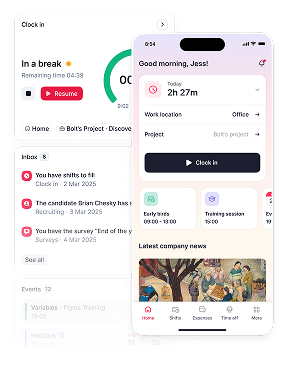
- Time and attendance tracking. Employees can clock in/out directly from their mobile or desktop. Geolocation is also available, as well as shift scheduling.
- Time-off management. Automate employee holiday requests with an easy approval system and shared calendar for visibility.
- Document management. Securely and safely stores company documents like SOPs and contracts. Even includes e-signature options.
- Performance reviews. Monitor employees’ goals and growth, as well as conduct performance reviews.
- Recruitment and onboarding. Attract and find top talent with AI. Once you’ve found the best candidate, onboard your new hire with custom onboarding workflows.
- Payroll management. Automate your payroll calculations and remain fully compliant with employment laws.
- Expense tracking. Keep track of all your expense reporting and reimbursements for projects, business trips, and resources.
- HR analytics. Generate customisable reports for data-driven insights from your overhead, hours spent working, or projects completed.
Pros:
- Comprehensive feature set covering all HR needs
- Intuitive design for both HR managers and employees
- Customisable workflows allow for high flexibility
Cons:
- May offer more features than very small teams need
- Advanced reporting tools may require a learning curve

Factorial’s versatility and depth make it a compelling choice for HR teams searching for robust BambooHR alternatives.
2. Gusto: Payroll-Focused HR Platform
Gusto is a solid BambooHR alternative for businesses that prioritise payroll and benefits as core HR functions. Its strength lies in payroll automation and compliance, making it a great fit for small to midsize companies seeking a straightforward solution.
However, unlike Factorial, Gusto is primarily payroll-focused and doesn’t offer the same breadth of HR features. While it simplifies paychecks and benefits management, teams looking for a more comprehensive HR platform – with tools for performance, time tracking, and employee engagement – may find Gusto’s offering a bit limited.
Key Features:
- Automated payroll processing with tax compliance
- Benefits management, including health and retirement plans
- Simple onboarding for new hires
Pros:
- Easy-to-use payroll tools
- Strong benefits management
Cons:
- Limited HR features beyond payroll
- Lacks the customisation found in more comprehensive HR platforms like Factorial
3. Zenefits: Modular HR with Flexibility
Zenefits is a flexible BambooHR alternative that offers a modular approach, allowing companies to pick and choose the features they need. It includes tools for payroll, benefits, and employee wellness – making it appealing for growing businesses seeking scalability.
However, as you add more features, the cost can rise quickly. In contrast, Factorial delivers a full-featured HR platform right out of the box, with customisable workflows and essential tools already built in. While Zenefits suits teams looking for a tailored setup, those seeking an all-in-one, easy-to-use solution may find Factorial’s simplicity and value more compelling. UK buyers should also verify local payroll, benefits, and compliance suitability before shortlisting it.
Key Features:
- Modular platform covering payroll, benefits, and wellness
- Customisable add-ons based on company needs
Pros:
- Flexible and modular pricing
- Good integration with wellness programs
Cons:
- Higher costs if multiple add-ons are needed
- Lacks the depth of features Factorial includes by default
4. Namely: HR for Midsize Businesses
Namely is a strong BambooHR alternative built for midsize businesses that need more advanced tools for employee engagement and performance. It offers a comprehensive HR suite – including payroll, benefits, and goal tracking – designed to support both day-to-day HR tasks and long-term employee development.
With customisable workflows, Namely adapts to the unique needs of growing teams. Its performance management tools make it easy for managers to set clear goals, give feedback, and build growth. Plus, with powerful reporting and analytics, HR teams can gain the insights they need to boost engagement and drive productivity across the organisation.
Key Features:
- Performance management with goal setting and reviews
- Customisable HR workflows and reporting capabilities
- Full payroll processing and benefits management
Pros:
- Tailored for mid-sized organisations
- Strong performance and engagement tools
Cons:
- Higher cost, best suited for larger budgets
- Some features may be complex for smaller teams
5. Rippling: Combined HR and IT Management
Rippling is a unique BambooHR alternative that combines HR and IT management, making it ideal for tech-driven companies. This platform allows HR teams to handle both employee data and IT provisioning, such as setting up devices and software, within a single interface. However, for businesses primarily seeking HR functions, this level of complexity might be unnecessary. Factorial, in contrast, covers HR essentials without the extra IT features, keeping HR processes straightforward and efficient.
Key Features:
- Unified HR and IT management, including device setup and software provisioning
- Automated employee onboarding across HR and IT
- Payroll, time tracking, and compliance tools
Pros:
- Combines HR and IT in one platform
- Simplifies onboarding across departments
Cons:
- Higher cost due to combined functions
- IT focus is excessive for companies that only need HR tools
6. Justworks: Simplified HR Compliance
Justworks is a BambooHR alternative with a focus on compliance, delivered through a Professional Employer Organisation (PEO) model. This model allows smaller companies to access benefits and tax resources similar to larger organisations, which is helpful for ensuring compliance. However, for teams needing a broader range of HR features, Factorial provides a more complete set of tools, from recruitment to performance tracking, all in one system.
Essentially, Justworks handles payroll and benefits, and it simplifies the compliance process for HR managers, making it especially useful for small businesses. But its PEO approach means customisation and direct control over HR functions may be limited.
Key Features:
- PEO model for access to large-company benefits
- Payroll processing with automated tax compliance
- Compliance resources and labour law support
Pros:
- Extensive compliance resources
- Large-company benefits access for small businesses
Cons:
- Limited customisation and flexibility
- PEO model may not suit every business’s needs
7. Paycor: Straightforward HR and Payroll
Paycor is a user-friendly BambooHR alternative focused on payroll and onboarding for small to mid-sized teams. While its payroll features are straightforward, they are primarily designed for the US market. For UK businesses, this presents a significant compliance gap. A solution like Factorial, with its payroll preparation, payroll integrations, and comprehensive feature set, offers a more integrated and legally sound option for managing the entire employee lifecycle in the United Kingdom.
Key Features:
- Payroll and tax compliance tools with automated processing
- Customisable onboarding workflows
- Reporting tools for employee data insights
Pros:
- Simple to use for payroll processing
- Effective onboarding and reporting support
Cons:
- Limited advanced HR features outside payroll
- Less flexibility compared to Factorial’s full HR suite
8. Paylocity: Engaging Employee Experience Tools
Paylocity is a BambooHR alternative focused on employee engagement, combining core HR functions with tools that support workplace culture. With features like internal messaging, surveys, and feedback, Paylocity works well for teams aiming to improve communication and boost morale. However, businesses seeking a well-rounded HR system may prefer Factorial’s blend of core HR functions, from payroll to performance tracking, with engagement features as part of its all-in-one platform.
Key Features:
- Social collaboration tools, like messaging and forums
- Employee surveys and feedback mechanisms
- Core HR functions, including payroll and compliance
Pros:
- Strong emphasis on engagement and workplace culture
- Tools for gathering and acting on employee feedback
Cons:
- Limited analytics compared to Factorial’s reporting capabilities
- May lack advanced HR tools for larger teams
9. Workday: Enterprise-Ready HR Solution
Workday is an enterprise-level BambooHR alternative tailored for large, often multinational, companies with complex needs, including those on the FTSE 100. With advanced HR, finance, and performance tools, Workday is suited for organisations requiring extensive customisation and scalability.
Workday’s depth of features includes comprehensive workforce planning and talent management, making it ideal for large enterprises. However, for small to midsize businesses, Factorial’s user-friendly, flexible platform may provide a more accessible solution with a full suite of HR functions.
Key Features:
- Advanced analytics for workforce planning and data-driven HR decisions
- Customisable talent management tools with goal setting and career tracking
- Highly scalable HR and financial management functions
Pros:
- Scalable and flexible for large organisations
- Extensive features across HR and finance
Cons:
- Higher cost, suited to larger budgets
- Complexity may be overwhelming for smaller or mid-sized teams
10. Deputy: Shift and Workforce Scheduling
Finally, Deputy is a BambooHR alternative designed specifically for companies with shift-based or hourly employees. It excels in workforce management and scheduling, allowing managers to create, assign, and adjust shifts with ease. This makes Deputy ideal for industries like retail, hospitality, and healthcare, where scheduling is a core operational requirement. However, while it integrates with popular payroll systems, Deputy’s primary focus is on scheduling rather than full HR functions. For businesses seeking robust HR tools beyond scheduling, Factorial’s comprehensive feature set can be a better long-term solution.
Key Features:
- Intuitive shift scheduling with drag-and-drop functionality
- Real-time attendance tracking, including GPS options
- Integration with payroll systems for simplified payment processing
Pros:
- Simple, effective scheduling for hourly workforces
- Great for industries like retail and hospitality
Cons:
- Limited beyond scheduling and time tracking
- Lacks comprehensive HR tools available in Factorial’s platform
Which BambooHR Alternative Is Best for Your Team?
At the end of the day, finding the right BambooHR alternative comes down to what fits your team best. Consider which features will make the biggest impact on your team’s productivity. Whether that’s more robust payroll support, stronger compliance tools, or easier ways to engage your employees. While every option we’ve covered brings something different to the table, Factorial stands out as a top pick for growing businesses.
Why? Because Factorial brings all the must-have HR tools (plus more!) together in one simplified platform. From payroll and compliance to time tracking, customisable workflows, and a self-service portal. It’s also designed to scale with your organisation, offering the flexibility and customisation capabilities to adapt across industries and company sizes.
Factorial is quick to set up, easy to use, and packed with features that reduce admin work so your team can focus on what really matters – your people. If you’re looking for a powerful, intuitive BambooHR alternative, Factorial is a smart, future-ready choice.
This content adheres to all applicable UK advertising and competition laws.The information presented on this page is based on publicly available sources as of October 2026, including provider websites and public review sites (Capterra, G2). This comparison is for informational purposes to illustrate software features and functionality. All details regarding features, pricing, and integrations are subject to change. Factorial assumes no liability for the accuracy of this information and we recommend contacting providers directly for the most current data. This content adheres to all applicable UK advertising standards and regulations.
FAQ
What is the best HR and payroll software?
The best software for HR and payroll integrates both functions to reduce errors and save time. An all-in-one business management software like Factorial is ideal, as it combines HMRC-compliant payroll with core HR features like time tracking and performance management in a single, user-friendly system.