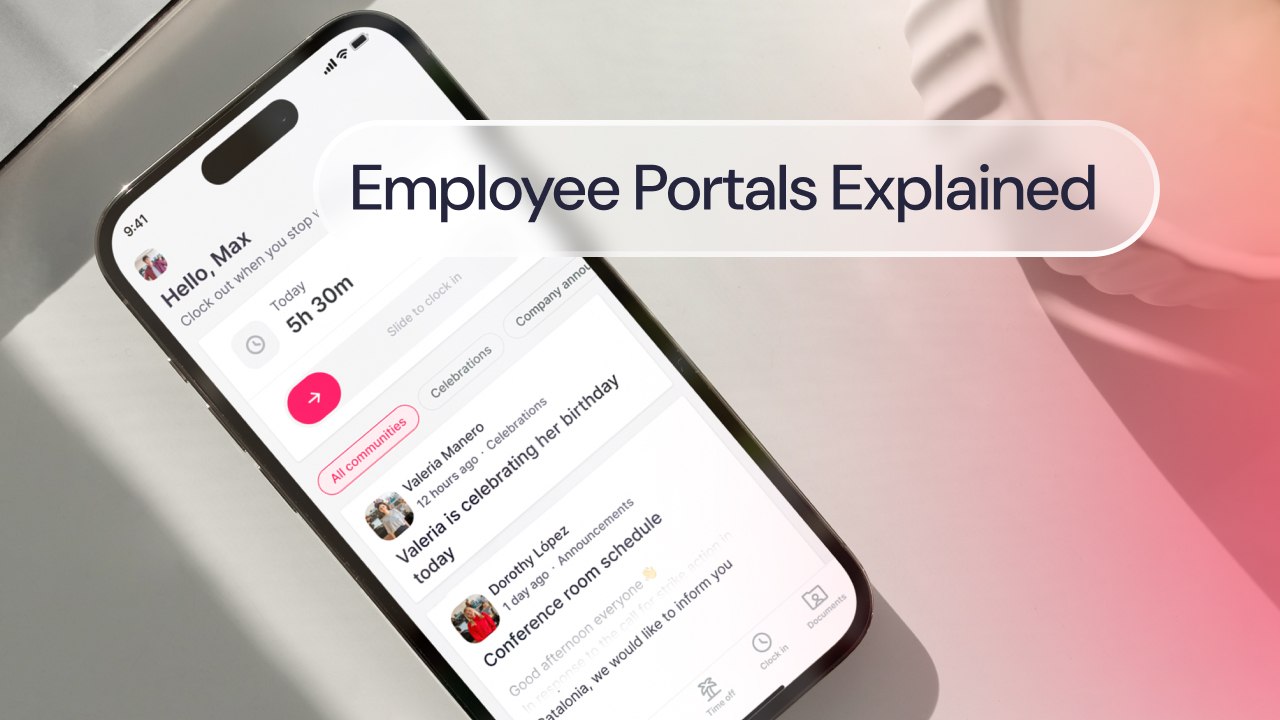
A Time Tracker helps UK employers maintain reliable working-time records, support payroll accuracy and identify potential issues with working hours and attendance.
Before we get deep into the topic, why would a company want to utilise a time tracker app to monitor their employee’s hours?
Table of Contents
- Key Facts
- Does Your Company Need an Employee Time Tracker to Comply with UK Law?
- What Are the UK Legal Requirements for Recording Employee Working Time?
- How Should a UK Business Choose a Time Tracker App?
- How Can Effective Time Tracking Improve Business Practices?
- The Employee Time Tracking Software with the flexibility you need.
Key Facts
- A Time Tracker gives employers a practical way to record working time, manage attendance and investigate discrepancies fairly.
- The Office for National Statistics found that 28% of working adults in Great Britain worked in a hybrid pattern between January and March 2025, making consistent working time records more important across locations.
- The Health and Safety Executive estimates that 1.9 million workers experienced work-related ill health in 2024/25, while 40.1 million working days were lost to work-related illness and non-fatal injuries.
- The Department for Business and Trade found that 44% of surveyed businesses used partially automated working-time records, showing the value of a consistent digital process.
Does Your Company Need an Employee Time Tracker to Comply with UK Law?
UK law does not impose a blanket requirement for every employer to record every worker’s daily hours. Acas states that employers must keep records showing compliance with key Working Time Regulations requirements, including the 48-hour weekly maximum and night-work limits, and retain those records for two years.
A clear time-recording process can help an employer demonstrate compliance, review working patterns and resolve attendance or payroll discrepancies consistently.
- Ensuring that employers are complying with the labour laws.
- Makes sure that appropriate rest breaks are being taken by employees, and they are not working in excess of the number of weekly hours by law.
- Helps identify discrepancies between scheduled hours, recorded hours and payroll inputs.
Most importantly, If there is a breach concerning one of the labour laws, authorities can reference the timesheet software records within a company to help confirm or disapprove a case. This information will help uphold the employee/employer’s rights in court.
What Are the UK Legal Requirements for Recording Employee Working Time?
In Great Britain, employers must keep adequate records to demonstrate compliance with the Working Time Regulations, but the law does not prescribe one mandatory format for those records. The Department for Business and Trade confirmed that employers do not generally need to create daily working-time records where they can demonstrate compliance through adequate records.
The UK Government’s 2023 reforms removed the effect of the 2019 CJEU judgment on working-time record keeping in Great Britain. According to the Department for Business and Trade, employers must still keep adequate records to show compliance with applicable Working Time Regulations requirements.
What should UK working-time records show?
- Whether workers exceed the 48-hour weekly average, unless they have opted out.
- Whether night-work limits are being observed.
- Whether required records can be retained for at least two years.
- Whether contractual, payroll and attendance data can be checked when a discrepancy arises.
GOV.UK states that the 48-hour weekly limit is normally averaged over 17 weeks, while Acas confirms that records must be retained for two years.
How Should a UK Business Choose a Time Tracker App?
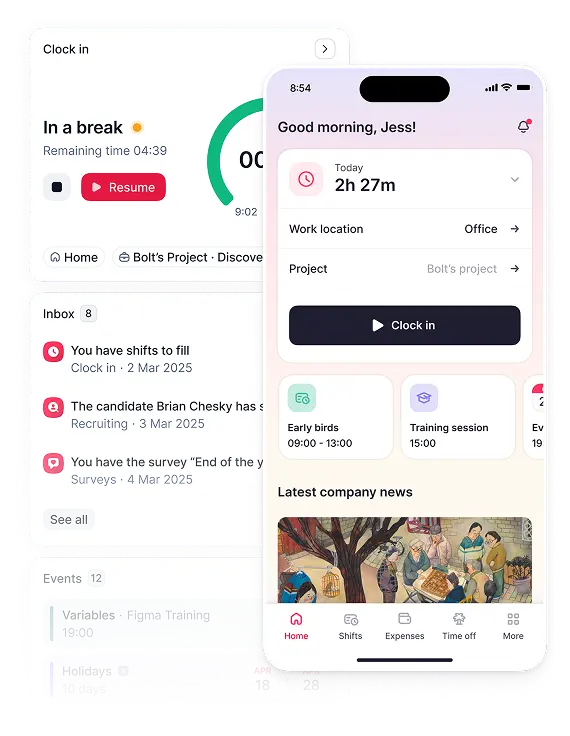
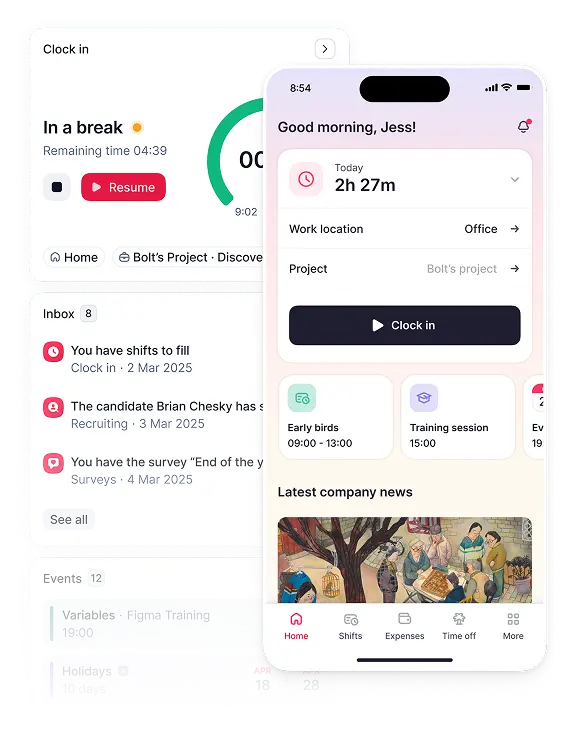
As the onus lies on the employers for how they want to track their employee’s time, they are free to implement the time tracking software that suits their needs best. With a time tracker app like Factorial, employers can choose whether they want to permit employees to manually or automatically clock in, or both. Flexibility is really the key here!
For teams that need a central record of employee attendance tracking, Factorial’s time tracker app can support consistent clock-in and clock-out processes while giving managers a clearer view of recorded hours.
GPS Tracking Software – Geolocalization
Whether we like it or not, wage and time theft are something that companies deal with from time to time. The increased number of companies offering flexible working hours and remote working opportunities, the conversation of trust and honesty between the employee and the company inevitably comes up. Many businesses in the UK have implemented geolocalization to help with accurate record-keeping and to minimize wage and time theft. Geolocation can support accurate records for mobile roles, but it should be used only where it is necessary, proportionate and clearly explained to staff.
Employee Geolocalization Controversy
Before enabling location-based clock-ins, document the purpose, identify a lawful basis, limit collection to what is necessary and provide clear privacy information. The Information Commissioner’s Office advises employers to use the least intrusive monitoring method, complete a DPIA where processing is likely to create high risk and inform workers before any GPS employee tracking begins.
When choosing which time tracker to use in your company, make sure that if it includes GPS tracking, no personal employee information is sent to a third party. Be aware of the Data Protection Act (DPA) laws to make sure you aren’t dipping your foot into a lawsuit.
With Factorial’s time tracker software, you can choose whether you want to enable geolocalization or not. When enabled, all of your employee’s information is safe on the platform. Best of all, the add-on provides simplicity. This means staff location information is only collected when they clock in or clock out, not during the day.
Companies using employee geolocalization are often accused of infringing on privacy laws. It’s for this reason, using a simplified system of tracking is best! In this way, employee privacy is protected. At the same time, the company can still know when and where the employee has clocked in/out.
How Can Effective Time Tracking Improve Business Practices?
If you want an employee time tracker that not only manages employee hours, Factorial has you covered. With custom absence management fields like working from home, smart shifts, better holiday leaves and time-off management, both employers and employees are offered maximum flexibility. It’s a win-win for all.
Accurate records from your time and attendance software should support healthier working patterns as well as administration. The Health and Safety Executive reported that 40.1 million working days were lost in Great Britain during 2024/25 because of work-related illness and non-fatal workplace injuries, underlining the importance of reviewing hours and workload trends.
How to introduce a time tracker fairly
- Define which working-time and attendance issues the process must solve.
- Choose the least intrusive method that meets that purpose.
- Explain the policy, privacy information and correction process to staff.
- Review records regularly for missed breaks, unusual hours and payroll discrepancies.
For hybrid teams, consistent rules matter as much as the tool itself. The Office for National Statistics reported that 28% of working adults in Great Britain worked in a hybrid pattern in early 2025, so employers should apply the same recording expectations across office, home and mobile work where roles are comparable.

FAQ
What is a time tracker?
A time tracker is a system used to record employee working hours. It helps companies comply with labor laws, ensure accurate payroll, manage overtime and breaks, and maintain reliable records for both employers and employees.
Which time tracker is best?
The best time trackers offer flexibility, ensure legal compliance, and integrate with other business functions. Factorial, an all-in-one business management software, provides flexible clock-in options, GPS tracking, and absence management, making it a comprehensive solution for any business.
What is the best free time tracker app?
While basic free apps exist, they often lack the features needed for full legal compliance and integration. For a reliable solution, consider an all-in-one business management software like Factorial, which ensures accurate, secure record-keeping and connects time tracking to other essential business operations.
Why is time tracking important?
Time tracking is crucial for legal compliance, as many regulations require employers to keep accurate records of employee hours. It also ensures employees are paid correctly for all time worked, including overtime, and helps manage breaks to prevent burnout.