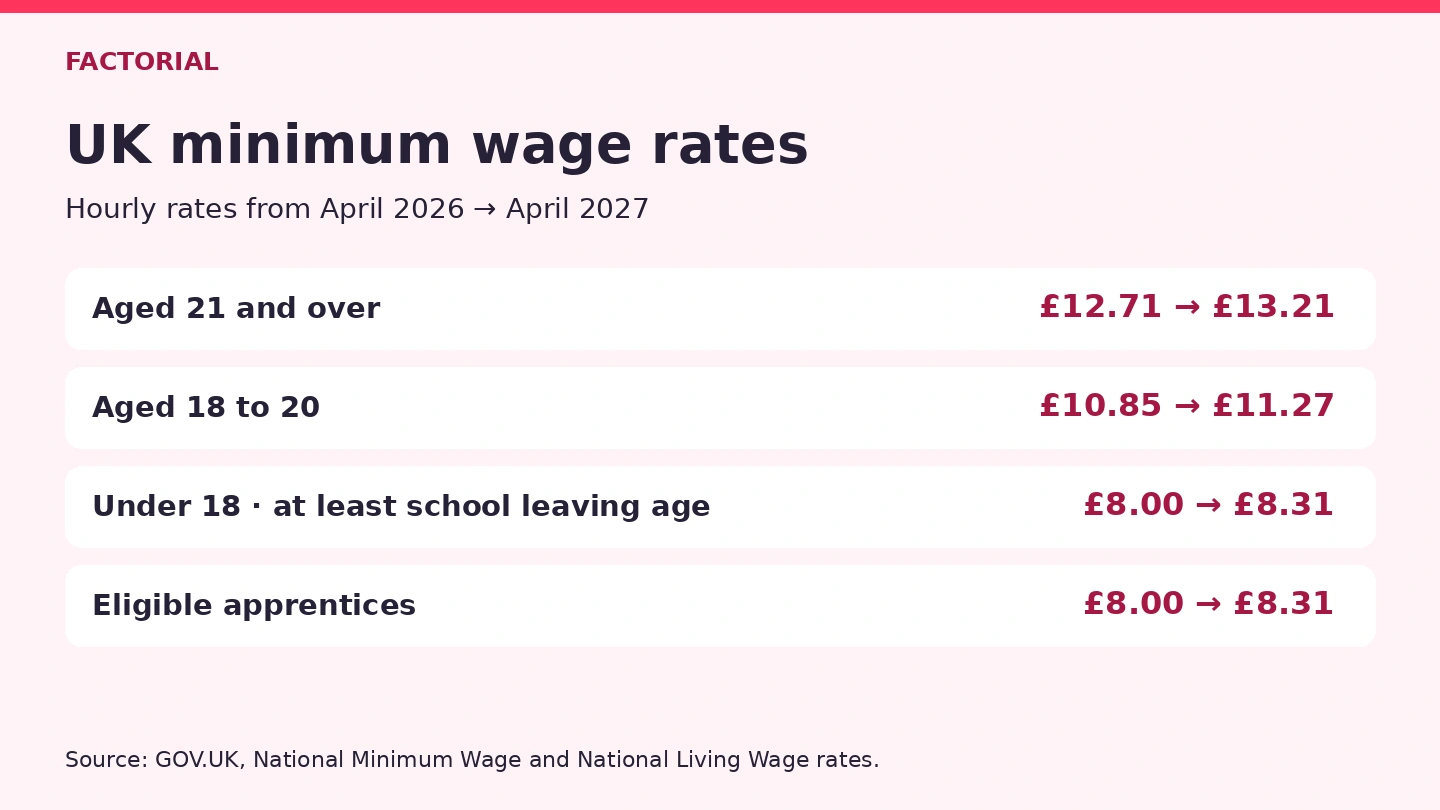
The UK National Living Wage is £12.71 an hour for workers aged 21 and over. From 1 April 2027, it rises to £13.21, and the rates for younger workers and eligible apprentices also increase.
This guide shows you how the minimum wage is changing in the UK, how to choose the right rate for each worker, check the first affected pay run and budget for the increase.
What are the UK minimum wage rates for 2026 and 2027?
The National Minimum Wage is the legal minimum hourly pay for eligible workers who have reached school leaving age. The National Living Wage is the highest statutory rate and generally applies from age 21. According to GOV.UK, the same statutory rates apply across the UK.
| Worker group | 1 April 2026 to 31 March 2027 | From 1 April 2027 |
| Aged 21 and over | £12.71 | £13.21 |
| Aged 18 to 20 | £10.85 | £11.27 |
| Under 18 and at least school leaving age | £8.00 | £8.31 |
| Eligible apprentices | £8.00 | £8.31 |
The adult rate rises by 50p an hour, or around 3.9%. The UK Budget 2026 covers the increase alongside changes to business mileage and the separate timetable for reporting taxable benefits through payroll.
Who gets the minimum wage and when does their rate change?
Eligibility depends on whether someone is a worker for minimum wage purposes. Part-time, casual and agency workers can qualify, and paying someone a salary does not remove their entitlement. If you use freelancers, interns or other arrangements where the person’s status is unclear, check the actual working arrangement against GOV.UK.
| Situation | What to do |
| A new statutory rate starts | Apply it from the first pay reference period that starts on or after the change. |
| A worker reaches a birthday that qualifies them for a higher rate | Check the first pay reference period starting on or after their birthday. |
| An apprentice is under 19 | The apprentice rate applies. |
| An apprentice is 19 or over | Use the apprentice rate in the first year of the apprenticeship. After that, use the rate for their age. |
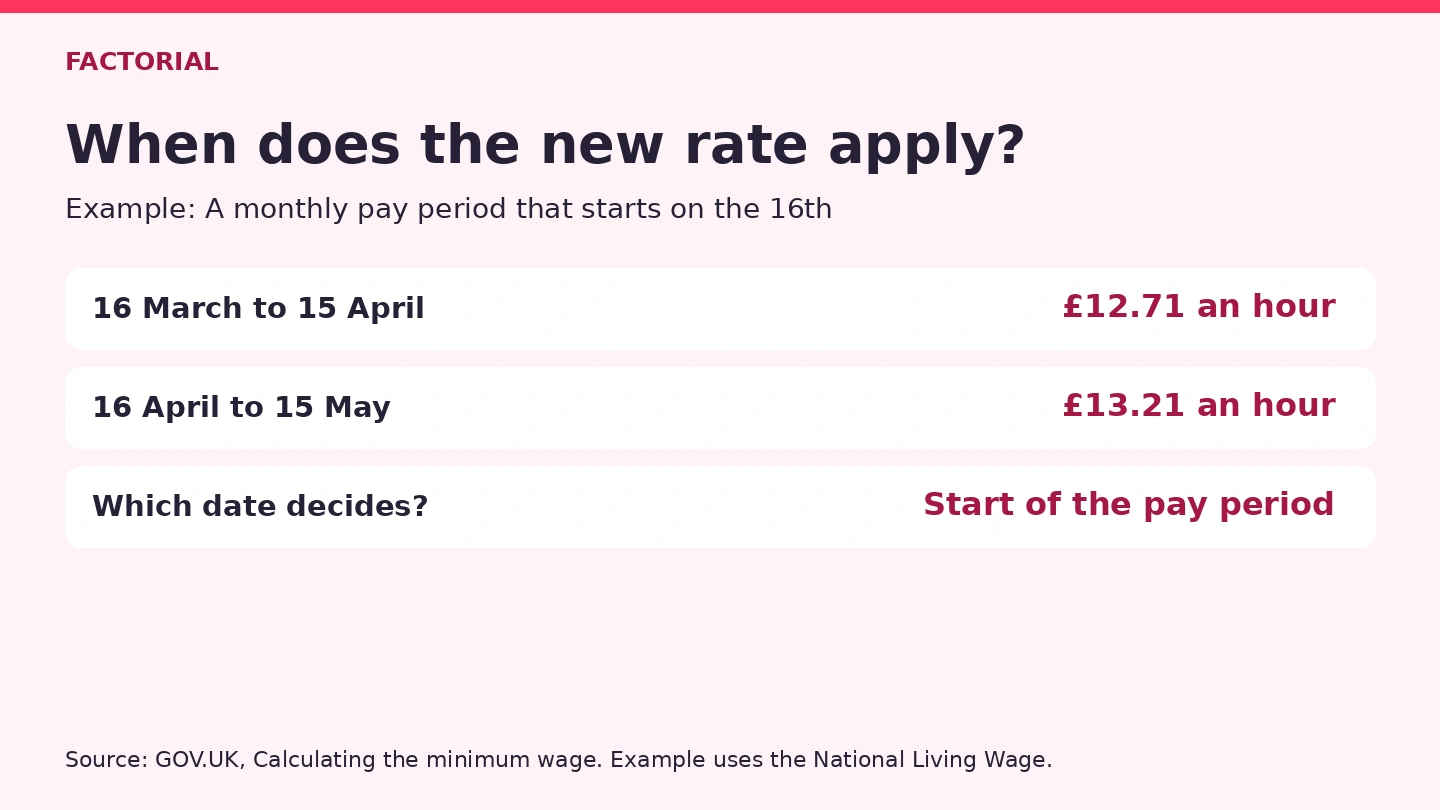
A pay reference period is the period the pay covers, up to one calendar month. If it runs from the 16th of one month to the 15th of the next, the April 2027 increase applies from 16 April. Use the start of the pay period to work this out. According to GOV.UK, a payment made on or after 1 April can still cover a period that began before the increase.
Check apprenticeship dates separately from birthdays. For example, an apprentice aged 20 in their first year qualifies for £8.31 an hour at the April 2027 rate. After completing the first year, they qualify for £11.27 while they are still 20. Give payroll both dates when the apprentice joins, so the change can be picked up alongside the annual rate update.
How do you check that a worker receives the minimum wage?
Work out the pay and hours that count under the rules for the worker’s type of work. Then divide that pay by those hours for the pay reference period and compare the result with the worker’s legal rate. GOV.UK sets out separate rules for different types of work, including hourly and salaried work.
| What to check | Why it matters |
| Hours worked | Required training, handovers and some travel between assignments can count as working time. |
| Tips and service charges | These payments do not count towards minimum wage pay. |
| Costs staff have to pay for work | A required uniform or tools that the worker pays for without reimbursement can reduce the pay that counts. |
| Employer-provided accommodation | A daily allowance called the accommodation offset affects how you account for accommodation. |
For example, from April 2027, a worker aged 21 or over who earns £13.30 for 40 hours receives £532 before deductions. If they must spend £8 on an unreimbursed uniform in that pay period, the pay that counts falls to £524, or £13.10 an hour. That is 11p an hour below the new legal minimum.
How do you check salaried workers’ pay?
Start by checking how the job is paid and whether it meets the rules for salaried hours work. Where those rules apply, you’ll need the basic annual hours and the start of the worker’s calculation year. Keep a record of extra hours worked. If someone regularly opens up early or stays late to close the premises, those extra hours can matter even when their monthly salary stays the same.
Ask managers to record required training and handovers alongside ordinary shifts. If you spot a shortfall, check who else worked the same pattern, work out what they are owed and pay the arrears. GOV.UK explains what employers need to do if they underpay.
What is the accommodation offset?
The accommodation offset is the amount per day you can take into account when you provide accommodation to a worker. It rises from £11.10 a day to £11.53 a day in April 2027. If you provide the accommodation free, the offset can increase the pay that counts for minimum wage purposes. According to GOV.UK, if you charge more than the offset, the excess reduces the pay that counts. For example, at the April 2027 offset, a daily charge of £15 reduces the pay that counts by £3.47 for each day the charge applies.
What is the difference between the National Living Wage and the real Living Wage?
The National Living Wage is the statutory minimum rate for eligible workers aged 21 and over, subject to the apprentice rules. The real Living Wage is a voluntary rate based on living costs, with a separate rate for London. The Living Wage Foundation announced the 2026/27 voluntary rates in October 2026 and asks accredited employers to implement them by 1 May 2027.
| Rate | Hourly pay |
| Statutory National Living Wage from 1 April 2027 | £13.21 |
| Voluntary real Living Wage outside London, 2026/27 | £14.10 |
| Voluntary London Living Wage, 2026/27 | £15.45 |
If you advertise a role as paying the real Living Wage, say which rate you use and check that the salary matches the paid hours. This helps candidates compare your offer with other jobs.
How much will the April 2027 increase cost employers?
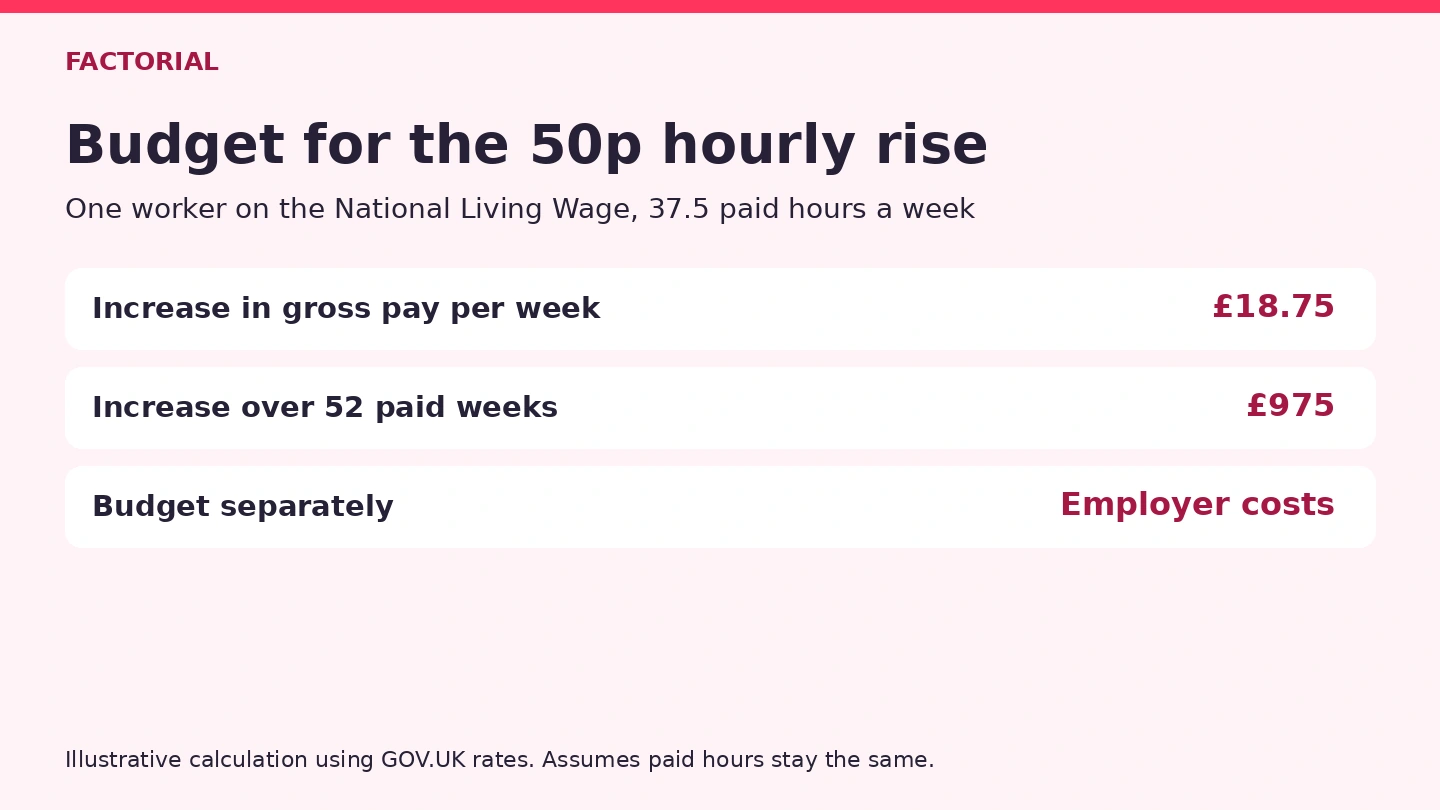
For someone working 37.5 paid hours a week on the National Living Wage, the 50p increase adds £18.75 a week to gross wages. That’s £975 over 52 weeks before employer costs, assuming hours stay the same.
| Gross wages for one worker | At £12.71 an hour | At £13.21 an hour |
| Weekly, based on 37.5 paid hours | £476.63 | £495.38 |
| Annual equivalent, based on 1,950 paid hours | £24,784.50 | £25,759.50 |
Work out the cost for everyone affected using their hourly increase and expected paid hours. Then add employer National Insurance and pension contributions where they apply. Use your actual payroll assumptions for those costs, including any reliefs and the earnings your pension scheme uses to calculate contributions.
Check the pay band above the legal minimum too. For example, if a supervisor earns £13.50 an hour, the gap above the National Living Wage falls from 79p to 29p. Cost any decision to keep that gap separately from the statutory increase. Add the rate changes to your payroll year-end checklist and tell staff when their new rate will appear on their payslip.
If you have several sites, run the calculation for each location. A shop with ten people at the minimum wage will feel the increase differently from an office where most employees already earn above it. Break out contracted hours, expected overtime and seasonal cover so finance can see which assumptions drive the total. Compare the first affected pay run with the forecast and check any differences against the hours people actually worked.
Use Factorial’s salary range calculator to sketch out a pay band for a role. Check the bottom of the proposed range against the statutory rate and the hours the job requires.
How can Factorial help with the 2027 pay review?
A pay review is easier to check when HR, finance and payroll work from the same approved rates. In Factorial’s 2026 Business Facts Index, 75.3% of surveyed leaders said their company would work better with fewer, more centralised software tools. The survey covered 3,760 business leaders in Spain, Germany, France, Italy and Portugal.
- Prepare the payroll handover. Bring pay changes and other payroll inputs together for review with Factorial Compensation. Record the effective date and approval alongside each change so payroll can trace the figure if an employee queries it.
- Review changes before sign-off. One is your personal AI agent at work. It uses company context and the information you have permission to access. A finance lead could ask One to summarise pay changes from records they can access, then check the figures with HR before sign-off.
- Give staff access to their payslips. With HR self-service, employees can find their payslips and check their pay after the change.
Request a free demo of Factorial to see how your team can spend less time gathering payroll information and more time supporting staff.

FAQs about minimum wage
Yes. From 1 April 2027, the National Living Wage rises from £12.71 to £13.21 an hour for eligible workers aged 21 and over. The other statutory rates also rise. Before updating payroll, check the first pay reference period that starts on or after 1 April for each group of workers.
At the National Living Wage, 40 paid hours comes to £508.40 before deductions at the April 2026 rate and £528.40 at the April 2027 rate. Assuming 40 paid hours every week for 52 weeks, those amounts are equivalent to £26,436.80 and £27,476.80 a year.
The legal minimum is set by the hour. The lowest statutory hourly rate is £8.00 until 31 March 2027 and £8.31 from 1 April 2027. It applies to eligible apprentices and workers under 18 who have reached school leaving age. The annual equivalent depends on how many hours a person is paid for.
A living wage is a rate intended to reflect what people need to meet living costs. In the UK, the Living Wage Foundation publishes the voluntary real Living Wage. The government uses National Living Wage as the name of its statutory rate for eligible workers aged 21 and over.
A living salary depends on location, household costs and paid hours. As a guide, the 2026/27 voluntary real Living Wage works out at £27,495 a year outside London and £30,127.50 in London, before deductions. Both figures assume 37.5 paid hours a week for 52 weeks.