As the year winds down, it is a good time to reflect on your employees’ achievements, assess their progress and identify areas for improvement. A well-conducted year-end performance review helps you understand what is working, address performance gaps and agree on meaningful goals for the year ahead. Whether you manage a small team or oversee a larger workforce, this guide will help you prepare for and conduct year-end performance reviews that lead to better conversations and actionable outcomes.
Why Year-End Performance Reviews Matter
A year-end performance review gives you an opportunity to step back and assess how your employees have performed throughout the year. It helps you recognise their contributions, understand their challenges and identify where they need additional support.
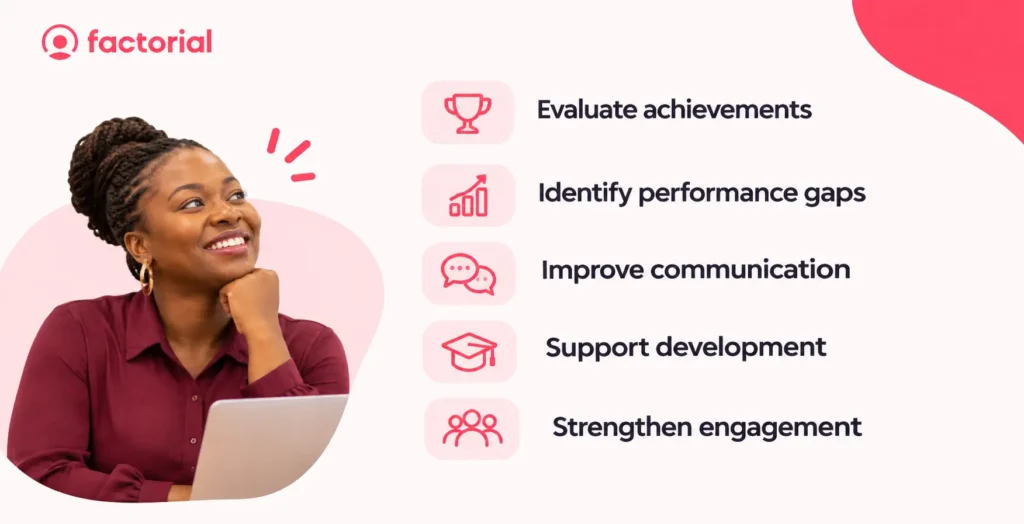
When you approach the process thoughtfully, you can:
- Evaluate employee achievements: Understand how your employees have contributed to individual, team and organisational goals.
- Identify performance gaps: Pinpoint areas where employees may need additional guidance, training or resources.
- Improve communication: Create an opportunity for honest conversations about expectations, challenges and progress.
- Support employee development: Identify skills employees need to develop and opportunities for career growth.
- Strengthen engagement: Show employees that you value their contributions and are invested in their development.
According to Gallup’s research on performance reviews, effective reviews should be fair, accurate and focused on employee development. This means your review should go beyond evaluating past performance to consider how you can help your employees improve.
Step-by-Step Guide to Conducting an Effective Year-End Performance Review
Conducting a meaningful performance review requires preparation, clear communication and a structured approach. Here are six steps to guide you.
1. Review Employee Goals and KPIs
Start by revisiting the goals and key performance indicators (KPIs) you set for each employee at the beginning of the year. This gives you a reference point for assessing their progress and determining whether they met their expectations.
Consider:
- Which goals did the employee achieve?
- Were there targets they struggled to meet?
- Did their responsibilities change during the year?
- How did their contributions support team or business objectives?
- Remember to consider any changes in responsibilities, resources or business priorities that may have affected their performance.
2. Gather Relevant Performance Data
Your assessment should be based on evidence rather than assumptions or recent experiences. Gather information that gives you a balanced view of each employee’s performance throughout the year.
This may include:
- Completed projects and key deliverables.
- Sales, productivity or customer service metrics.
- Feedback from colleagues, managers or customers.
- Attendance and punctuality records, where relevant.
- Outcomes from previous performance reviews.
Using different sources of information helps you build a more accurate picture of each employee’s contributions.
3. Schedule and Prepare for Review Meetings
Give your employees enough notice before their performance review meetings. Let them know what the discussion will cover and what they should prepare.
You should also:
- Review their performance records and previous feedback.
- Prepare specific examples to support your assessment.
- Share the review criteria ahead of the meeting.
- Ask employees to complete a self-assessment.
- Set aside enough time for an open discussion.
Proper preparation helps you avoid rushed conversations and gives employees an opportunity to reflect on their performance.
4. Discuss Achievements and Areas for Improvement
During the meeting, start by acknowledging the employee’s achievements and contributions. Discuss areas where they performed well before moving on to challenges or areas that need improvement. Be specific when providing feedback. Rather than saying an employee needs to improve their communication, explain the situations where communication could have been better and what you would like to see going forward.
Keep the conversation constructive and give the employee room to share their perspective. According to Gallup’s research on effective feedback, meaningful feedback can play an important role in improving employee engagement.
5. Encourage Employee Self-Assessment
Year-end performance reviews should not feel like a one-sided evaluation. Give employees the opportunity to reflect on their own progress, share their experiences and discuss the support they need.
You can ask them to:
- Highlight their most significant achievements.
- Discuss challenges that affected their performance.
- Identify skills they would like to improve.
- Share feedback on their role, team and working environment.
Listening to their perspective can help you understand circumstances that may not be visible in performance reports.
6. Agree on Future Performance Goals
Use the insights from the review to establish clear goals for the coming year. Work with each employee to identify realistic objectives that support their professional development and your organisation’s priorities. Make sure each goal is specific, measurable and achievable. You should also agree on how progress will be measured and when you will review it.
Involving employees in setting their goals can make them feel more accountable and invested in achieving them.

Important Questions to Ask During Performance Reviews
The questions you ask can shape the quality of your year-end performance review conversations. Instead of focusing only on targets and shortcomings, ask questions that encourage employees to reflect, share feedback and think about their development.
Here are some questions you can use:
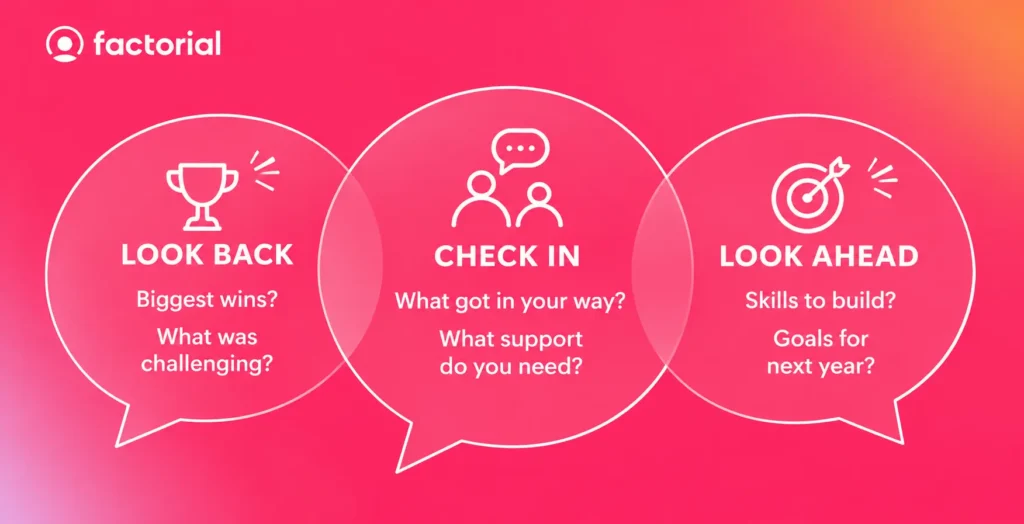
Performance and achievements
- What achievement are you most proud of this year?
- Which of your goals did you find most challenging?
- What do you think you could have done differently?
Employee experience and support
- What challenges affected your work this year?
- Do you have the resources and support you need to perform effectively?
- How would you describe your working relationship with your team?
Development and future goals
- Which skills would you like to develop in the coming year?
- Are there additional responsibilities you would like to take on?
- What goals would you like to work towards next year?
You do not have to ask every question. Choose the ones that are most relevant to the employee’s role, performance and development needs.
What to Do After a Year-End Performance Review
Your responsibility does not end when the year-end performance review meeting is over. The next step is to turn the feedback and insights from the conversation into practical actions.
Here is what you should do:
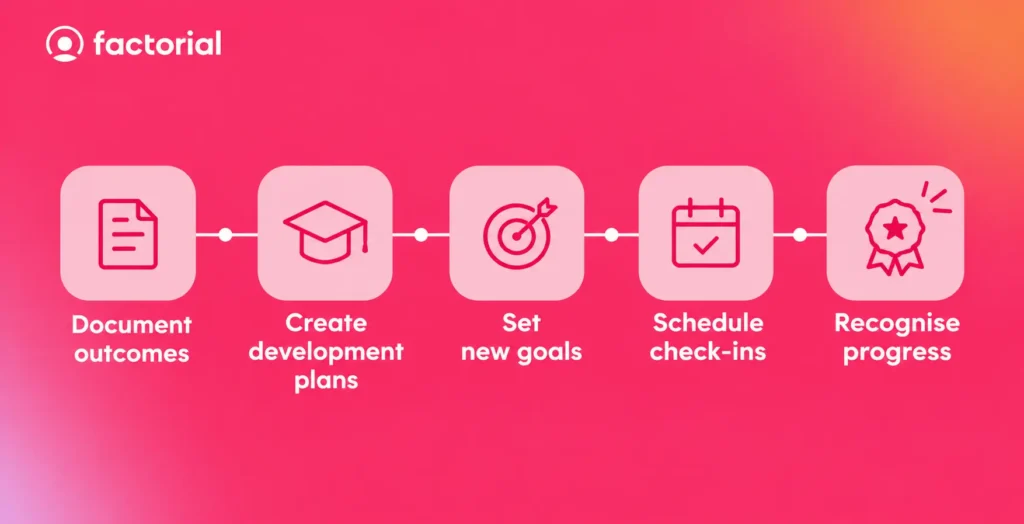
- Document the outcomes: Keep a record of the employee’s achievements, feedback, agreed goals and areas for improvement.
- Create development plans: Identify the training, mentorship or resources employees need to improve their performance.
- Set new goals: Translate the discussion into measurable objectives for the coming year.
- Schedule regular check-ins: Follow up on agreed actions throughout the year rather than waiting until the next annual review.
- Recognise progress: Acknowledge improvements and achievements as employees work towards their goals.
Following through on these actions shows employees that their feedback matters and that the review is more than an annual formality.
Simplify Year-End Performance Reviews with Factorial
Managing year-end performance reviews can become complicated when you rely on spreadsheets, scattered documents and manual follow-ups. You need a way to organise the process, keep performance information accessible and track employee progress.
With Factorial’s performance management software, you can organise performance review cycles, gather feedback and manage employee evaluations in one place.
- Set up structured performance reviews.
- Collect self-assessments and feedback from managers, peers and other colleagues.
- Track employee goals and progress, depending on your plan.
- Document feedback and identify development opportunities.
- Create action plans following performance reviews.
With a more organised process, you can spend less time managing paperwork and more time having meaningful conversations with your employees.
Explore how Factorial equips you to manage employee performance and build a more productive, engaged workforce.

Year-End Performance Reviews FAQs
A year-end performance review is a formal assessment of an employee's performance over a specific period, usually the preceding year. It helps you evaluate achievements, discuss challenges, provide feedback and establish goals for the coming year.
You can conduct formal performance reviews annually, twice a year or quarterly, depending on your organisation's needs. Regular one-to-one meetings and feedback sessions throughout the year can also help you monitor progress between formal reviews.
Your review should cover employee achievements, progress against goals, key performance indicators, areas for improvement, feedback, development needs and objectives for the next review period.
Start by reviewing the employee's goals, performance records and previous feedback. Prepare specific examples, share the review criteria and give the employee time to complete a self-assessment before the meeting.
Avoid relying on personal opinions, focusing only on recent performance, comparing employees unfairly or making the conversation one-sided. Your feedback should be specific, balanced and focused on helping the employee improve.