Employee payslips explain how pay has been calculated, what has been deducted and when payment is due. For UK employers, accurate itemised payslips support payroll compliance, help workers check their earnings and reduce avoidable pay queries.

Table of Contents
- Key Facts
- What is a payslip and when must it be provided?
- Which workers are legally entitled to a payslip?
- What must a UK payslip include?
- How do you read an HMRC payslip?
- What does your tax code mean?
- How can employees check a payslip for errors?
- Free Payslip Template
Key Facts
- A UK payslip is an itemised pay statement that GOV.UK says must be issued on or before payday and show pay, deductions and relevant variable hours.
- For 2026–27, HM Revenue & Customs sets the standard Personal Allowance at £12,570, equal to £242 per week or £1,048 per month.
- Acas states that employers must retain relevant hours-worked or payment records for the previous 6 years where National Minimum Wage compliance is questioned.
- HM Revenue & Customs recommends a 6-point payslip check covering receipt, personal details, employer details, tax code, tax and National Insurance, and pension deductions.
What is a payslip and when must it be provided?
A payslip provides information about your pay, including the pay period and your earnings before and after any deductions such as tax. It can also be called a pay stub, wage slip, wage advice or salary statement.
Paper and electronic payslips
Employers may provide printed or electronic payslips. GOV.UK confirms that the employer can choose the format, provided workers receive their payslips on or before payday.
Before payroll systems were digitalised, a payslip was a paper statement issued with wages. Payslips can now be provided on paper, by email or through an online system. Acas states that employers should provide an alternative format when a worker cannot access an online payslip.
Employers must provide payslips on or before payday. GOV.UK confirms that the statutory timing is linked to payday, not the moment funds reach a bank account. Payroll teams should also verify approved hours before processing pay so that overtime, absence and variable-hours data are reflected correctly.
For teams managing payslips through a central HR system, Factorial’s employee portal can give authorised employees access to their payroll documents while helping HR teams keep document access organised.
Which workers are legally entitled to a payslip?
Employees and workers are generally entitled to a written itemised payslip from their first payday. Acas confirms that this includes agency workers and people on zero-hours contracts, while genuinely self-employed contractors are not entitled to payslips.
There are a few exceptions:
- Workers who are contractors or freelancers rather than employees.
- Those working in the police service, as merchant seamen or in share fishing.
What must a UK payslip include?
Since 6 April 2019, employers have had to provide itemised payslips to workers. GOV.UK confirms this legal requirement. HR teams need an effective workflow for issuing accurate payslips to workers in the UK.
These itemised payslips must include:
| Mandatory information | When it must appear | Key requirement |
|---|---|---|
| Gross and net pay | Every payslip | Show earnings before and after deductions. |
| Variable deductions | Every payslip | Show deductions that can change, including tax and National Insurance. |
| Variable-hours pay | When pay varies by time worked | Show the hours worked and the associated pay. |
| Fixed deductions | Every payslip or separate statement | Provide a separate fixed-deduction statement before the first payslip and reissue it at least every 12 months. Acas sets out these requirements. |
To fulfil this legal requirement and help people understand the details of what they are being paid, a payslip typically includes the following information:
- Number of hours being paid.
- The period the pay covers.
- Employee tax code.
- Amounts of pay before any deductions (called gross pay).
- Pay amounts after deductions, such as tax (called net pay).
- Amounts of any variable deductions, including National Insurance, student loan repayments and pension contributions.
- Amounts of fixed deductions, such as loans for travel or union subscriptions.
- A breakdown of how wages will be paid.
- When applicable, bonuses, maternity or statutory sick pay.
Employers must also clearly explain any deductions that are fixed in amount, for example, a season ticket loan. They can do this either on the payslip or in a separate statement. If they choose to send a separate statement, this should be done before the first payslip is received and updated yearly.

When can employers make deductions from wages?
Employers may make deductions where the law requires or permits them, where the worker has agreed in writing, where the employment contract allows them, or where a court order applies. GOV.UK states that deductions for shortages from retail workers are normally limited to 10% of gross pay in each pay period.
How do you read an HMRC payslip?
Let’s have a look at the information in a payslip:
Pay, tax and year-to-date fields
Personal information: employee details such as name, address, National Insurance number and payroll or employee number (used by companies to identify individuals on their payroll).
Tax period & code: the specific tax period within the UK tax year (also known as the fiscal year, which runs from the start of April to the end of March the following year) for this particular pay slip, along with the relevant tax code for the individual.
Gross & net pay: gross pay shows what an employee has earned before taxes and other deductions, net pay shows an employee’s take-home pay once those deductions have been made. A payslip will usually indicate what makes up the gross pay (for example, where bonuses are included or statutory pay received). It will detail the different deductions (for example, tax, National Insurance and pension contributions).
Year to Date (YTD): this information shows the total amount earned and the total deductions taken for the whole period since the start of the fiscal year.
Benefits and expenses
Workplace benefits: benefits the company offers, such as health insurance or a company car, will be clearly shown on a payslip.
Expenses: employers may indicate payment or reimbursement of business expenses on payslips, although some employers use a different system to payroll for expenses.

What does your tax code mean?
A tax code comprises numbers and letters that tell HMRC how much money you should pay in tax. The numbers and letters are directly linked to your circumstances, and the combination can be confusing. As the code directly impacts how much money is deducted from your pay in PAYE (‘pay as you earn’ or the money taken from your pay by your employer and given directly to the tax man), it is helpful to understand what the code means.
While we’ve included the main tax codes below, more detail is available in our handy tax codes guide for the UK.
1257L: For the 2026–27 tax year, 1257L is the standard code for most people with one job or pension. HM Revenue & Customs sets the Personal Allowance at £12,570. HM Revenue & Customs may use 1257L with W1, M1 or X on a non-cumulative basis.
L: you are entitled to the tax-free allowance.
K: used when you have income that is not being taxed in another way and is worth more than your tax-free allowance, for example, benefits that you need to pay tax on or you are paying the tax you owe from a previous year
M & N: you’ve received a transfer of 10% of your partner’s Personal Allowance (M), or you have given 10% of your Personal Allowance (N).
C: indicates you are being taxed at the Welsh income tax rates.
T & 0T: T means HM Revenue & Customs needs to review the amount of Personal Allowance available. 0T means no Personal Allowance is applied to that income. HM Revenue & Customs confirms that 0T can be used on a non-cumulative basis after employment ends.
BR, D0 & D1: these codes may apply to income from a second job or second pension.
NT: no tax is payable on this income.
W1, M1 or X at the end of the code: these are temporary emergency tax codes, for example, if you have started a job after working as a contractor and HMRC does not have access to all the necessary details.
Tax codes can change at the start of a tax year or when income, benefits or unpaid tax change. HM Revenue & Customs may send an updated tax-code notification to your employer when payroll records need to change.
What does PAYE mean on a payslip?
PAYE means Pay As You Earn. Employers operate PAYE through payroll so that Income Tax and employee National Insurance are deducted from pay and paid to HM Revenue & Customs. For 2026–27, HM Revenue & Customs sets the employee National Insurance primary threshold at £242 per week and the upper earnings limit at £967 per week.

How can employees check a payslip for errors?
Check every payslip against approved hours, the expected pay period and the tax code shown. HM Revenue & Customs recommends checking 6 details: receipt of a payslip, personal details, employer details, tax code, tax and National Insurance deductions, and pension deductions.
- Compare gross pay with contracted pay, overtime and approved absence.
- Check deductions against the tax code, pension arrangement and any agreed repayments.
- Raise unexplained differences with payroll promptly and retain a copy of the payslip.
If an old payslip is unavailable, ask the employer or former employer for a copy first. Acas states that employers must keep relevant hours-worked or payment records for the previous 6 years where National Minimum Wage compliance is in question.
How should payslip data be protected?
Payslips contain personal payroll information and should only be accessible to authorised people. The Information Commissioner’s Office states that employment records must be protected with access controls appropriate to the information and potential harm from misuse or loss.
Free Payslip Template
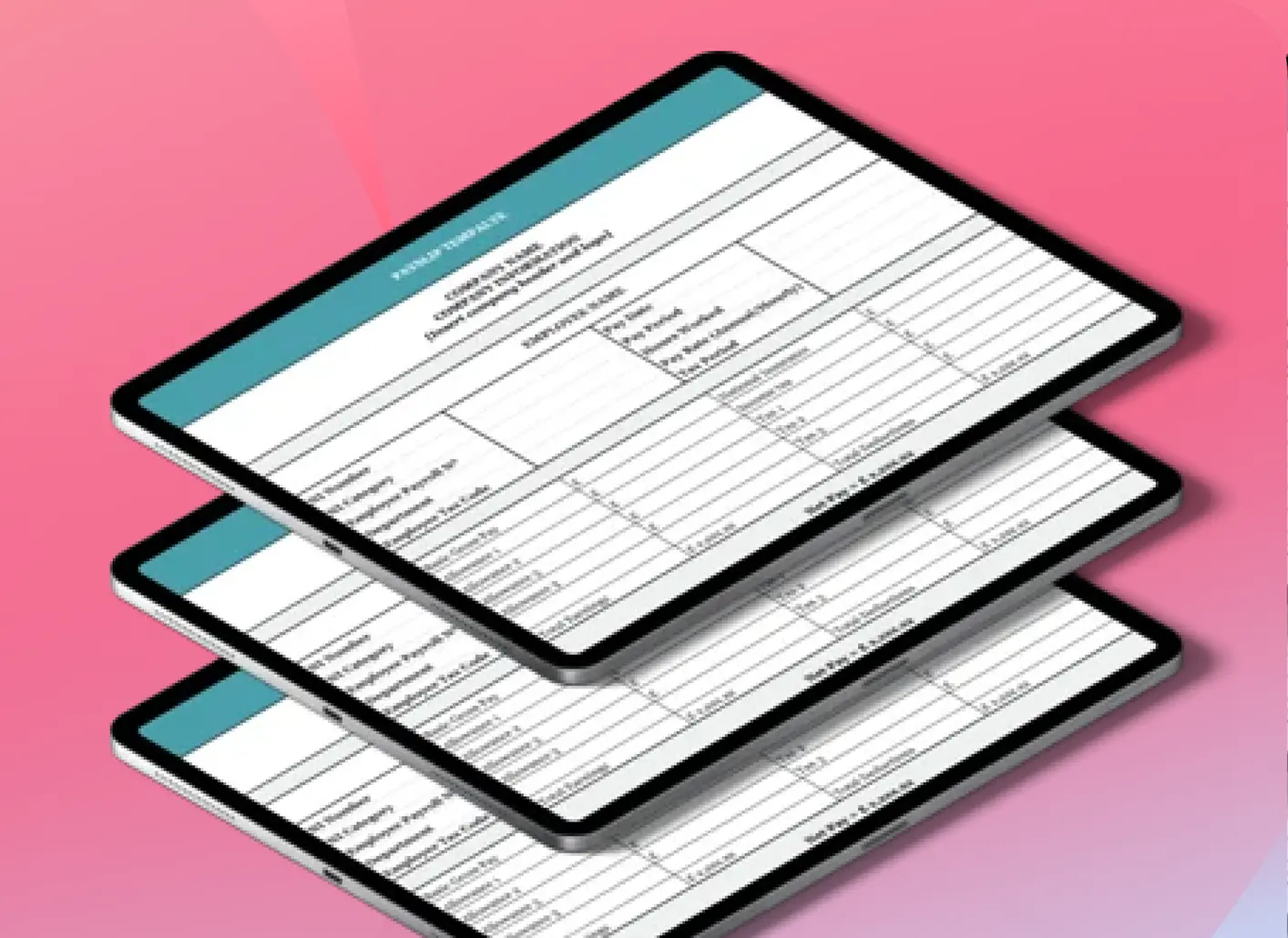
Here at Factorial, we know how important it is to get payslips right, so we’ve developed a free and easy-to-use template.
Can I download my employees’ payslips from Factorial’s employee portal?
Yes, both employers and employees can download payslips from Factorial’s employee portal. Even better, managers and HR teams can customise permission settings to ensure only the appropriate individuals can access sensitive information like payslips.
FAQ
What must be shown on a payslip in the UK?
A UK payslip must legally show your gross pay (earnings before deductions) and net pay (take-home pay). It must also provide an itemised list of all deductions, such as tax and National Insurance. If your pay varies based on hours worked, the payslip must show those hours.
How to read your payslip in the UK?
To read your payslip, start with your gross pay, which is your total earnings before any deductions. Then, review the itemised deductions, such as PAYE tax, National Insurance, and pension contributions. The final figure is your net pay, which is the amount you actually receive.
How do I work out if my payslip is correct?
To check your payslip, verify that your gross pay matches your contracted salary and any overtime. Ensure your tax code is correct by checking it against HMRC’s records. Finally, confirm that all fixed and variable deductions, like pension contributions or student loan repayments, are accurate.
Can I view payslips on HMRC?
No, you cannot view or download the actual payslip documents from your employer on the HMRC website. However, you can log into your personal tax account to see the pay and tax details that your employer has reported to HMRC for the current and previous tax years.
What are the different pay codes?
Pay codes, more commonly known as tax codes, are used by your employer to calculate how much Income Tax to deduct from your pay. The most common code is 1257L for people with one job. Different codes exist for various circumstances, like having a second job or receiving benefits.
What is ni ee and ni er on payslip?
“NI EE” refers to the employee’s National Insurance contribution, which is deducted from your gross pay. “NI ER” is the employer’s National Insurance contribution, which your employer pays on top of your salary. Only the employee’s contribution (NI EE) affects your take-home pay.
What does minus mean on a payslip?
A minus sign on a payslip typically indicates a deduction from your gross pay, such as tax, National Insurance, or pension contributions. It can also represent a repayment you are making to the company, for instance, for a salary advance or to correct a previous overpayment.
Do employers need to keep PAYE records?
Yes, employers must keep PAYE records for 3 years from the end of the tax year, and HMRC can charge a penalty of up to £3,000 for incomplete records.