What are your rights regarding paternity leave, and how long can you take off work?
If you need clear answers to start planning your leave, this article has you covered with straightforward guidance on claiming paternity leave and understanding pay, duration, and essential steps to secure your time with your new child.
This guide covers the statutory rules for England, Scotland and Wales. Paternity leave rules differ in Northern Ireland, so employees and employers there should check the relevant local guidance. GOV.UK confirms that separate rules apply in Northern Ireland.
Table of Contents
- Key Facts
- What Is Statutory Paternity Leave?
- Who Qualifies for Statutory Paternity Leave and Pay?
- How Much Is Statutory Paternity Pay?
- Steps to Claim Statutory Paternity Pay
- Alternatives and Additional Options
- Navigating Workplace Policies and Legal Protections
- Preparing for Paternity Leave
- Automating Leave Management with Factorial
- Frequently Asked Questions
Key Facts
- In England, Scotland and Wales, eligible employees can take up to two weeks of Statutory Paternity Leave after a birth, adoption or eligible surrogacy arrangement. GOV.UK confirms that the leave may be taken as one two-week block or two separate one-week blocks.
- GOV.UK sets Statutory Paternity Pay at £194.32 a week or 90% of average weekly earnings, whichever is lower.
- Acas reports that one fifth of fathers were not entitled to paternity leave under the former service rules, illustrating why the 6 April 2026 day-one leave entitlement matters.
- Employees should give their employer at least 28 days’ notice of the intended leave start date and whether they will take one or two weeks. GOV.UK confirms this requirement.
What Is Statutory Paternity Leave?
Statutory paternity leave is a provision aimed at nurturing the vital bond between parents and their newborn or adopted child. This provision allows eligible fathers and partners to take one or two consecutive weeks off to spend time with their new child, ensuring that they can be there for those first precious moments without the worry of work commitments.
The underlying objective of statutory paternity leave is to enable fathers and partners to participate actively in their child’s early life, thus building a balanced distribution of family duties.
Duration and Timing of Leave
Statutory Paternity Leave can be taken as either one two-week block or two separate one-week blocks. It cannot begin before the birth and must end within 52 weeks of the birth, or within 52 weeks of the due date if the baby is born early. GOV.UK confirms these timing rules.
But what if the baby arrives earlier than expected or requires hospital care? In these instances, paternity leave can be taken within eight weeks of the actual birth date, potentially starting once the baby leaves the hospital. Such flexibility guarantees your presence during your child’s most crucial moments.
Rights During Leave
Taking time off for paternity leave does not mean forfeiting your rights as an employee. During paternity leave, your employment rights remain protected, including entitlement to pay rises, holiday accrual and return to work. GOV.UK confirms these protections. This includes:
- Any pay rises that occur during your leave
- The right to return to the same or an equivalent position after your leave
- Your holiday entitlement continues to accumulate as normal during your leave.
If you feel that you’ve been unfairly dismissed or discriminated against due to taking or intending to take paternity leave, you have the right to appeal to an employment tribunal.
Who Qualifies for Statutory Paternity Leave and Pay?
Paternity leave isn’t a universal right for all employees, specific eligibility conditions must be satisfied. Since 6 April 2026, Statutory Paternity Leave has been a day-one right for eligible employees. Acas confirms that the separate 26-week continuous-service requirement still applies to Statutory Paternity Pay, alongside an average weekly earnings threshold of £129..
Eligible individuals for paternity leave include:
| Family situation | Potentially eligible person | Key condition |
|---|---|---|
| Birth | The child’s father or the mother’s spouse or partner | The person must expect to care for the child or support the birth parent. |
| Adoption | The primary adopter’s spouse or partner | The person taking paternity leave must not be the primary adopter taking adoption leave. |
| Surrogacy | An intended parent | The intended parent must meet the applicable parental-order conditions. |
GOV.UK confirms that eligibility can apply to birth, adoption and qualifying surrogacy arrangements.
Employment Status Requirements
When it comes to employment status, there are specific requirements that need to be met to qualify for paternity leave, including statutory paternity leave. One must be an employee and have maintained continuous employment with the same employer for a minimum of 26 weeks up to any day in the ‘qualifying week’.
For intended parents in a surrogacy arrangement, they must be legally classed as an employee or work through an agency and meet the same continuous employment requirement. The ‘qualifying week’ for paternity pay eligibility in the case of surrogacy is 15 weeks before the baby is expected to be born.

Relationship to the Child
In addition to employment status, your relationship with the child is crucial in determining your eligibility for paternity leave. The legislation extends beyond biological fathers, encompassing the husband or partner of the pregnant woman, thus ensuring inclusivity. Adoptive parents are also included in the provision, with specific criteria that must be satisfied.
Only one partner can take Statutory Paternity Leave, and this partner must be the spouse, civil partner, or partner of the primary adopter of the child. For individuals in a surrogacy arrangement, the intended parent who is not taking adoption leave is eligible, provided they will apply for a parental order and meet other eligibility criteria.
How Much Is Statutory Paternity Pay?
While paternity leave offers you time away to bond with your new child, it’s also crucial to comprehend the financial implications. Statutory Paternity Pay is a provision that offers financial support during this period. To qualify for Statutory Paternity Pay, employees generally need 26 weeks’ continuous employment by the qualifying week and average weekly earnings of at least £129 during the relevant eight-week period. Acas sets out both conditions.
Calculation of Pay Rates
Calculating your Statutory Paternity Pay might seem complex, but it’s based on a straightforward formula. Your pay is calculated over a ‘relevant period’, typically the eight weeks leading up to the ‘qualifying week’. The Average Weekly Earnings (AWE) are calculated by dividing your total earnings paid during the relevant period by the number of days, weeks, or months in that period.
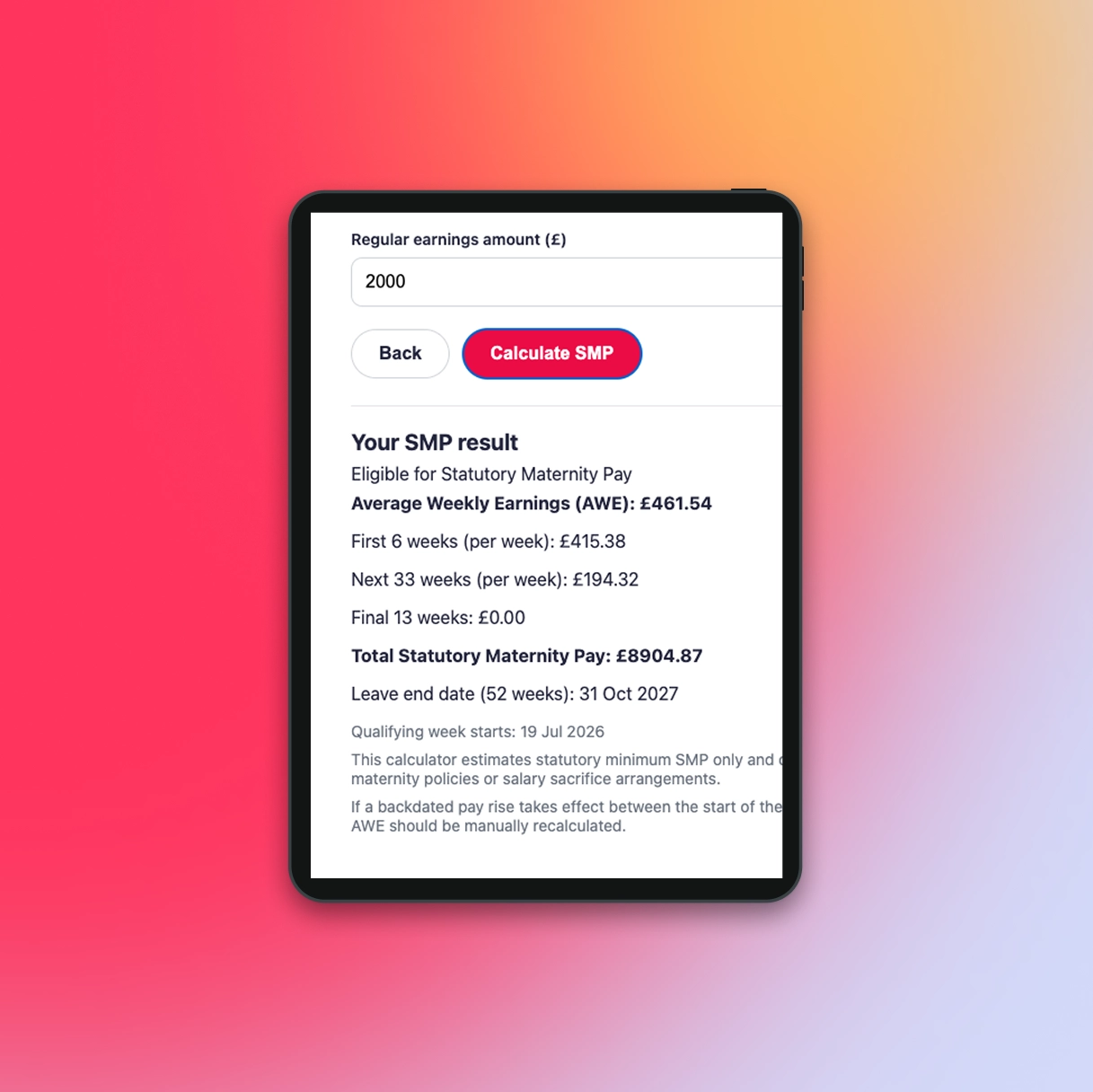
Statutory Paternity Pay is calculated using the lower of two figures: £194.32 a week or 90% of average weekly earnings. GOV.UK confirms the current statutory rate. It’s important to note that if you’re engaged in a salary sacrifice scheme, your AWE is based on the reduced earnings received after the sacrifice. This calculation method is similar to that of statutory maternity pay.
Tax and Deductions
Statutory Paternity Pay is taxable and subject to National Insurance contributions, like your regular income. These deductions are made when your pay is processed during the leave period, ensuring you don’t have to worry about making these payments yourself.

Steps to Claim Statutory Paternity Pay
Claiming your Statutory Paternity Pay should be done in steps. For a birth, employees must tell their employer the due date at least 15 weeks before the baby is expected and give at least 28 days’ notice of the intended leave dates and duration. GOV.UK confirms that the online process previously called form SC3 can be used unless the employer provides its own form..
If you can’t give notice on time for some reason, it’s important to discuss the reasons with your employer and provide the notice as soon as possible without further delay.
Employer Notice Requirements
When giving notice to your employer, certain requirements must be met:
- Tell your employer the baby’s due date at least 15 weeks before the expected week of childbirth.
- Give at least 28 days’ notice of each requested leave period, including the intended start date and whether you will take one or two weeks.
- Give at least 28 days’ notice if you need to change the start date of paid paternity leave.
This will ensure that proper arrangements can be made.
For surrogacy arrangements, you need to give notice to your employer at least 15 weeks before the baby’s due date, and inform your employer of the birth as soon as possible after it occurs.
Documentation and Employer Requests
In addition to giving notice, you may also need to provide certain documentation to your employer. To claim paternity leave and pay, use the GOV.UK online form previously called SC3, then download or print it for your employer. If your employer has its own form, use that instead. GOV.UK confirms this process. For those adopting, you must provide proof of adoption, such as a letter from the adoption agency or the matching certificate.
For surrogacy arrangements, a ‘statutory declaration’ can be used as documentation confirming your intention to apply for a parental order.
Alternatives and Additional Options
While statutory paternity leave is a common choice, there are alternative forms of leave available to new parents. These include shared parental leave and unpaid parental leave, which provide different options depending on your individual circumstances and needs. In some cases, unpaid leave might be suitable for those requiring more flexibility.
Comprehending these alternatives is vital for making a knowledgeable decision about the leave type that best suits you and your family.
Shared Parental Leave

One alternative to statutory paternity leave is Shared Parental Leave. This provision enables parents to share up to 50 weeks of leave and 37 weeks of pay, offering greater flexibility for couples.
It’s important to note that the partner of a self-employed father may still be eligible for shared parental leave if they are entitled to maternity leave. Same-sex couples are also eligible, sharing the same entitlement of up to 50 weeks of leave and 37 weeks of pay.
Neonatal Care Leave and Pay
If a baby born on or after 6 April 2025 receives neonatal care for at least seven consecutive days, eligible parents may receive up to 12 weeks of Neonatal Care Leave and Pay. GOV.UK confirms that this leave is additional to other statutory parental entitlements.
Unpaid Parental Leave
Another alternative is Unpaid Parental Leave. This provision allows employees who have been with their company for over a year to take up to 18 weeks of leave for each child until the child’s 18th birthday. While this leave is unpaid, it provides greater flexibility for parents, particularly those who wish to take extended time off to care for their children.
Adoption Leave and Pay
For those who are adopting, you are entitled to up to 52 weeks of adoption leave and up to 39 weeks of statutory adoption pay. During the first six weeks of adoption leave, statutory adoption pay amounts to 90% of the adopter’s average gross weekly earnings. Employees are also permitted time off to attend two adoption appointments after being matched with a child.
Surrogacy and Same-Sex Couples
In the case of surrogacy arrangements, the intended parent who is not taking adoption leave is eligible for Statutory Paternity Leave, providing that one of the parents is the child’s biological parent and that either the biological parent or their spouse, partner or civil partner has the main responsibility for the child’s care.
Same-sex partners, including those who are not the biological parents, have the right to paternity leave and pay equivalent to that which birth fathers are entitled to.
Bereaved Partner’s Paternity Leave
Where the child’s mother, primary adopter or primary intended parent dies on or after 6 April 2026, an eligible bereaved parent may take up to 52 weeks of Bereaved Partner’s Paternity Leave. Acas confirms that this is a day-one employment right.
Navigating Workplace Policies and Legal Protections
Knowing your rights is one aspect, but manoeuvring through workplace policies to affirm these rights is a different challenge. Before notifying your employer about paternity leave, it’s necessary to comprehend your legal rights and the company’s policy on paternity leave. Some employers may offer a company paternity scheme that provides more than the statutory amount, but they cannot offer less.
If you face discrimination during the paternity leave process, you can seek support from employment solicitors specialising in maternity and paternity rights.
Flexible Working Patterns
Employees have had the statutory right to request flexible working from the first day of employment since April 2024. The Acas Code changes also allow two requests in a 12-month period and require employers to consult before rejecting a request.. On receiving a flexible working request, employers are required to consider the request and are only permitted to refuse them based on specific business reasons.
If an employer refuses a flexible working request, they must provide a solid reason, and many offer a chance to appeal even though there’s no legal right to it.
Dealing with Challenges
If you encounter discrimination or hurdles during paternity leave, it’s important that you don’t endure in silence. Legal protections are in place and professionals who can provide the support you need.
Consulting an experienced employment solicitor can aid in navigating legal complexities and protecting your rights in paternity leave disputes.
Preparing for Paternity Leave
Now that you understand your rights and entitlements, it’s time to prepare for your paternity leave. This involves communicating with your employer, understanding your workplace policies, and planning for your work responsibilities during your absence.
Communicating with Your Employer
Productive dialogue with your employer is fundamental for a smooth transition into paternity leave. It’s crucial to:
- Provide notice to your employer as early as possible
- Detail your plan for paternity leave
- Propose how your responsibilities will be managed during your absence.
It’s also beneficial to present your employer with multiple flexible working scenarios to increase the chance of approval for your proposed arrangements.
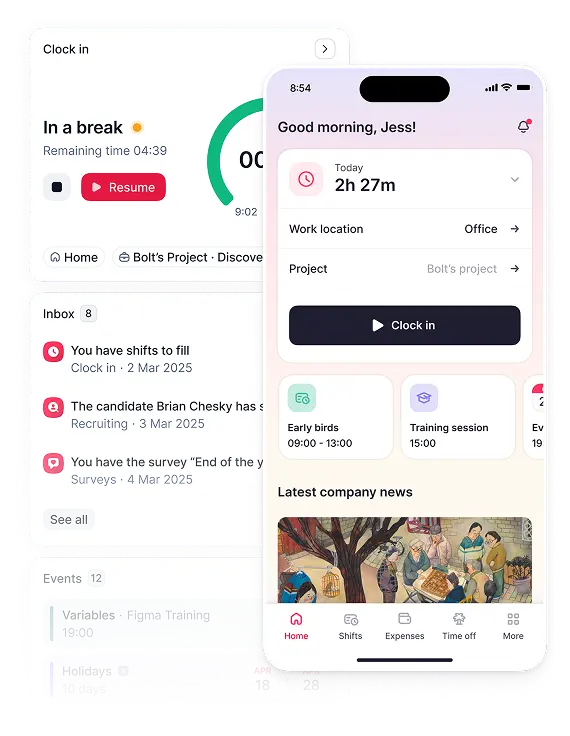
For HR teams, Factorial’s time off management software provides a central place to record paternity leave dates, approval status and team absences before cover arrangements are confirmed.
Planning Financially
Financial planning is a crucial component of preparing for paternity leave. Review and understand the details of your paternity pay package and any additional benefits provided by your employer. Consider saving up annual leave days before the birth to extend paternity leave with full pay if your employer’s policies permit this.
Create a budget that accounts for reduced income during paternity leave and identifies all essential monthly expenses.
Automating Leave Management with Factorial
The easiest way to manage statutory leave requests is by using the right tools and software. This can help you simplify the process so that time-off requests can be easily submitted and approved in line with employee schedules and your anticipated workload.
With Factorial’s time off management software, you can create your time-off policy directly on the platform so that your staff can access it at all times. That way, your employees know exactly what they need to do when they want to request days off.
They can submit a request through the employee portal, which gets sent directly to the right person for approval.
Using Factorial, you can:
- Automate holiday requests.
- See holiday days and absences accrued, used, and remaining.
- Use the calendar to review upcoming employee absences with ease.
- View all upcoming paternity leave, sick leave, holiday days, and other types of leave at a glance.
- Track time off to make sure each team is staffed efficiently.
FAQ
Do fathers get paid paternity leave in the UK?
Yes, eligible fathers receive Statutory Paternity Pay. The rate is the lower of a set weekly amount or 90% of your average weekly earnings. Some employers may offer enhanced, or full, pay as a contractual benefit, so it is important to check your company’s policy.
Is paternity leave 2 weeks or 14 working days?
Statutory Paternity Leave is taken as one or two consecutive weeks. This is a continuous block of time, equivalent to 14 calendar days for a two-week leave, rather than 14 separate working days.
What are the new paternity leave rules in 2026?
Significant changes offering more flexibility were introduced in April 2024, but no specific new rules have been announced for 2026. The 2024 rules allow fathers to take their two weeks of leave in separate one-week blocks anytime within the first year after birth or adoption.
Why do dads only get 2 weeks paternity leave?
The two-week period is the statutory minimum entitlement provided by UK law to ensure fathers have a dedicated period to bond with their new child. For a longer period of leave, eligible parents can use the Shared Parental Leave scheme to divide up to 50 weeks of leave.
Do men get 3 months paternity leave?
Standard Statutory Paternity Leave is capped at two weeks. However, a father can take a longer period, such as three months, by using the Shared Parental Leave scheme, which allows eligible parents to share up to 50 weeks of leave and 37 weeks of pay.