Workplace injury compensation can cover the harm and financial losses someone suffers because of an accident at work. In the UK, the amount depends on the injury, its effects and who was responsible.
This guide explains what employers and HR teams need to do after an accident, how compensation is assessed and which records help you support the employee and deal with a claim.
What is workplace injury compensation?
Workplace injury compensation is money paid to someone for an injury or illness for which another party is legally responsible. According to HSE, an employee may be able to claim if an employer’s negligence caused their injury or illness. An employer can also be responsible when someone working for them negligently causes harm.
For example, an employee might injure themselves after slipping on a damaged floor the business knew needed repairing. Whether compensation is due depends on the evidence, including what caused the accident and what reasonable steps were taken to prevent it.
| Payment or support | What it covers |
| Personal injury compensation | The injury’s effects and relevant financial losses where legal responsibility is established. |
| Sick pay | Pay during sickness absence under statutory rules and any company scheme. |
| Industrial Injuries Disablement Benefit | A state benefit for eligible people with a qualifying work-related disability or disease. |
| Rehabilitation and workplace support | Treatment, changes to duties or other support that helps the employee recover and return safely. |
A person may need more than one type of support. Keep the sickness absence and payroll process moving while the insurer or legal advisers investigate any compensation claim. Employees can check eligibility for Industrial Injuries Disablement Benefit on GOV.UK and seek advice about the benefits available in their circumstances.
How much workplace injury compensation could an employee receive?
The amount of workplace injury compensation depends on the medical evidence, the effect on the person’s life and the financial losses linked to the injury. Two people with similar injuries can receive different amounts because their recovery, earnings and support needs differ.
A claim may include compensation for pain, suffering and the effect on everyday life. It may also include financial losses, such as lost earnings, treatment costs, and help they needed at home. Medical and legal advisers assess which losses the evidence supports.
| Part of the claim | Evidence that may be relevant |
| The injury and recovery | Medical reports describing the injury, treatment and likely longer-term effects. |
| Lost earnings | Pay records, absence dates and details of sick pay already received. |
| Treatment and travel | Receipts and evidence linking the expense to the injury. |
| Care and future needs | Records of help provided and professional evidence about future support or lost earning capacity. |
Example of financial losses
Suppose an injured employee has £1,200 in lost earnings after allowing for pay received, £300 in treatment costs and £80 in travel expenses. Those items total £1,580. This example shows how to organise financial losses. The overall claim would also depend on the injury’s effects, legal responsibility and any other relevant adjustments.
HR’s role in workplace injury compensation is to supply accurate employment records. Let the insurer and legal advisers assess liability and the value of a claim. If a formal claim arrives, send it to your insurer promptly.
What should an employer do after an accident at work?
First arrange medical help, make the area safe and record what happened. Then check whether the incident needs reporting, notify the relevant people and investigate how to prevent it happening again.
- Get help: Follow your first-aid and emergency procedures. Deal with any continuing danger to colleagues, visitors or contractors.
- Record the facts: Note the date, location, people involved and what witnesses saw. Record facts separately from opinions about the cause.
- Preserve relevant evidence: Keep photographs, inspection records, training records and relevant CCTV before it is routinely deleted, where lawful.
- Check reporting duties: Ask the person responsible for health and safety to assess the incident against the applicable reporting rules.
- Notify your insurer: Follow the policy’s notification requirements, including for incidents that might lead to a claim.
- Support the employee: Explain the absence process, who will contact them and how pay will be handled.
According to HSE, certain injuries, diseases and dangerous occurrences must be reported under RIDDOR in Great Britain. Reporting an incident records what happened under the safety rules. Legal responsibility for compensation is assessed through the claims process.
Northern Ireland has its own health and safety regulator and reporting framework. Employers with sites there should check the applicable requirements with HSENI. Include the location in your incident procedure so the correct person handles the report.
After the immediate response, give each corrective action an owner and deadline. For example, a manager might arrange a repair, review equipment checks or organise further training. Record when each action is completed. If your team struggles to track these tasks, our guide to health and safety management software explains the features you should compare.
How should HR manage absence, pay and the return to work?
HR should record the absence, check sick pay entitlement and agree how to keep in touch. Start with the employee’s contract, your sick leave policy and the rules for Statutory Sick Pay. Your company may also have a scheme that provides extra pay when someone is injured at work.
When tracking employee absences, keep the start date, expected return date and any changes up to date. Give payroll the information it needs to calculate pay during sickness absence. Agree who will contact the employee and how often. If their expected return date changes, explain any effect on pay before the next payroll deadline where possible.
| Stage | What HR should check |
| Start of absence | Dates, reporting requirements, sick pay and who will keep in contact. |
| During recovery | Medical updates needed for work, revised absence dates and any support requested. |
| Before returning | Advice about duties, hours, equipment and any adjustments needed. |
| After returning | Whether the agreed support works and when to review it. |
A return-to-work interview gives the employee and manager time to discuss what they can manage. For example, someone recovering from a shoulder injury may need lighter duties while medical advice is reviewed. In case of disability, consider reasonable adjustments, such as changes to equipment, working hours or tasks. Agree when to review the support with the employee.
Medical information needs to be handled carefully. Give managers the information they need to support the person at work and restrict access to more detailed records. A shared absence calendar usually needs dates and availability, rather than a description of the injury.

How do insurance and tax affect workplace compensation?
Employers’ liability insurance helps meet the cost of successful employee injury claims. The tax treatment of a payment depends on why it is paid and the conditions attached to it. These are all important to understand for creating a proper policy for workplace injury compensation.
According to GOV.UK, most employers in Great Britain must have employers’ liability insurance with cover of at least £5 million, subject to exemptions. Northern Ireland employers should check their separate insurance requirements. Keep policy details accessible and tell the insurer about a potential claim in line with the policy.
HMRC explains when compensation for an injury at work can be paid without reporting it or paying tax and National Insurance. Its conditions include:
- The payment is made in return for the employee agreeing not to bring a legal claim.
- The employment contract gives the employee no automatic entitlement to that payment.
- You would have made the same payment to a member of the public in similar circumstances.
- You and the employee discussed and negotiated appropriate compensation.
Ask payroll and your legal advisers to check the payment against the applicable rules before processing it. Keep ordinary sick pay and contractual injury payments clearly identified so the correct treatment can be applied.
If the employee receives benefits, a compensation payment can also affect them. The insurer or legal representative can deal with any compensation recovery requirements and direct the employee to benefits advice.
How can Factorial help you support employees after a workplace injury?
Factorial helps HR, finance and managers keep absence records, pay changes and company policies organised after a workplace injury. Having this information together makes it easier to answer employees’ questions and coordinate the work needed during their recovery.
- Keep track of time away from work: Record sickness absence in Factorial and use the shared calendar to help managers organise cover. Keep sensitive information restricted to the people who need it.
- Prepare accurate payroll inputs: Factorial Compensation brings payroll inputs together for review. HR and finance can check changes affecting an employee’s pay before handing the information to their payroll provider.
- Make company policies easier to find. Keep sickness and absence policies in one place so employees can understand the process and managers can follow the same guidance.
- Spend less time searching for answers. One, your personal AI agent at work, can help people find information in company policies and summarise records they have permission to access. For example, an HR colleague could ask it to summarise the company’s sickness absence procedure before speaking with an injured employee.
With clearer records and less repeated administration, your team has more time to support the employee and coordinate their return to work.
Request a free Factorial demo to see how connected HR and payroll preparation can help your team manage employee absence with greater clarity.
FAQs about workplace injury compensation
The amount depends on the injury, its effects and the losses supported by evidence. Medical reports help assess the harm, while pay records and receipts help show financial losses. The insurer and legal advisers assess the claim, including who was responsible and any relevant reductions.
The injured person is affected first, but colleagues, witnesses, family members and others nearby may also need support. Managers may need to arrange cover, while HR handles absence and pay records. Check whether anyone else was exposed to the same hazard when investigating the incident.
You may be able to claim if another party’s negligence caused your injury. A solicitor or trade union adviser can check the evidence, legal responsibility and relevant time limit. Get advice promptly because claim deadlines and exceptions depend on the circumstances and jurisdiction.
This usually refers to how certain means-tested benefits treat personal injury compensation. For Universal Credit, GOV.UK says the payment is disregarded as savings for the first 12 months. Further protection may apply where the money is held in a qualifying trust. It concerns benefits treatment, rather than the deadline for an injury claim.
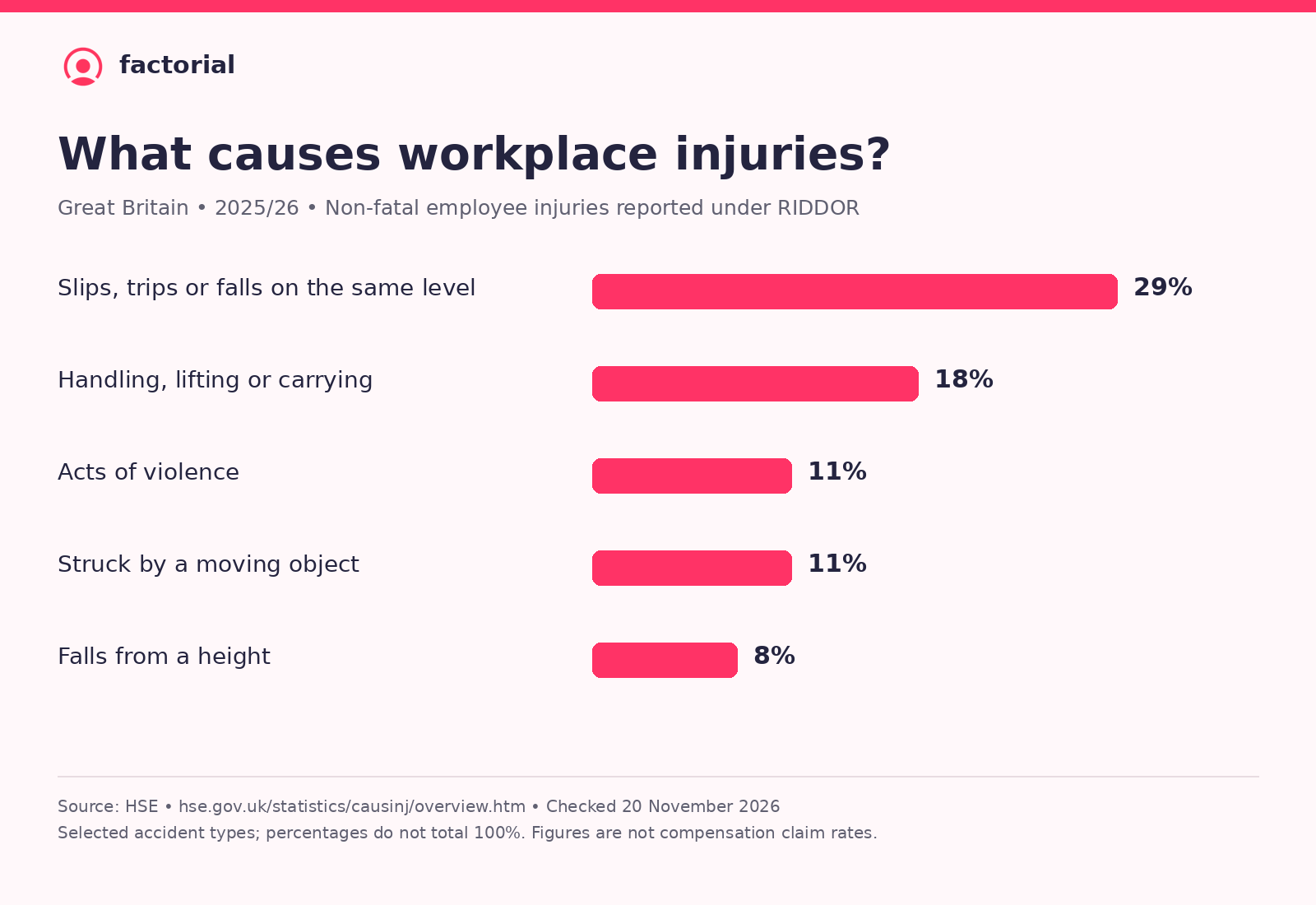
According to the National Safety Council and the most recent data, the most common workplace injuries are contact incidents (most frequently cuts, lacerations, and punctures without internal injury), Overexertion from repetitive motion, and bodily condition (most commonly affecting the back), and falls, slips, trips (frequently sprains, strains, tears).