December leave planning can be challenging when several employees want time off at the same time. HR teams must balance employee requests with staffing requirements, annual leave balances and business shutdown arrangements. A clear leave management process helps you coordinate time off, maintain essential operations and prepare your workforce for the year-end break.
How to plan employee leave during the December holiday season
Managing December leave starts with giving employees clear instructions and understanding how much cover your business needs. These five steps can help you organise requests and avoid last-minute staffing problems.
1. Set an early deadline for leave requests
Encourage employees to submit their December leave requests well in advance. Waiting until the last few weeks of the year can make it difficult to accommodate everyone’s plans, particularly when several people in the same department want the same dates.
Set a submission deadline and communicate when employees can expect a decision. This gives managers enough time to review requests, identify scheduling conflicts and arrange cover where necessary. You should also explain how employees can submit requests and who is responsible for approving them.
2. Review employee leave balances
Before approving requests, check how much annual leave each employee has available. This helps you understand which requests can be accommodated and identify employees who may not have enough leave for the full holiday period.
Review outstanding leave as well as leave already approved for December. Make sure your records are up to date so that employees and managers are working with accurate balances. Where an employee does not have enough annual leave, discuss the available arrangements before confirming their time off.
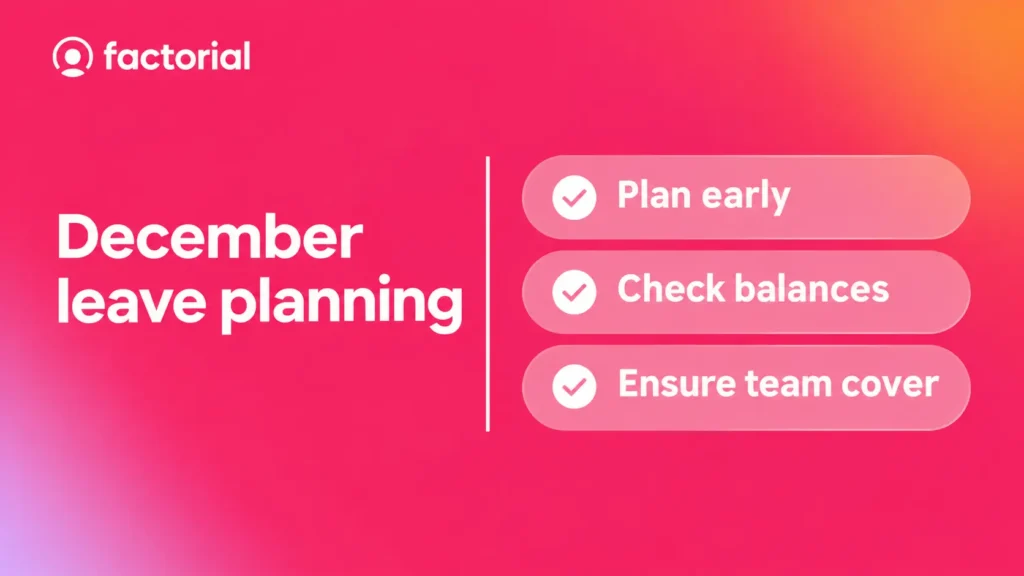
3. Establish minimum staffing requirements
Not every employee can take leave at the same time, particularly in departments that need to remain operational throughout December.
Identify the roles and teams that must remain available during the holiday period. Consider customer support, payroll, finance, IT and other functions that your business relies on. You can then establish minimum staffing levels for each team and use them when reviewing overlapping requests. This helps you avoid approving leave that leaves essential responsibilities unattended.
4. Create a fair leave approval process
When several employees request the same dates, you need a consistent way to make decisions.
Consider factors such as:
- Whether the employee has already taken leave during previous peak periods.
- Whether their role is essential during the proposed absence.
- Whether another team member can cover their responsibilities.
- Whether alternative dates are available.
Communicate your approval criteria before employees submit requests. This helps manage expectations and reduces misunderstandings when you cannot approve every request.
5. Communicate December shutdown arrangements
If your business closes for part of December, communicate the arrangements as early as possible. Employees should know the closure dates, when operations will resume and whether they are expected to take annual leave during the shutdown. Explain how the shutdown will affect leave balances and what happens if an employee does not have enough accrued leave to cover the closure.
Make sure managers understand the arrangements too, so employees receive consistent information across departments.
What does South African labour law say about December leave?
In South Africa, annual leave is regulated by section 20 of the Basic Conditions of Employment Act (BCEA). Employers should consider these requirements when planning December leave and company shutdowns.
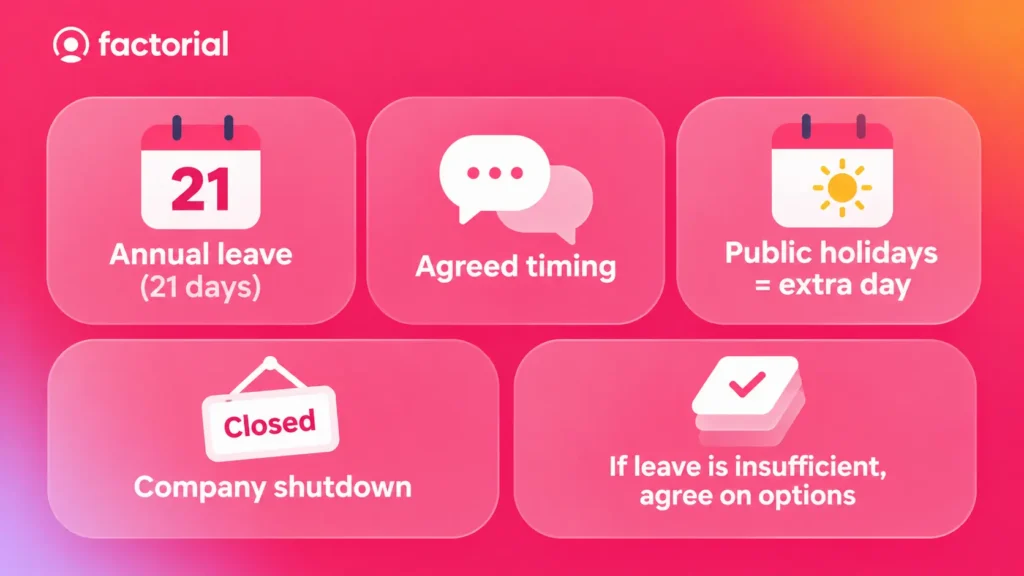
1. Annual leave entitlement: The BCEA provides for at least 21 consecutive days of annual leave on full remuneration for each annual leave cycle. By agreement, leave can instead accrue at one day for every 17 days worked or paid, or one hour for every 17 hours worked or paid.
2. When employees take annual leave: The timing of annual leave should be agreed between the employer and employee. If there is no agreement, the employer may determine when the leave is taken, subject to the Act. Annual leave must be granted within six months after the end of the relevant leave cycle.
3. Public holidays during annual leave: A public holiday cannot simply be deducted from an employee’s annual leave balance. Under section 20(8), if a public holiday falls during annual leave on a day the employee would ordinarily have worked, the employer must grant an additional day of paid leave.
4. Company shutdowns: Employers should communicate shutdown arrangements clearly and check the employment contract, workplace policies and any applicable collective agreement. Where annual leave is scheduled during a shutdown, employers must still comply with the BCEA’s rules on leave entitlement and timing.
5. Employees with insufficient leave: If an employee has not accrued enough annual leave to cover the shutdown, discuss the options before making deductions or changing their leave balance. Any arrangement involving unpaid leave or an advance on future leave should be handled in accordance with the applicable agreement and employment terms.
For the full requirements, refer to the Basic Conditions of Employment Act and the Department of Employment and Labour’s Basic Guide to Annual Leave.
How to prepare for employees returning in January
Leave planning should also account for what happens when employees return. A little preparation before the shutdown can help your teams resume work without unnecessary delays.
- Confirm return dates: Remind employees when they are expected back and make sure managers have the same schedule.
- Arrange handovers: Ask employees to document outstanding tasks and share important information with colleagues covering their responsibilities.
- Review pending work: Identify tasks that can wait until January and those that need attention before the shutdown.
- Plan January priorities: Check upcoming deadlines, projects and staffing requirements so teams know what needs attention when they return.
These steps help reduce confusion and give employees a clearer starting point after the holiday break.
Simplify December leave planning with Factorial
Managing multiple leave requests, balances and approval decisions through spreadsheets and email can become difficult as the holiday season approaches.
With Factorial, you can manage employee leave requests and approvals, keep leave records organised and get a clearer view of team availability. This gives HR teams and managers better visibility when coordinating time off and planning staffing for December.
Want to make leave management easier? Book a free demo with Factorial and explore how its HR software can support your leave management process.

FAQs
The BCEA allows an employer to determine when annual leave is taken if there is no agreement with the employee. However, the employer must still comply with section 20, employment contracts and applicable collective agreements when arranging a shutdown.
Employees do not have an automatic right to choose any dates for annual leave. The timing should be agreed between the employer and employee. If they cannot agree, the employer may determine the timing in accordance with the BCEA.
No. If a public holiday falls during annual leave on a day the employee would ordinarily have worked, the employer must grant an additional day of paid leave under section 20(8) of the BCEA.
The BCEA requires employers to grant annual leave within six months after the end of the relevant leave cycle. The treatment of additional contractual leave may depend on the employment agreement or workplace policy. Employers should not assume that statutory leave automatically expires at the end of December.